

What happened
This review from The Hollywood Reporter, authored by Angie Han, discusses the film 'Hamnet', directed by Chloé Zhao. The film, which premiered at the Telluride Film Festival on Thursday, November 27th, is a fictionalized account of William Shakespeare and his wife, Agnes Hathaway.
Key Findings and Conclusions:
Film Details:
The first time we see Agnes (Jessie Buckley), she’s curled up asleep at the mossy base of a giant tree. Dressed in red and purple, she looks like a flower, or perhaps an organ — a heart out in the open, ready to be plucked up and held close. Next to her lies a void, a hollow beneath the roots so deep and so dark that it looks like nothing at all.
In Hamnet, the latest film from Oscar-winning Nomadland director Chloé Zhao, the two always go hand in hand: joy and fear, love and loss. One feeds into the other in a cycle as old as life itself, and unavoidable. But just as her William Shakespeare (Paul Mescal) turns the pain of being caught between the two into the masterpiece that is Hamlet, Zhao harnesses those elements into something gorgeous and cathartic.
Hamnet The Bottom Line A tremendously acted heartbreaker. Venue: Telluride Film FestivalRelease date: Thursday, Nov. 27Cast: Jessie Buckley, Paul Mescal, Emily Watson, Joe AlwynDirector: Chloé ZhaoScreenwriters: Chloé Zhao and Maggie O'Farrell, based on the book by O'Farrell 2 hours 5 minutes The first time Will sees Agnes, she’s coming back from that very same sojourn into the woods.
He’s inside, supposedly tutoring her brothers in Latin, but he’s distracted by the glimpse of her from his window. He follows her into the barn, and asks for her name. She coyly refuses, and lets him kiss her before she’ll finally answer. So undeniable is their attraction that who they are to the rest of the world hardly seems to matter.
In no time at all, the two are sneaking off in the woods and into sheds, striking up a whirlwind romance they know full well neither family would approve of. Will’s mother Mary (Emily Mortimer) has heard rumors Agnes is the daughter of a forest witch. Agnes’ brother Bartholomew (Joe Alwyn), though more open-minded, asks why she’d tie herself down to “a pasty-faced scholar.
” But their opinions cease to matter once she gets pregnant, leaving the delighted parents-to-be with no choice but to marry and start a family that will eventually include three lovely children. The first act of Hamnet, which Zhao wrote with Maggie O’Farrell based on O’Farrell’s own novel, is a thing of delight and wonder.
Zhao’s appreciation for natural grandeur, as seen even in her big-budget superhero movie Eternals, shines through, as does her attention to detail. Cinematographer Lukasz Zal captures the vast lushness of the forest where Agnes and Will first fall in love in generous wide shots that occasionally make the couple look like forest creatures, and sound designer Johnnie Burn evokes the quiet rhythms of everyday life with an occasional musical assist from Max Richter’s ethereal score.
There’s something almost primal about Agnes in particular, who’s such a creature of nature that when her water breaks with her first child, she slips off into the woods to give birth alone. (She’s forced to have her second birth inside by Mary, who not unreasonably points out that it’s absolutely pouring rain out there.
) But the needs of civilized society have a way of intruding. Agnes might have been content to wander those hills forever, but Will is a frustrated artist who even she can see needs to be among other creatives in London. She encourages him to pursue his dreams, but as Will’s career takes off in the city, she grows ever more reluctant to leave Stratford-upon-Avon.
Still, their family life remains a happy one when he is home — their only son, Hamnet (Jacobi Jupe), is particularly close to his dad, dreaming of working with him in the theater someday. But it’s while he’s away that unthinkable tragedy occurs, forever shattering the idyll of the Shakespeare clan and driving a seemingly intractable wedge between Agnes and Will.
She retreats, unable to move on and bitter that he wasn’t there when she needed him most. He can’t seem to move on fast enough, heading back to London while the grief is still fresh and throwing more and more of himself into his work. Mescal is wonderful as the Bard, in a role that might provoke even more tears than his mourning musicologist in The History of Sound.
He underplays his emotions when one might expect him to go big, which makes the moments when he does explode all the more impactful. Among the supporting cast, Mortimer deserves special mention for a devastating monologue midway through, in which she sums up one of the film’s central theses by stating, simply, that “What is given may be taken away at any time.
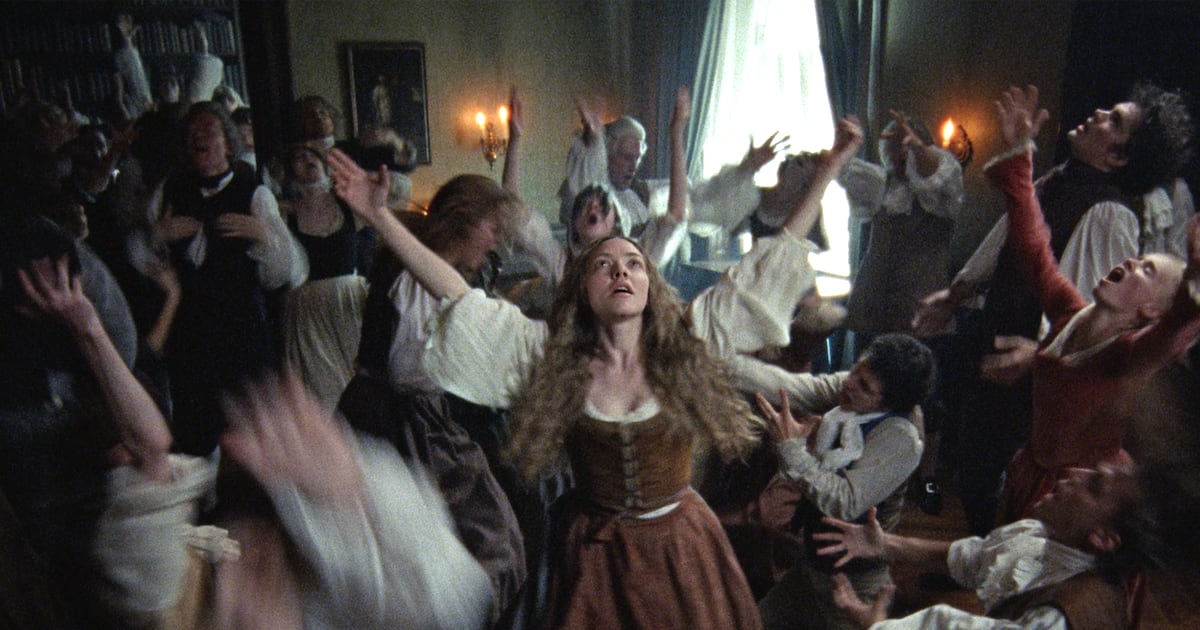
” But it’s Buckley who really stuns, as she evolves Agnes from the free-spirited girl of the grass to the loving wife and mother to the brittle and grieving woman. She grounds a character who could have seemed too ethereal in raw, naked feeling; there’s a moment when she screams with grief until she runs out of sound that I’ll be thinking about for a long time.
Buckley is an actor who can take you on a whole journey just by the way she watches someone. She does it early in the film, when Will tells her the story of Orpheus and Eurydice (another one about a lovelorn couple and a greedy void). And she does it even more powerfully in the third act, as she finally sees what Will’s been up to in his months away.
Initially, she’s confused and distraught to discover that her husband has named his new tragedy after their boy. (As a caption at the start of the film notes, “Hamlet” and “Hamnet” were considered to be the same name in that era.) Bit by bit, however, she begins to see how Will has expressed his grief through his play — and in doing so transformed a senseless tragedy into a meaningful masterpiece that might move hundreds, thousands, millions.
How precisely he does this, Hamnet does not show in detail, as Zhao only touches glancingly on his creative process. It suits the film just fine. The glory and the terror of the elements, introduced to us in those first shots of Agnes in the forest, transform, as if by magic, into the enduring power of art.
Source coverage
This review from The Hollywood Reporter, authored by Angie Han, discusses the film 'Hamnet', directed by Chloé Zhao. The film, which premiered at the Telluride Film Festival on Thursday, November 27th, is a fictionalized account of William Shakespeare and his wife, Agnes Hathaway.
Key Findings and Conclusions:
Deeper analysis
Full source content
The first time we see Agnes (Jessie Buckley), she’s curled up asleep at the mossy base of a giant tree. Dressed in red and purple, she looks like a flower, or perhaps an organ — a heart out in the open, ready to be plucked up and held close. Next to her lies a void, a hollow beneath the roots so deep and so dark that it looks like nothing at all.
In Hamnet, the latest film from Oscar-winning Nomadland director Chloé Zhao, the two always go hand in hand: joy and fear, love and loss. One feeds into the other in a cycle as old as life itself, and unavoidable. But just as her William Shakespeare (Paul Mescal) turns the pain of being caught between the two into the masterpiece that is Hamlet, Zhao harnesses those elements into something gorgeous and cathartic.
Hamnet The Bottom Line A tremendously acted heartbreaker. Venue: Telluride Film FestivalRelease date: Thursday, Nov. 27Cast: Jessie Buckley, Paul Mescal, Emily Watson, Joe AlwynDirector: Chloé ZhaoScreenwriters: Chloé Zhao and Maggie O'Farrell, based on the book by O'Farrell 2 hours 5 minutes The first time Will sees Agnes, she’s coming back from that very same sojourn into the woods.
He’s inside, supposedly tutoring her brothers in Latin, but he’s distracted by the glimpse of her from his window. He follows her into the barn, and asks for her name. She coyly refuses, and lets him kiss her before she’ll finally answer. So undeniable is their attraction that who they are to the rest of the world hardly seems to matter.
In no time at all, the two are sneaking off in the woods and into sheds, striking up a whirlwind romance they know full well neither family would approve of. Will’s mother Mary (Emily Mortimer) has heard rumors Agnes is the daughter of a forest witch. Agnes’ brother Bartholomew (Joe Alwyn), though more open-minded, asks why she’d tie herself down to “a pasty-faced scholar.
” But their opinions cease to matter once she gets pregnant, leaving the delighted parents-to-be with no choice but to marry and start a family that will eventually include three lovely children. The first act of Hamnet, which Zhao wrote with Maggie O’Farrell based on O’Farrell’s own novel, is a thing of delight and wonder.
Zhao’s appreciation for natural grandeur, as seen even in her big-budget superhero movie Eternals, shines through, as does her attention to detail. Cinematographer Lukasz Zal captures the vast lushness of the forest where Agnes and Will first fall in love in generous wide shots that occasionally make the couple look like forest creatures, and sound designer Johnnie Burn evokes the quiet rhythms of everyday life with an occasional musical assist from Max Richter’s ethereal score.
There’s something almost primal about Agnes in particular, who’s such a creature of nature that when her water breaks with her first child, she slips off into the woods to give birth alone. (She’s forced to have her second birth inside by Mary, who not unreasonably points out that it’s absolutely pouring rain out there.
) But the needs of civilized society have a way of intruding. Agnes might have been content to wander those hills forever, but Will is a frustrated artist who even she can see needs to be among other creatives in London. She encourages him to pursue his dreams, but as Will’s career takes off in the city, she grows ever more reluctant to leave Stratford-upon-Avon.
Still, their family life remains a happy one when he is home — their only son, Hamnet (Jacobi Jupe), is particularly close to his dad, dreaming of working with him in the theater someday. But it’s while he’s away that unthinkable tragedy occurs, forever shattering the idyll of the Shakespeare clan and driving a seemingly intractable wedge between Agnes and Will.
She retreats, unable to move on and bitter that he wasn’t there when she needed him most. He can’t seem to move on fast enough, heading back to London while the grief is still fresh and throwing more and more of himself into his work. Mescal is wonderful as the Bard, in a role that might provoke even more tears than his mourning musicologist in The History of Sound.
He underplays his emotions when one might expect him to go big, which makes the moments when he does explode all the more impactful. Among the supporting cast, Mortimer deserves special mention for a devastating monologue midway through, in which she sums up one of the film’s central theses by stating, simply, that “What is given may be taken away at any time.
” But it’s Buckley who really stuns, as she evolves Agnes from the free-spirited girl of the grass to the loving wife and mother to the brittle and grieving woman. She grounds a character who could have seemed too ethereal in raw, naked feeling; there’s a moment when she screams with grief until she runs out of sound that I’ll be thinking about for a long time.
Buckley is an actor who can take you on a whole journey just by the way she watches someone. She does it early in the film, when Will tells her the story of Orpheus and Eurydice (another one about a lovelorn couple and a greedy void). And she does it even more powerfully in the third act, as she finally sees what Will’s been up to in his months away.
Initially, she’s confused and distraught to discover that her husband has named his new tragedy after their boy. (As a caption at the start of the film notes, “Hamlet” and “Hamnet” were considered to be the same name in that era.) Bit by bit, however, she begins to see how Will has expressed his grief through his play — and in doing so transformed a senseless tragedy into a meaningful masterpiece that might move hundreds, thousands, millions.
How precisely he does this, Hamnet does not show in detail, as Zhao only touches glancingly on his creative process. It suits the film just fine. The glory and the terror of the elements, introduced to us in those first shots of Agnes in the forest, transform, as if by magic, into the enduring power of art.
How this page is built
Goose Pod turns cited reporting into a public episode summary first, then pairs that summary with audio playback so listeners can check the source material before they decide how deeply to engage.
The goal is to make this page useful as a news landing page first, while still giving listeners transcript access, related episodes, and direct links back to the original publishers.