

What happened
This news article from The Daily Beast, authored by Nick Schager, discusses the film "The Testament of Ann Lee," a musical film screening at the Toronto International Film Festival after its premiere at the Venice Film Festival. The film, released around September 9, 2025, is described as a "daring and thrilling...
Key Findings and Conclusions:
Key Individuals and Dates:
Revelation, devotion, delusion, and madness all look alike in The Testament of Ann Lee, such that differentiating between them requires only a slight shift in perspective. The story of Ann Lee, founder of the Shaker religious sect, Mona Fastvold’s film—screening at this year’s Toronto International Film Festival following its celebrated premiere at the Venice Film Festival—is possessed with the fanatical spirit of its protagonist.
Like Joshua Oppenheimer’s The End, it’s a daring and thrilling reinvention of the movie musical, tapping into a tumultuous, eroticized zealotry that makes it both euphoric sermon and folk-horror hallucination. A collision of agony and ecstasy that approaches the divine even as it reveals piousness to be an outgrowth of, and justification for, earthly suffering, it’s like nothing the genre has seen before.
Born to a blacksmith and his wife in 1736 Manchester, Ann Lee (Amanda Seyfried) is consumed, from an early age, with faith in the Lord, who bestows her with visions of heavenly angels and sinful serpents. By visiting the cotton factory where her mother is employed, Ann learns the value of hard work, just as at night, her close-up view of her parents fornicating instills in her a disgust of sexuality.
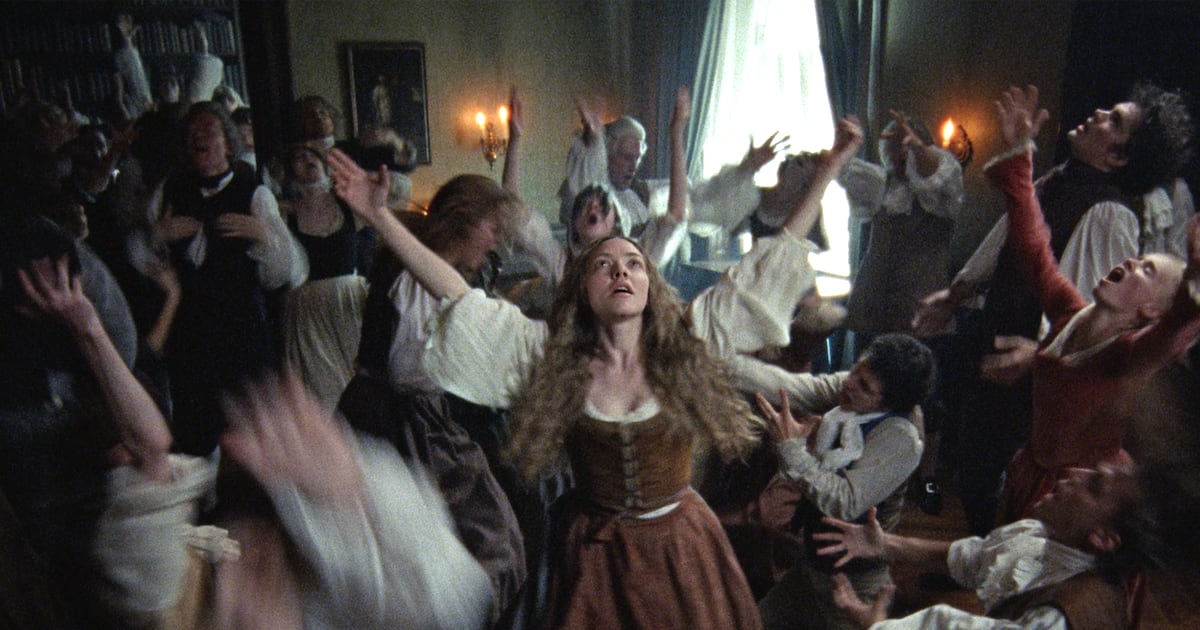
She’s forever transformed by a visit to a revival meeting where James (Scott Handy) and Jane Wardley (Stacy Martin) preach a unique gospel in which communion with God is achieved through a combination of public confession, hysterical moaning, and forceful trembling. For Ann, this cult is precisely what she’s been seeking, and she joins it lustily, immersing herself in the flock as they beat their chests and thrust their arms outward and to the sky, their heads and palms turned upward and their eyes alight with holy bliss.
The Testament of Ann Lee opens with snapshots of men and women in bonnets and black dress performing their traditional Shaker routine in a wintery forest, as well as title cards of pagan symbols that, combined with Daniel Blumberg’s haunting score, root the action in ancient ominousness. Brady Corbet and Amanda Seyfried at the 82nd Venice International Film Festival on September 02, 2025 in Venice, Italy.
Luigi Iorio/GC Images Joining Wardleys’ faction, Ann marries Abraham (Christopher Abbott), a blacksmith like her father who, at night, commands his wife to “take me in your mouth.” She declines, but acquiesces, with much repulsed wincing, to his other carnal demands. Four pregnancies follow, each of them resulting in a baby that perishes before its first birthday.
In the aftermath of these calamities, she’s imprisoned in an infirmary where God grants her additional visions that, she proclaims upon her release, have shown her a new gospel: she is the second coming of Jesus Christ (to be known as “Mother Ann”), and the way to get close to Him is through toil and chastity.
This is the stuff of religious legend, and it’s presented as such by Fastvold, whose story is narrated by Ann’s close disciple Mary (Thomasin McKenzie) and recounted, in part, via song and dance numbers marked by lyrical, ethereal melodies, chant-like lyrics, and heaving, stretching, pulsating choreography whose lasciviousness suggests that Ann and her minions are attempting to purge themselves of their profane desires.
In these early sequences, during which characters move in circular directions (including around Seyfried’s protagonist and the camera itself), The Testament of Ann Lee is mesmerizing, casting a hypnotic spell that conveys the seductive appeal of Ann’s ascetic doctrine.Convinced that she’s God’s resurrected son (whom, she contends, was born in humanity’s image, meaning he can be man or woman), Ann builds a congregation alongside the Wardleys, Mary, and her loyal brother William (Lewis Pullman).
Seyfried’s performance is so ardent and expressive that it compensates for the fact that the script (by Fastvold and husband Brady Corbet) sometimes resorts to plain articulations of devoutness and doubt. The Testament of Ann Lee hinges on its lead’s committed performance, and its energy flags when it drifts away from her and toward the rest of her followers, who are an imprecise bunch.
Though Pullman and McKenzie gyrate and groan with intensity, thumping their torsos and pushing and pulling at their fellow believers, William and Mary provide minimal support, as does Tim Blake Nelson’s converted preacher.Once Ann decides that her destiny is across the Atlantic in America, the film reveals a kinship with Corbet’s The Brutalist, in that it too becomes a portrait of building a (figurative) monument to deeply rooted pain and suffering—specifically, Ann’s lifelong detestation of the flesh, which has brought her misfortune and a heartache (over her deceased children) that can solely be assuaged by the Almighty.
Shot on 70mm by William Rexer, The Testament of Ann Lee is rich in visual texture, all mud, mist, and beatific sunshine, and Fastvold and editor Sofía Subercaseaux cut it masterfully, highlighted by a musical sequence aboard a New England-bound ship that seamlessly segues between its characters singing and spinning about in daylight, rain, and snow.
Such aesthetic splendor renders the proceedings reverential. Still, the director laces her material with humor—Abraham’s hilariously understandable misery over his wife’s abstinence policy; financer John Hocknell (David Cale) goofily locating the Hudson Valley plot of land that will be their home by following his divinely guided finger—that subtly undermines Ann and the tenets upon which her Shaker faith is erected.
As Ann and her devotees expand their village, The Testament of Ann Lee loses a touch of its early momentum, and Ann’s objection to slavery (she screams “Shame!” at a corner auction) and the Revolutionary War prove underdeveloped aspects of her ideology. The evolution of the Shakers’ rhythmic dancing from wildly lustful to mechanical and chaste—echoed by the settings of their flailing prostrations, which transition from dark, warm, mahogany drawing rooms to bright, white church spaces—implies that, by the time of Ann’s passing in 1784 at the age of 48, she and her brood had successfully expelled the last vestiges of their licentiousness.
Yet that means the film grows chillier in its final passages, drained of its initial, frenzied lifeforce. Even so, The Testament of Ann Lee paints a remarkably bold portrait of a pioneering woman who created a religious movement out of her personal hang-ups, needs, and sorrow. Led by the riveting Seyfried, it’s an audacious song-and-dance fantasia that locates a distinctive strain of fervent craziness at the heart of the American origin story.
Source coverage
This news article from The Daily Beast, authored by Nick Schager, discusses the film "The Testament of Ann Lee," a musical film screening at the Toronto International Film Festival after its premiere at the Venice Film Festival. The film, released around September 9, 2025, is described as a "daring and thrilling...
Key Findings and Conclusions:
Deeper analysis
Full source content
Revelation, devotion, delusion, and madness all look alike in The Testament of Ann Lee, such that differentiating between them requires only a slight shift in perspective. The story of Ann Lee, founder of the Shaker religious sect, Mona Fastvold’s film—screening at this year’s Toronto International Film Festival following its celebrated premiere at the Venice Film Festival—is possessed with the fanatical spirit of its protagonist.
Like Joshua Oppenheimer’s The End, it’s a daring and thrilling reinvention of the movie musical, tapping into a tumultuous, eroticized zealotry that makes it both euphoric sermon and folk-horror hallucination. A collision of agony and ecstasy that approaches the divine even as it reveals piousness to be an outgrowth of, and justification for, earthly suffering, it’s like nothing the genre has seen before.
Born to a blacksmith and his wife in 1736 Manchester, Ann Lee (Amanda Seyfried) is consumed, from an early age, with faith in the Lord, who bestows her with visions of heavenly angels and sinful serpents. By visiting the cotton factory where her mother is employed, Ann learns the value of hard work, just as at night, her close-up view of her parents fornicating instills in her a disgust of sexuality.
She’s forever transformed by a visit to a revival meeting where James (Scott Handy) and Jane Wardley (Stacy Martin) preach a unique gospel in which communion with God is achieved through a combination of public confession, hysterical moaning, and forceful trembling. For Ann, this cult is precisely what she’s been seeking, and she joins it lustily, immersing herself in the flock as they beat their chests and thrust their arms outward and to the sky, their heads and palms turned upward and their eyes alight with holy bliss.
The Testament of Ann Lee opens with snapshots of men and women in bonnets and black dress performing their traditional Shaker routine in a wintery forest, as well as title cards of pagan symbols that, combined with Daniel Blumberg’s haunting score, root the action in ancient ominousness. Brady Corbet and Amanda Seyfried at the 82nd Venice International Film Festival on September 02, 2025 in Venice, Italy.
Luigi Iorio/GC Images Joining Wardleys’ faction, Ann marries Abraham (Christopher Abbott), a blacksmith like her father who, at night, commands his wife to “take me in your mouth.” She declines, but acquiesces, with much repulsed wincing, to his other carnal demands. Four pregnancies follow, each of them resulting in a baby that perishes before its first birthday.
In the aftermath of these calamities, she’s imprisoned in an infirmary where God grants her additional visions that, she proclaims upon her release, have shown her a new gospel: she is the second coming of Jesus Christ (to be known as “Mother Ann”), and the way to get close to Him is through toil and chastity.
This is the stuff of religious legend, and it’s presented as such by Fastvold, whose story is narrated by Ann’s close disciple Mary (Thomasin McKenzie) and recounted, in part, via song and dance numbers marked by lyrical, ethereal melodies, chant-like lyrics, and heaving, stretching, pulsating choreography whose lasciviousness suggests that Ann and her minions are attempting to purge themselves of their profane desires.
In these early sequences, during which characters move in circular directions (including around Seyfried’s protagonist and the camera itself), The Testament of Ann Lee is mesmerizing, casting a hypnotic spell that conveys the seductive appeal of Ann’s ascetic doctrine.Convinced that she’s God’s resurrected son (whom, she contends, was born in humanity’s image, meaning he can be man or woman), Ann builds a congregation alongside the Wardleys, Mary, and her loyal brother William (Lewis Pullman).
Seyfried’s performance is so ardent and expressive that it compensates for the fact that the script (by Fastvold and husband Brady Corbet) sometimes resorts to plain articulations of devoutness and doubt. The Testament of Ann Lee hinges on its lead’s committed performance, and its energy flags when it drifts away from her and toward the rest of her followers, who are an imprecise bunch.
Though Pullman and McKenzie gyrate and groan with intensity, thumping their torsos and pushing and pulling at their fellow believers, William and Mary provide minimal support, as does Tim Blake Nelson’s converted preacher.Once Ann decides that her destiny is across the Atlantic in America, the film reveals a kinship with Corbet’s The Brutalist, in that it too becomes a portrait of building a (figurative) monument to deeply rooted pain and suffering—specifically, Ann’s lifelong detestation of the flesh, which has brought her misfortune and a heartache (over her deceased children) that can solely be assuaged by the Almighty.
Shot on 70mm by William Rexer, The Testament of Ann Lee is rich in visual texture, all mud, mist, and beatific sunshine, and Fastvold and editor Sofía Subercaseaux cut it masterfully, highlighted by a musical sequence aboard a New England-bound ship that seamlessly segues between its characters singing and spinning about in daylight, rain, and snow.
Such aesthetic splendor renders the proceedings reverential. Still, the director laces her material with humor—Abraham’s hilariously understandable misery over his wife’s abstinence policy; financer John Hocknell (David Cale) goofily locating the Hudson Valley plot of land that will be their home by following his divinely guided finger—that subtly undermines Ann and the tenets upon which her Shaker faith is erected.
As Ann and her devotees expand their village, The Testament of Ann Lee loses a touch of its early momentum, and Ann’s objection to slavery (she screams “Shame!” at a corner auction) and the Revolutionary War prove underdeveloped aspects of her ideology. The evolution of the Shakers’ rhythmic dancing from wildly lustful to mechanical and chaste—echoed by the settings of their flailing prostrations, which transition from dark, warm, mahogany drawing rooms to bright, white church spaces—implies that, by the time of Ann’s passing in 1784 at the age of 48, she and her brood had successfully expelled the last vestiges of their licentiousness.
Yet that means the film grows chillier in its final passages, drained of its initial, frenzied lifeforce. Even so, The Testament of Ann Lee paints a remarkably bold portrait of a pioneering woman who created a religious movement out of her personal hang-ups, needs, and sorrow. Led by the riveting Seyfried, it’s an audacious song-and-dance fantasia that locates a distinctive strain of fervent craziness at the heart of the American origin story.
How this page is built
Goose Pod turns cited reporting into a public episode summary first, then pairs that summary with audio playback so listeners can check the source material before they decide how deeply to engage.
The goal is to make this page useful as a news landing page first, while still giving listeners transcript access, related episodes, and direct links back to the original publishers.


