
What happened
Publication Date: September 17, 2025
Provider: Brookings
Author: William G. Gale
September 17, 2025 The traditional notion that states could follow their own ideologies has given way to attempts to impose preferences across state lines. Some Democratic-led states, noting they pay more in federal taxes than they get back in grants, have floated a “soft secession”—withholding tax payments to protest Trump policies they deem unlawful.
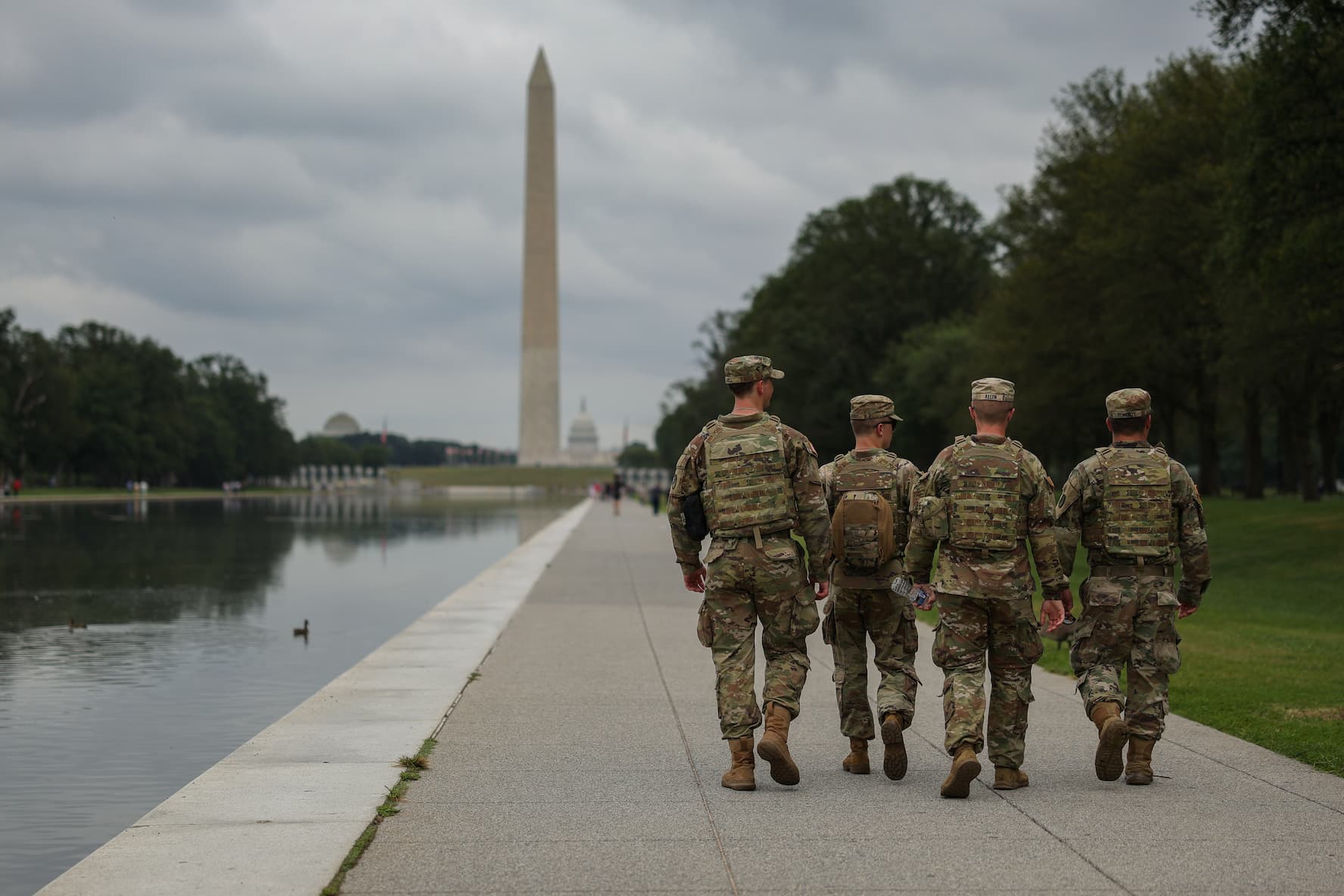
If Trump’s expansion of executive power and national authority continues, it could fundamentally reshape federal-state relations. National Guard troops patrol outside of the Lincoln Memorial on the National Mall in Washington, D.C. on August 20, 2025. The week prior, President Donald Trump invoked section 740 of Washington, D.
C.'s Home Rule Act of 1973, federalizing the D.C. Metropolitan Police Department and deploying National Guard troops, citing crime-fighting reasons. Bryan Dozier/NurPhoto 7 min read Since his inauguration, President Trump has moved aggressively to enact his agenda. He has encountered few checks on presidential power; the Republican Congress has been loyal to the administration, court decisions have been a mixed bag, and the Democratic Party is some time away from being able to coalesce around a new leader.
But overlooked in this discussion is federalism and the important role that the 50 individual states play and have always played in shaping the future of the country. In recent years, sharp policy divides have emerged not only between red and blue states but also in their interactions with the federal government.
States and the federal government have clashed over abortion, redistricting, voting rights, vaccines, immigration, crime, and taxes. The traditional idea that conservative states could pursue conservative policies while liberal states pursued liberal ones has increasingly given way to efforts by states or the federal government to impose their preferences on others.
Even before the second Trump administration, the repeal of Roe v. Wade, ending federal protection for abortion rights, prompted a surge of state-level legislation that varied widely across red and blue states. Blue states enacted measures protecting abortion providers from prosecution, while red states adopted laws penalizing abortion providers residing in other jurisdictions as well as out-of-state distributors of abortion medication.
Another example of the war between the states is redistricting. Traditionally, redistricting occurred following the decennial census. However, at the urging of President Donald Trump, the Texas legislature adopted a new 2026 congressional map designed to secure five additional Republican seats. Similar efforts in states such as Indiana and Missouri prompted Democratic-led states like California and Maryland to advance their own partisan maps, further intensifying conflict between state governments.
Voting rights have become quite contentious as well, particularly in light of former President Trump’s stated intention to ban mail ballots and voting machines. Since the adoption of the Constitution, states have held primary authority over the conduct and administration of elections, and the chief executive’s announcement raises questions about whether states will be able to maintain control over their preferred methods of running elections.
With the federal government adopting a less supportive stance on vaccines, the governors of California, Washington, and Oregon formed a “health alliance” to coordinate guidance and pool resources across their jurisdictions. This initiative came in response to vaccine policy pullbacks within the Department of Health and Human Services and staff resignations at the Centers for Disease Control and Prevention.
Florida, by contrast, announced plans to discontinue childhood vaccine requirements, a move that could pose risks to residents and visitors from other states. For several years, disputes over undocumented immigrants have led some border-state governors to put migrants on buses to Northern cities such as New York, Chicago, and Washington, D.
C., often without even notifying local officials. In some cases, refugees have arrived with no accommodations or support to help them navigate unfamiliar surroundings. Additionally, citing Boston’s status as a “sanctuary city,” the U.S. Department of Justice recently filed a lawsuit against city officials for failing to assist with federal immigration crackdowns.
The most recent intergovernmental confrontation involves the deployment of National Guard troops and the militarization of local police, with Republican-led states sending forces to Democratic-led cities. In Washington, D.C., the presence of troops from Alabama, Texas, South Carolina, and other states prompted strong local opposition: A Washington Post/George Mason University survey found that 79% of residents opposed the policy, and 61% reported feeling less safe with the troops on the streets.
Los Angeles faced similar intrusions but prevailed in court when a federal judge ruled that sending military forces for law enforcement purposes without local or state consent was unlawful. Despite that legal setback, President Trump has threatened to deploy federal law enforcement personnel and/or National Guard troops to cities such as Chicago, New York, Baltimore, and elsewhere.
If the D.C. experience is any indication, many residents in these cities could react strongly to the sight of delivery workers, domestic staff, construction workers, and firefighters being removed from public spaces by masked agents and transported in unmarked vehicles to undisclosed locations. These issues—and likely others to follow—pit Republican-led states against Democratic-led cities and states.
They have disrupted the traditional function of federalism, which allows for differing approaches across jurisdictions while providing a mechanism to challenge the national government. Such interventions are generating widespread concern and anxiety about legal rights and the prerogatives of state and local authorities.
Escalations and political brinkmanship that would have been unlikely in previous years have now become increasingly common. Acknowledging that many large Democratic-led states contribute more in federal taxes than they receive in federal grants, some state leaders have proposed what they term “soft secession”—withholding federal tax payments as a form of protest against Trump administration policies they consider unlawful.
As shown in Tables 1 and 2, states such as New York ($89 billion), California ($78 billion), New Jersey ($70 billion), and Texas ($67 billion) contribute far more in federal taxes than they receive in federal grants. In contrast, states such as Alabama ($41 billion), Arizona ($40 billion), and South Carolina ($37 billion) receive more from the federal government than they contribute.
These budgetary imbalances give “donor” states potential leverage over federal policy, as some leaders have suggested using this fiscal influence to counter what they perceive as punitive actions by the Trump administration toward their states, as well as preferential treatment of conservative “recipient” states.
Note that with the exception of Texas, the donor states are all blue states, and with the exception of Maryland and New Mexico, the recipient states are all red states. This is the second time that President Trump’s governing style has prompted a renaissance in state actions; the president’s uneven response to COVID-19 frequently led states to take matters into their own hands and develop their own pandemic responses.
In the current period, the unprecedented attacks on states’ rights jeopardize American federalism and the separation of powers across political jurisdictions. Given the GOP’s historic emphasis on states’ rights, it is notable how expansive the party’s stance is on national prerogatives. If Trump’s expansion of executive power and national authority continues, it could fundamentally reshape federal-state relations.
Taken to an extreme, conflict over these issues could escalate into a financial or law enforcement equivalent of a contemporary Civil War. It is a dangerous usurpation of state and local rights that may lead to a contentious confrontation. The Brookings Institution is committed to quality, independence, and impact.
We are supported by a diverse array of funders. In line with our values and policies, each Brookings publication represents the sole views of its author(s).
Source coverage
Publication Date: September 17, 2025
Provider: Brookings
Deeper analysis
Full source content
September 17, 2025 The traditional notion that states could follow their own ideologies has given way to attempts to impose preferences across state lines. Some Democratic-led states, noting they pay more in federal taxes than they get back in grants, have floated a “soft secession”—withholding tax payments to protest Trump policies they deem unlawful.
If Trump’s expansion of executive power and national authority continues, it could fundamentally reshape federal-state relations. National Guard troops patrol outside of the Lincoln Memorial on the National Mall in Washington, D.C. on August 20, 2025. The week prior, President Donald Trump invoked section 740 of Washington, D.
C.'s Home Rule Act of 1973, federalizing the D.C. Metropolitan Police Department and deploying National Guard troops, citing crime-fighting reasons. Bryan Dozier/NurPhoto 7 min read Since his inauguration, President Trump has moved aggressively to enact his agenda. He has encountered few checks on presidential power; the Republican Congress has been loyal to the administration, court decisions have been a mixed bag, and the Democratic Party is some time away from being able to coalesce around a new leader.
But overlooked in this discussion is federalism and the important role that the 50 individual states play and have always played in shaping the future of the country. In recent years, sharp policy divides have emerged not only between red and blue states but also in their interactions with the federal government.
States and the federal government have clashed over abortion, redistricting, voting rights, vaccines, immigration, crime, and taxes. The traditional idea that conservative states could pursue conservative policies while liberal states pursued liberal ones has increasingly given way to efforts by states or the federal government to impose their preferences on others.
Even before the second Trump administration, the repeal of Roe v. Wade, ending federal protection for abortion rights, prompted a surge of state-level legislation that varied widely across red and blue states. Blue states enacted measures protecting abortion providers from prosecution, while red states adopted laws penalizing abortion providers residing in other jurisdictions as well as out-of-state distributors of abortion medication.
Another example of the war between the states is redistricting. Traditionally, redistricting occurred following the decennial census. However, at the urging of President Donald Trump, the Texas legislature adopted a new 2026 congressional map designed to secure five additional Republican seats. Similar efforts in states such as Indiana and Missouri prompted Democratic-led states like California and Maryland to advance their own partisan maps, further intensifying conflict between state governments.
Voting rights have become quite contentious as well, particularly in light of former President Trump’s stated intention to ban mail ballots and voting machines. Since the adoption of the Constitution, states have held primary authority over the conduct and administration of elections, and the chief executive’s announcement raises questions about whether states will be able to maintain control over their preferred methods of running elections.
With the federal government adopting a less supportive stance on vaccines, the governors of California, Washington, and Oregon formed a “health alliance” to coordinate guidance and pool resources across their jurisdictions. This initiative came in response to vaccine policy pullbacks within the Department of Health and Human Services and staff resignations at the Centers for Disease Control and Prevention.
Florida, by contrast, announced plans to discontinue childhood vaccine requirements, a move that could pose risks to residents and visitors from other states. For several years, disputes over undocumented immigrants have led some border-state governors to put migrants on buses to Northern cities such as New York, Chicago, and Washington, D.
C., often without even notifying local officials. In some cases, refugees have arrived with no accommodations or support to help them navigate unfamiliar surroundings. Additionally, citing Boston’s status as a “sanctuary city,” the U.S. Department of Justice recently filed a lawsuit against city officials for failing to assist with federal immigration crackdowns.
The most recent intergovernmental confrontation involves the deployment of National Guard troops and the militarization of local police, with Republican-led states sending forces to Democratic-led cities. In Washington, D.C., the presence of troops from Alabama, Texas, South Carolina, and other states prompted strong local opposition: A Washington Post/George Mason University survey found that 79% of residents opposed the policy, and 61% reported feeling less safe with the troops on the streets.
Los Angeles faced similar intrusions but prevailed in court when a federal judge ruled that sending military forces for law enforcement purposes without local or state consent was unlawful. Despite that legal setback, President Trump has threatened to deploy federal law enforcement personnel and/or National Guard troops to cities such as Chicago, New York, Baltimore, and elsewhere.
If the D.C. experience is any indication, many residents in these cities could react strongly to the sight of delivery workers, domestic staff, construction workers, and firefighters being removed from public spaces by masked agents and transported in unmarked vehicles to undisclosed locations. These issues—and likely others to follow—pit Republican-led states against Democratic-led cities and states.
They have disrupted the traditional function of federalism, which allows for differing approaches across jurisdictions while providing a mechanism to challenge the national government. Such interventions are generating widespread concern and anxiety about legal rights and the prerogatives of state and local authorities.
Escalations and political brinkmanship that would have been unlikely in previous years have now become increasingly common. Acknowledging that many large Democratic-led states contribute more in federal taxes than they receive in federal grants, some state leaders have proposed what they term “soft secession”—withholding federal tax payments as a form of protest against Trump administration policies they consider unlawful.
As shown in Tables 1 and 2, states such as New York ($89 billion), California ($78 billion), New Jersey ($70 billion), and Texas ($67 billion) contribute far more in federal taxes than they receive in federal grants. In contrast, states such as Alabama ($41 billion), Arizona ($40 billion), and South Carolina ($37 billion) receive more from the federal government than they contribute.
These budgetary imbalances give “donor” states potential leverage over federal policy, as some leaders have suggested using this fiscal influence to counter what they perceive as punitive actions by the Trump administration toward their states, as well as preferential treatment of conservative “recipient” states.
Note that with the exception of Texas, the donor states are all blue states, and with the exception of Maryland and New Mexico, the recipient states are all red states. This is the second time that President Trump’s governing style has prompted a renaissance in state actions; the president’s uneven response to COVID-19 frequently led states to take matters into their own hands and develop their own pandemic responses.
In the current period, the unprecedented attacks on states’ rights jeopardize American federalism and the separation of powers across political jurisdictions. Given the GOP’s historic emphasis on states’ rights, it is notable how expansive the party’s stance is on national prerogatives. If Trump’s expansion of executive power and national authority continues, it could fundamentally reshape federal-state relations.
Taken to an extreme, conflict over these issues could escalate into a financial or law enforcement equivalent of a contemporary Civil War. It is a dangerous usurpation of state and local rights that may lead to a contentious confrontation. The Brookings Institution is committed to quality, independence, and impact.
We are supported by a diverse array of funders. In line with our values and policies, each Brookings publication represents the sole views of its author(s).
How this page is built
Goose Pod turns cited reporting into a public episode summary first, then pairs that summary with audio playback so listeners can check the source material before they decide how deeply to engage.
The goal is to make this page useful as a news landing page first, while still giving listeners transcript access, related episodes, and direct links back to the original publishers.