
What happened
Report Provider: Gallup.com
Author: Frank Newport
Date/Time Period Covered: The latest reading is from President Donald Trump's second term, with comparisons to previous years including President Obama's second term (2013, 2015), President George W. Bush's era (2002-2007), and President Biden's administration. The trend data spans 23 years since 2002.
WASHINGTON, D.C. — Does the U.S. government have too much power? The answer to that question, according to the American public, is yes. Sixty-two percent of Americans say the federal government has too much power, with most of the rest saying the government’s power is about right. This latest reading, the first in President Donald Trump’s second term, is up from 51% a year ago and is the highest in Gallup’s trend since 2002, by two percentage points.
The prior high was 60%, recorded during Barack Obama’s second term, in 2013 and 2015. The current figure is also well above the 53% average “too much power” reading since Gallup first asked the question in 2002. Views about government power have shifted significantly over the past 23 years. For the first few years of Gallup’s tracking, from 2002 to 2004, less than half of Americans perceived the government had too much power.
This most likely reflected the more positive views of government and elected leaders after the 9/11 terrorist attacks. Since 2005, “too much power” ratings have consistently been at 50% or higher, mostly within a range of 50% to 60%, with this year’s 62% marking the highest on record. ###Embeddable### Partisan Differences Reflect Both Ideology and Current Political Reality The uptick this year in views that the government has too much power reflects shifts among partisan groups.
Democrats (and Democratic-leaning independents) have become much more likely to say the government has too much power, surging to 66% from 25% in the past year. Republicans have moved in the opposite direction, but to a lesser degree, falling to 58% from 75% last year. As a result, this marks the first time since the years 2003-2007 that Democrats have been more likely than Republicans to say the government has too much power.
Democrats’ concern about government power during the George W. Bush era most likely reflected the expansion of government actions after 9/11 and opposition to the Iraq War. Democrats’ reactions were more muted during Trump’s first term, when 44% to 50% said the federal government was too powerful, only modestly higher than the 36% who said this in Obama’s final year in office.
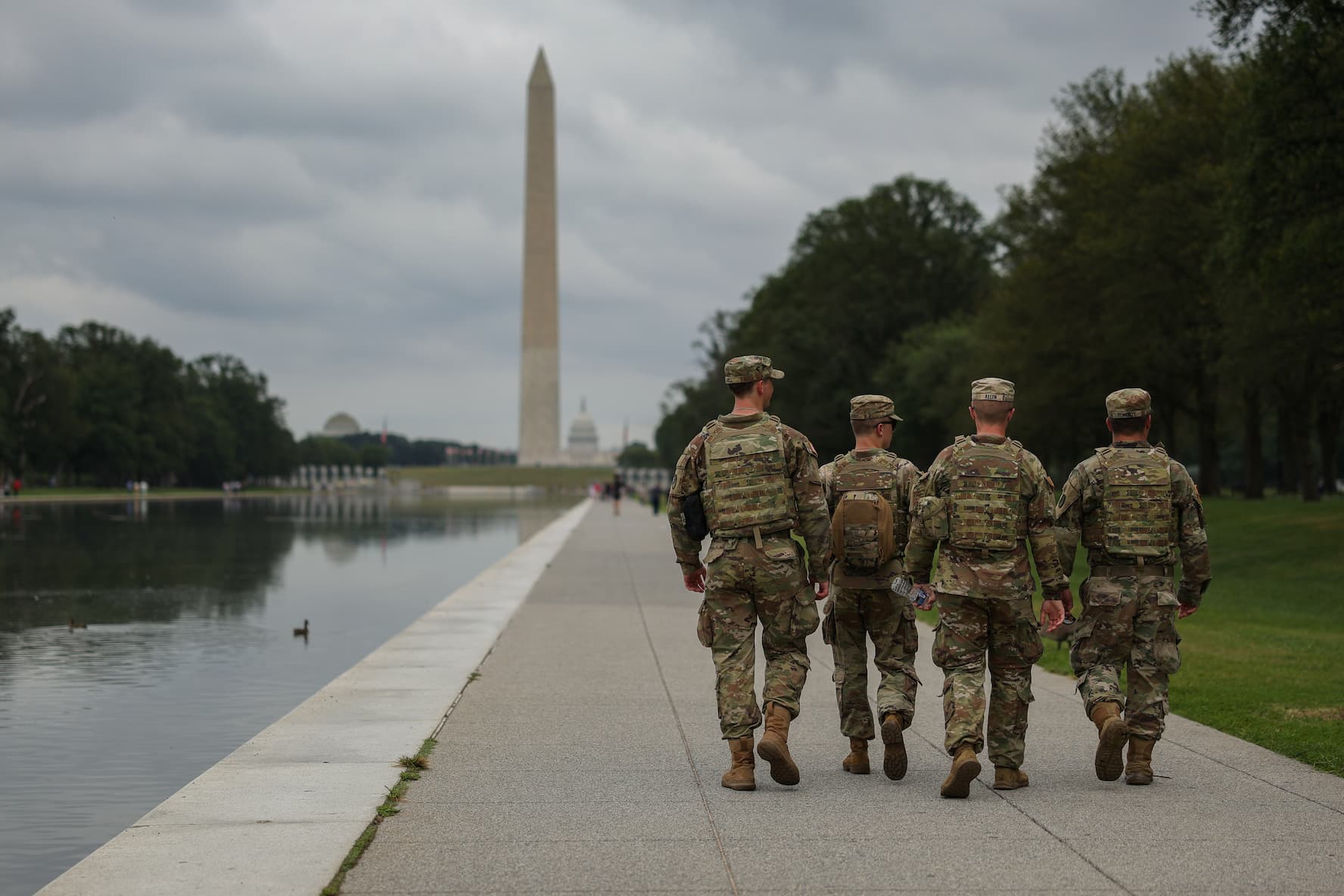
Democrats’ current concerns about government power are likely a reaction to Trump’s extraordinarily active presidency thus far, including a record-high number of executive orders, the use of the military domestically, the unilateral imposition of tariffs, and other major policy changes across the government.
Still, even now, Democrats’ belief that the government is too powerful is lower than the 74% to 82% of Republicans who viewed the government as having too much power during the Obama and Biden administrations. ###Embeddable### Is the Government Doing Too Much? Another aspect of the role of government that Gallup tracks asks the public to say whether the government “is trying to do too many things that should be left to individuals and businesses” or the government “should do more to solve our country’s problems.
” Currently, 51% of Americans say the government is doing too much, while 40% say it is doing too little. This nearly matches the long-term averages. There have been only four times in the past 33 years when the public has chosen the more active government alternative over the “government doing too much” choice.
These occurred in 1992 and 1993 when the government was coming out of a recession, in 2001 after 9/11, and in 2020 during the COVID-19 pandemic. But in each instance, Americans soon drifted back to the long-term pattern of saying the government is doing too much. ###Embeddable### Unlike what is observed on the measure of government power, the percentage of Americans choosing the “government doing too much” alternative dropped by a few points from last year.
This year’s figure is not too far off from what was observed while Joe Biden was president (albeit with a slightly higher percentage now expressing no opinion). Big Partisan Differences Exist in Preferences for Government’s Role There is the expected partisan gap in responses to this question about the government’s role in society.
Throughout the trend, large majorities of Republicans have said the government is trying to do too many things, fluctuating between 62% and 84% (with an average of 73%) since 2001. Many fewer Democrats agree, with an average of 32% (since 2001) saying the government is doing too much and Democratic responses usually within the 20% to 40% range.
This year, both partisan groups are slightly above their long-term averages — 74% of Republicans say the government is doing too much, compared with 34% of Democrats. ###Embeddable### Republicans are, not surprisingly, slightly less likely to say the government is doing too much when a Republican is in the White House (Bush administration and the first Trump term) and somewhat more likely when there is a Democratic president (Obama and Biden administrations).
This year, with a Republican back in office, Republicans are slightly less likely than in 2024 to say the government is doing too much, while Democrats have moved the same amount in the opposite direction. But these changes are nowhere near as great as seen on the measure of government power. Bottom Line In the years since 9/11 began to fade as an influence on public attitudes toward the government, these two questions about the role of government have reflected an underlying and mostly enduring public perception: The federal government has too much power and tries to do too much that should be left to individuals and businesses.
As is true for so many aspects of American life today, preferences about government power and the role of government are strongly partisan. Republicans tend to be the most concerned about the federal government having too much power, while Democrats are usually less so. These underlying historical patterns make the sharp increase in this year’s percentage of Democrats saying the government has too much power all the more notable.
Democrats are, no doubt, reacting to the Trump administration’s actions and unprecedented expansion of the use of government power. Their reactions are much stronger than those during the Bush administration and Trump’s first term. As a result, for the first time in almost two decades, Democrats are more worried than Republicans about the federal government being too powerful.
Democrats’ responses to the question asking about the more general role of government in solving the nation’s problems do not show the same type of change this year. In short, Democrats’ views that the government has too much power have jumped up significantly, while their views that the government is doing too much that should be left to individuals and businesses have remained relatively stable.
Without experimental research, it is impossible to say exactly why the two questions evoke such different reactions. But it may be that even though the “doing too much” question is phrased in terms of what is happening now, the wording of the “government should do more to solve our country’s problems” alternative evokes generally positive reactions from Democrats who interpret it as a general, philosophic principle.
Stay up to date with the latest insights by following @Gallup on X and on Instagram. Learn more about how the Gallup Poll Social Series works. View complete question responses and trends (PDF download). ###Embeddable###
Source coverage
Report Provider: Gallup.com
Author: Frank Newport
Deeper analysis
Full source content
WASHINGTON, D.C. — Does the U.S. government have too much power? The answer to that question, according to the American public, is yes. Sixty-two percent of Americans say the federal government has too much power, with most of the rest saying the government’s power is about right. This latest reading, the first in President Donald Trump’s second term, is up from 51% a year ago and is the highest in Gallup’s trend since 2002, by two percentage points.
The prior high was 60%, recorded during Barack Obama’s second term, in 2013 and 2015. The current figure is also well above the 53% average “too much power” reading since Gallup first asked the question in 2002. Views about government power have shifted significantly over the past 23 years. For the first few years of Gallup’s tracking, from 2002 to 2004, less than half of Americans perceived the government had too much power.
This most likely reflected the more positive views of government and elected leaders after the 9/11 terrorist attacks. Since 2005, “too much power” ratings have consistently been at 50% or higher, mostly within a range of 50% to 60%, with this year’s 62% marking the highest on record. ###Embeddable### Partisan Differences Reflect Both Ideology and Current Political Reality The uptick this year in views that the government has too much power reflects shifts among partisan groups.
Democrats (and Democratic-leaning independents) have become much more likely to say the government has too much power, surging to 66% from 25% in the past year. Republicans have moved in the opposite direction, but to a lesser degree, falling to 58% from 75% last year. As a result, this marks the first time since the years 2003-2007 that Democrats have been more likely than Republicans to say the government has too much power.
Democrats’ concern about government power during the George W. Bush era most likely reflected the expansion of government actions after 9/11 and opposition to the Iraq War. Democrats’ reactions were more muted during Trump’s first term, when 44% to 50% said the federal government was too powerful, only modestly higher than the 36% who said this in Obama’s final year in office.
Democrats’ current concerns about government power are likely a reaction to Trump’s extraordinarily active presidency thus far, including a record-high number of executive orders, the use of the military domestically, the unilateral imposition of tariffs, and other major policy changes across the government.
Still, even now, Democrats’ belief that the government is too powerful is lower than the 74% to 82% of Republicans who viewed the government as having too much power during the Obama and Biden administrations. ###Embeddable### Is the Government Doing Too Much? Another aspect of the role of government that Gallup tracks asks the public to say whether the government “is trying to do too many things that should be left to individuals and businesses” or the government “should do more to solve our country’s problems.
” Currently, 51% of Americans say the government is doing too much, while 40% say it is doing too little. This nearly matches the long-term averages. There have been only four times in the past 33 years when the public has chosen the more active government alternative over the “government doing too much” choice.
These occurred in 1992 and 1993 when the government was coming out of a recession, in 2001 after 9/11, and in 2020 during the COVID-19 pandemic. But in each instance, Americans soon drifted back to the long-term pattern of saying the government is doing too much. ###Embeddable### Unlike what is observed on the measure of government power, the percentage of Americans choosing the “government doing too much” alternative dropped by a few points from last year.
This year’s figure is not too far off from what was observed while Joe Biden was president (albeit with a slightly higher percentage now expressing no opinion). Big Partisan Differences Exist in Preferences for Government’s Role There is the expected partisan gap in responses to this question about the government’s role in society.
Throughout the trend, large majorities of Republicans have said the government is trying to do too many things, fluctuating between 62% and 84% (with an average of 73%) since 2001. Many fewer Democrats agree, with an average of 32% (since 2001) saying the government is doing too much and Democratic responses usually within the 20% to 40% range.
This year, both partisan groups are slightly above their long-term averages — 74% of Republicans say the government is doing too much, compared with 34% of Democrats. ###Embeddable### Republicans are, not surprisingly, slightly less likely to say the government is doing too much when a Republican is in the White House (Bush administration and the first Trump term) and somewhat more likely when there is a Democratic president (Obama and Biden administrations).
This year, with a Republican back in office, Republicans are slightly less likely than in 2024 to say the government is doing too much, while Democrats have moved the same amount in the opposite direction. But these changes are nowhere near as great as seen on the measure of government power. Bottom Line In the years since 9/11 began to fade as an influence on public attitudes toward the government, these two questions about the role of government have reflected an underlying and mostly enduring public perception: The federal government has too much power and tries to do too much that should be left to individuals and businesses.
As is true for so many aspects of American life today, preferences about government power and the role of government are strongly partisan. Republicans tend to be the most concerned about the federal government having too much power, while Democrats are usually less so. These underlying historical patterns make the sharp increase in this year’s percentage of Democrats saying the government has too much power all the more notable.
Democrats are, no doubt, reacting to the Trump administration’s actions and unprecedented expansion of the use of government power. Their reactions are much stronger than those during the Bush administration and Trump’s first term. As a result, for the first time in almost two decades, Democrats are more worried than Republicans about the federal government being too powerful.
Democrats’ responses to the question asking about the more general role of government in solving the nation’s problems do not show the same type of change this year. In short, Democrats’ views that the government has too much power have jumped up significantly, while their views that the government is doing too much that should be left to individuals and businesses have remained relatively stable.
Without experimental research, it is impossible to say exactly why the two questions evoke such different reactions. But it may be that even though the “doing too much” question is phrased in terms of what is happening now, the wording of the “government should do more to solve our country’s problems” alternative evokes generally positive reactions from Democrats who interpret it as a general, philosophic principle.
Stay up to date with the latest insights by following @Gallup on X and on Instagram. Learn more about how the Gallup Poll Social Series works. View complete question responses and trends (PDF download). ###Embeddable###
How this page is built
Goose Pod turns cited reporting into a public episode summary first, then pairs that summary with audio playback so listeners can check the source material before they decide how deeply to engage.
The goal is to make this page useful as a news landing page first, while still giving listeners transcript access, related episodes, and direct links back to the original publishers.