
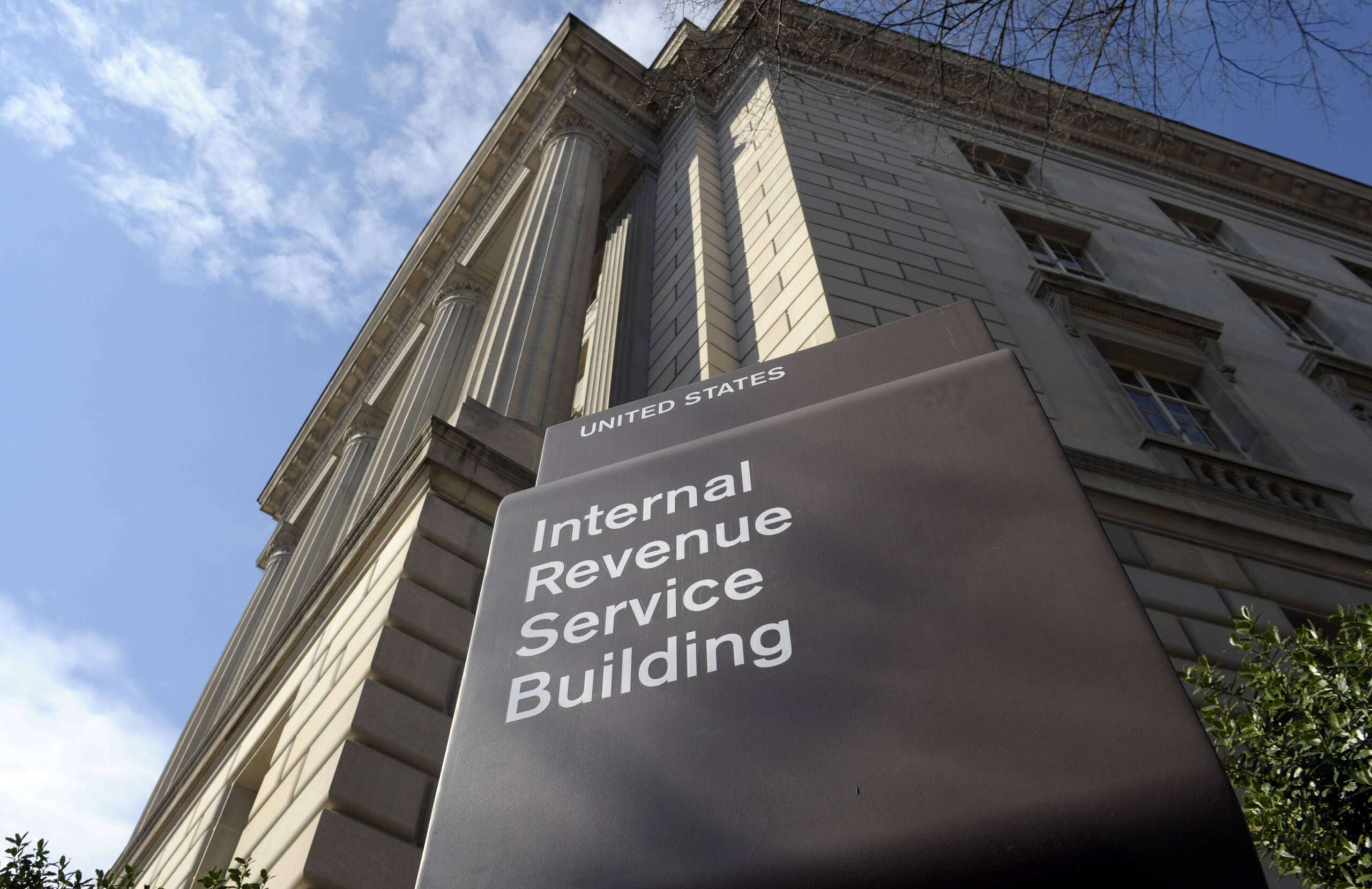
IRS backtracks on back pay guarantee for furloughed employees

IRS backtracks on back pay guarantee for furloughed employees

2025-11-07Politics
--:--
--:--
Aura Windfall
Good evening Norris Tong, and welcome to Goose Pod, your personalized podcast experience. Today is Friday, November 7th. I'm Aura Windfall.
Mask
And I'm Mask. Tonight, we're dissecting a sudden and shocking reversal: the IRS has just backtracked on its guarantee of back pay for furloughed employees.
Aura Windfall
What I know for sure is that for thousands of federal workers, this news feels like the rug has been pulled out from under them. Just yesterday, they had a promise.
Mask
A promise based on a memo. The IRS initially assured its employees, citing the 2019 Government Employee Fair Treatment Act, that they would be compensated after the shutdown. It was clear.
Aura Windfall
But then, almost as quickly as it appeared, that assurance vanished. An employee told Federal News Network the memo was automatically deleted from their inboxes. That feels so... unsettling, doesn't it?
Mask
It's a tactical retreat. The IRS is now deferring to the Office of Management and Budget, the OMB. They floated a draft legal opinion suggesting back pay is no longer automatic.
Aura Windfall
So one moment you have a guarantee, rooted in law, and the next it's just... gone? Replaced with a vague promise that the OMB will provide guidance later. The confusion is palpable.
Mask
It's more than confusion, it's a calculated move. The OMB is reinterpreting the 2019 law, arguing it only applied to that specific shutdown. A novel, if provocative, legal theory.
Aura Windfall
And this comes at a time when the judicial system is already stepping in. A federal judge had to expand a restraining order just to stop the administration from firing federal workers during the shutdown.
Mask
Exactly. Judge Susan Illston's order in San Francisco now protects members of several major unions, including the American Federation of Government Employees. It's a legal firewall against layoffs.
Aura Windfall
It feels like these employees are caught in a storm from all sides. They're facing the threat of furloughs, the possibility of layoffs, and now the loss of guaranteed back pay. Where is the stability for them?
Mask
Stability is a luxury. The administration is using every lever of power it has. By forcing agencies to clarify layoff numbers, the judge is forcing their hand and bringing transparency to the chaos.
Aura Windfall
It's a necessary transparency. But for the individual, hearing "no one knows who's getting paid and who will not" is terrifying. This isn't just policy; it's people's lives and their ability to pay their rent.
Mask
It is. And the contradiction is glaring. The old guidance guaranteeing pay is still on the IRS website, even as they disavow it in new memos. It's a masterclass in bureaucratic whiplash.
Aura Windfall
To truly understand the heart of this issue, we have to go back to the 'why'. Why was this guarantee of back pay created in the first place? It was born from a period of intense struggle.
Mask
The 35-day government shutdown at the end of 2018. The longest in U.S. history. It was a disaster for federal employees, many of whom were forced to work without pay or were sent home indefinitely.
Aura Windfall
Exactly. What I know for sure is that out of that collective pain came a moment of clarity and unity. In January 2019, Congress acted. They passed the Government Employee Fair Treatment Act.
Mask
And they passed it unanimously. The Senate passed it on a voice vote without a single objection. It was then signed into law by President Trump himself. This wasn't some partisan squabble; it was a consensus.
Aura Windfall
It was a promise to every public servant that they would never again be used as pawns in a political game. The law was designed to provide certainty, to say, "We value your work, and you will be paid for it."
Mask
The language was explicit. It applied to "any lapse in appropriations that begins on or after December 22, 2018." The intent was to make back pay automatic for all future shutdowns, removing the need for Congress to approve it each time.
Aura Windfall
Think about the sheer scale of people this affects. During the 2013 shutdown, about 850,000 federal employees were furloughed. In the 2018-2019 shutdown, it was around 380,000 furloughed and another 420,000 working without pay.
Mask
These aren't abstract numbers. These are people at the Treasury Department, Health and Human Services, the CDC. We're talking about scientists, air traffic controllers, and thousands of others who keep the country running.
Aura Windfall
And the unions fought hard for this protection. Organizations like AFGE, the American Federation of Government Employees, saw this law as a monumental victory for workers' rights and financial security.
Mask
Which is why the current administration's move is so disruptive. They're not just challenging a policy; they're challenging a law born from bipartisan agreement and recent memory. They're effectively trying to erase the solution to the last crisis.
Aura Windfall
It's a direct contradiction of what even their own agencies have been saying. The Office of Personnel Management's own shutdown guidance, updated just last year, still clearly states that furloughed workers will get back pay.
Mask
So you have the OPM, the government's HR department, saying one thing, and the OMB, the budget office, saying the complete opposite. It's an internal power struggle being played out at the expense of the workforce.
Aura Windfall
This act was supposed to be a floor, a baseline of decency and respect for federal workers. It was about acknowledging that they have mortgages, tuition bills, and groceries to buy, just like everyone else.
Mask
But in a shutdown, leverage is everything. The administration sees an opportunity to redefine the terms. By creating this uncertainty, they apply immense pressure not just on the workers, but on Congress to bend to their will on budget negotiations.
Mask
Let's call this what it is: a high-stakes legal gambit. The OMB is floating a "novel interpretation" of the 2019 law. They are essentially arguing that the guarantee had an unwritten expiration date.
Aura Windfall
But how can that be? The text seems so clear. Congressional leaders from both parties are pushing back, hard. House Speaker Mike Johnson said his understanding is that the law dictates they get paid. It's tradition and statutory law.
Mask
Tradition doesn't hold up in a knife fight. The OMB's draft legal opinion is their weapon. They're forcing a new debate, arguing that lawmakers must now explicitly approve back pay in every single stopgap spending bill.
Aura Windfall
It feels like a betrayal of the spirit of the law. Senator Chris Van Hollen put it so directly: "The law is the law." He co-authored that legislation to prevent this very kind of uncertainty.
Mask
And Senator Tim Kaine called it a "thuggish intimidation tactic." He warned the OMB to prepare to face them in court. The battle lines are being drawn between the executive branch's budget office and the legislative branch.
Aura Windfall
What I know for sure is that this isn't just a legal disagreement; it's a fundamental conflict of values. On one side, you have the principle that public servants should be protected from political crossfire.
Mask
And on the other, you have the administration's position that every tool must be available during a negotiation, including the financial security of its own workforce. They're willing to risk legal challenges for that leverage.
Aura Windfall
Matt Biggs, the president of a major federal union, said the OMB director can't just "unilaterally ignore a law that overwhelmingly passed both chambers of Congress and was signed by President Trump himself."
Mask
But they are. They're creating a reality where the law is whatever their lawyers say it is today. They've already directed agencies like the EPA to update their shutdown guidance, scrubbing any mention of the 2019 Fair Treatment Act.
Aura Windfall
So they're erasing the evidence of the promise. The old EPA guidance literally had a question: "Am I guaranteed pay once the government reopens?" And the answer was a simple, clear "Yes." Now, that's gone.
Mask
It's a clean slate. This creates a direct clash. Will the courts side with the clear text and intent of the 2019 law, or will they grant deference to the executive branch's interpretation of its own operational funding?
Aura Windfall
Beyond the legal theories and political strategy, the impact on the ground is immediate and deeply human. We're talking about growing uncertainty and fear for hundreds of thousands of families.
Mask
The direct economic impact of a shutdown itself is often debated. Some economists argue it doesn't really "move the needle" for the overall economy in the short term. But that misses the point entirely.
Aura Windfall
It absolutely does. Because for the individual, this isn't about GDP. It's about their personal economy. It’s the stress of not knowing if you can make your next mortgage payment or afford your child's medication.
Mask
That's the real leverage. The administration knows that the financial precarity of its workforce is a powerful tool. The uncertainty itself is the weapon. It's designed to cause distress.
Aura Windfall
What I know for sure is that this erodes the very foundation of public service. How can you attract and retain talented, dedicated people if you treat their livelihoods as a bargaining chip? It's incredibly demoralizing.
Mask
It also stalls the functions of government. With thousands of workers furloughed, services grind to a halt. We saw this with the USDA, where bridge payments for farmers were ready to go but couldn't be processed because the department was shut down.
Aura Windfall
And even for those deemed "essential" and forced to work, they're doing so without a paycheck. They have to show up every day, performing critical duties, while wondering how they'll pay their bills.
Mask
This also has a ripple effect. Federal contractors, for instance, have historically not received back pay. When their federal projects are paused, they're often just out of luck. The financial pain spreads beyond the direct employees.
Aura Windfall
Ultimately, the greatest impact is the erosion of trust. Trust between employees and their employer, the government. And trust from the public that the government can function effectively and treat its people with dignity.
Mask
So what's the endgame? The future of back pay now rests on a knife's edge. The OMB has successfully muddied the waters, turning what was a guarantee into a question that must be re-litigated every time.
Aura Windfall
It seems the most likely path forward is through the courts and through intense public and political pressure. The unions have already shown they are willing to sue over illegal firings; they will certainly challenge this.
Mask
Congress is in a tough spot. The OMB's interpretation forces them to add back pay provisions to every funding bill, which could become a political football in an already divided environment.
Aura Windfall
But there does seem to be some bipartisan agreement that this is a line that shouldn't be crossed. Republican Senator John Kennedy said he expects they will provide back pay, just as they always have.
Mask
That's the optimistic view. The pessimistic one is that this tactic works, giving the administration more leverage in future budget fights. It sets a new, more ruthless precedent for how shutdowns are conducted.
Aura Windfall
What I know for sure is that this moment calls for a reaffirmation of the principles in the 2019 Act. Perhaps even stronger legislation is needed to close any perceived loopholes the OMB is trying to exploit.
Aura Windfall
The anxiety this reversal has created is undeniable. It's a stark reminder of the real people at the heart of these political battles. What I know for sure is that their service deserves our gratitude and respect.
Mask
That's all the time we have for today. Thank you for listening to Goose Pod, Norris Tong. We'll see you tomorrow.

The IRS has reversed its guarantee of back pay for furloughed employees, citing a new interpretation of the 2019 Government Employee Fair Treatment Act. This move, driven by the OMB, creates uncertainty and distress for federal workers, potentially leading to legal challenges and a renewed debate over worker protections during shutdowns.

IRS backtracks on back pay guarantee for furloughed employees

Read original at Federal News Network

The IRS is walking back guidance it recently sent to furloughed employees that assured them that they are guaranteed back pay once the government shutdown ends. The agency, in its latest notice, is deferring to the Office of Management and Budget, which on Tuesday floated the possibility that furloughed federal employees would not be guaranteed back pay.

Legislation that President Trump signed in January 2019, which ended a record 35-day government shutdown, guaranteed back pay to these employees once any shutdown ends. A copy of the notice, shared with Federal News Network, states “an earlier memo circulated on furlough guidance incorrectly stated the nature of the Government Employee Fair Treatment Act of 2019, as it relates to compensation for non-pay and non-duty status.

” “The Office of Management and Budget will provide guidance on this issue, and you will be updated accordingly,” the IRS wrote. An IRS employee told Federal News Network that earlier guidance emailed to employees on Wednesday was automatically deleted from their inboxes by Thursday. Federal News Network has reached out to OMB and the IRS for comment.

Even though the IRS is backtracking on its backpay guarantee, earlier guidance guaranteeing back pay is still available on its website providing shutdown guidance to employees. The IRS told furloughed employees on Wednesday that, “although you will be placed in non-pay and non-duty status during the furlough, the Government Employee Fair Treatment Act of 2019 requires employees of the federal government who are furloughed or required to work during a lapse in appropriations to be compensated for the period of the lapse.

” “The employees must be compensated on the earliest date possible after the lapse ends, regardless of scheduled pay dates,” the notice stated. OMB circulated a draft legal opinion on Tuesday stating that furloughed federal employees will no longer be automatically guaranteed back pay. Instead, OMB argued that lawmakers must explicitly approve back pay for furloughed employees in a stopgap spending bill.

OMB’s memo immediately provoked bipartisan pushback from congressional leaders, and attorneys told Federal News Network that the proposal would likely come under legal scrutiny. House Speaker Mike Johnson (R-La.) told reporters on Wednesday that “it’s my understanding that the law is that they would be paid.

” “There is some other legal analysis that’s floating around. I haven’t yet had time to dig into and read that. But it has always been the case — that is, tradition and I think statutory law — that federal employees be paid,” Johnson said. “And that’s my position. I think they should be. They should not be subjected to harm and financial dire straits.

” An IRS employee told Federal News Network that this latest update was “really confusing and stressful.” “No one knows who’s getting paid and who will not,” the employee said. This is a developing story and will be updated. Copyright © 2025 Federal News Network. All rights reserved. This website is not intended for users located within the European Economic Area.

Analysis

Conflict+
Related Info+
Core Event+
Background+
Impact+
Future+

Related Podcasts