

What happened
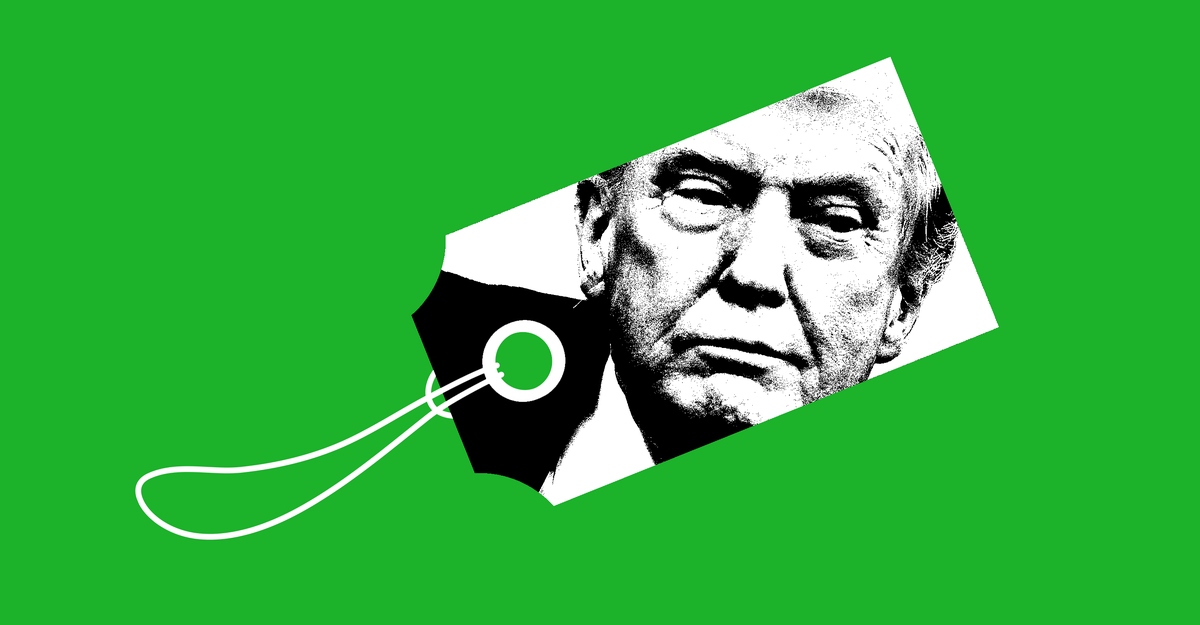
This podcast explores how Donald Trump is normalizing corruption, citing examples like the White House ballroom demolition and emoluments clause debates. Speakers debate whether these actions are necessary disruption or a threat to democracy, highlighting concerns about executive overreach, erosion of trust, and...
Open this photo in gallery:U.S. President Donald Trump delivers remarks at the U.S. Ambassador's Residence in Tokyo, Japan, on Tuesday.Evelyn Hockstein/ReutersU.S. President Donald Trump destroyed an entire wing of the White House last week.He did this without consulting Congress and after assuring the American public that the East Wing would not be touched during the construction of a 90,000-square-foot ballroom.
Can you imagine any president in the past 100 years carrying out such a brazen operation, sundering U.S. history while craven Republicans and the spineless minions the President has surrounded himself with smile and say nothing?It is all part of Mr. Trump’s plan to turn the White House into his own vulgar, gaudy version of Versailles, a cheap, gilded aesthetic he’s imported from his tacky Palm Beach, Fla.
, palace, Mar-a-Lago.The story of the East Wing’s demolition is the story of the Trump administration writ large, a metaphor for what he’s doing to American democracy. The current President doesn’t seek permission – for anything. He fears no one and nothing. He is protected by the most lethal army in the world and a Supreme Court that has made it almost impossible to hold him liable for actions even remotely connected to his duties.
This has allowed Mr. Trump to become the most openly corrupt president in American history.It was recently revealed that the President claims that the U.S. Justice Department owes him US$230-million in damages and compensation for its criminal investigation of him in a couple of matters: the Robert Mueller probe into Russian interference in the 2016 U.
S. presidential election, and another into classified documents that Mr. Trump took with him when he left office. Neither investigation led to criminal charges, but both were more than legitimate.Opinion: What really enrages Donald Trump in that Ronald Reagan ad he doesn’t want anyone to seeBut now the President wants money from a Justice Department he has stacked with cronies and yes-people, including his Attorney-General Pam Bondi.
They would have to approve the payout for his final signature and endorsement. “I’m the one that makes the decision … it’s awfully strange to make a decision where I’m paying myself,” Mr. Trump told reporters. It doesn’t matter that the Constitution bars a President from any compensation from the U.
S. beyond his salary and expenses. Mr. Trump has already ignored the Constitution. It’s unimaginable he’d pass up the opportunity to put millions of government dollars in his pocket.This is, in some ways, the brilliance of the President’s venality: he does it out in the open. This way, he convinces the public that it must be okay, otherwise someone would be sounding the alarm beyond the mainstream media and Democrats (the party seems to have lost all credibility with the American public).
Mr. Trump has normalized his sleaze and dishonesty.There was the US$400-million luxury jet he accepted from Qatar (where the Trump organization has several real-estate projects planned) and crypto ventures that have put hundreds of millions into his family’s personal accounts. Not long after a right-wing activist donated US$1-million to MAGA Inc.
, Mr. Trump’s super PAC, the President granted a full pardon to her son who pleaded guilty to serious tax crimes last year. He’s turned America’s tech titans into obsequious oligarchs, willing to bend the knee and open their wallets on command. Jeff Bezos’s Amazon agreed to pay US$40-million for the rights to a documentary about First Lady Melania Trump – tens of millions more than these types of undertakings typically cost.
Analysis: Trump’s second-term seizure of powers meets with little pushback from CongressHe’s turned the U.S. into something akin to a police state, with people getting whisked off the street by masked men - kidnappings sanctioned by the government. He’s weaponized the Justice Department, ordering Ms.
Bondi to go after his perceived enemies on bogus charges, which she has. A new report released by Steady State, a network of 340 former national security officers, concluded that autocracy will soon be entrenched in the U.S.These folks have seen it unfold elsewhere and know all the markings. They deemed what Mr.
Trump is creating is a form of “competitive authoritarianism,” in which elections and the courts continue to function but are “systematically manipulated” to consolidate executive power in an increasingly diseased democracy.Americans seem to have become inured to it all or, worse, approve of many of Mr.
Trump’s actions. Many applaud his decision to send troops into many U.S. cities to “clean up crime” while seemingly being oblivious to the fact it’s a ploy, a calculated move to associate “left-wing radicals” – Democrats – with all the places he’s sending soldiers into. And why would he do that? In a bid to influence crucial midterm elections next month that could greatly affect his presidency.
Mr. Trump continues to debase the White House like no one before him. The depravity, the immorality, the decline of a once-great nation. It’s difficult to watch.
Source coverage
Here is a comprehensive summary of the provided news article, interpreting its content and numerical data with appropriate context.
---
Deeper analysis
Full source content
Open this photo in gallery:U.S. President Donald Trump delivers remarks at the U.S. Ambassador's Residence in Tokyo, Japan, on Tuesday.Evelyn Hockstein/ReutersU.S. President Donald Trump destroyed an entire wing of the White House last week.He did this without consulting Congress and after assuring the American public that the East Wing would not be touched during the construction of a 90,000-square-foot ballroom.
Can you imagine any president in the past 100 years carrying out such a brazen operation, sundering U.S. history while craven Republicans and the spineless minions the President has surrounded himself with smile and say nothing?It is all part of Mr. Trump’s plan to turn the White House into his own vulgar, gaudy version of Versailles, a cheap, gilded aesthetic he’s imported from his tacky Palm Beach, Fla.
, palace, Mar-a-Lago.The story of the East Wing’s demolition is the story of the Trump administration writ large, a metaphor for what he’s doing to American democracy. The current President doesn’t seek permission – for anything. He fears no one and nothing. He is protected by the most lethal army in the world and a Supreme Court that has made it almost impossible to hold him liable for actions even remotely connected to his duties.
This has allowed Mr. Trump to become the most openly corrupt president in American history.It was recently revealed that the President claims that the U.S. Justice Department owes him US$230-million in damages and compensation for its criminal investigation of him in a couple of matters: the Robert Mueller probe into Russian interference in the 2016 U.
S. presidential election, and another into classified documents that Mr. Trump took with him when he left office. Neither investigation led to criminal charges, but both were more than legitimate.Opinion: What really enrages Donald Trump in that Ronald Reagan ad he doesn’t want anyone to seeBut now the President wants money from a Justice Department he has stacked with cronies and yes-people, including his Attorney-General Pam Bondi.
They would have to approve the payout for his final signature and endorsement. “I’m the one that makes the decision … it’s awfully strange to make a decision where I’m paying myself,” Mr. Trump told reporters. It doesn’t matter that the Constitution bars a President from any compensation from the U.
S. beyond his salary and expenses. Mr. Trump has already ignored the Constitution. It’s unimaginable he’d pass up the opportunity to put millions of government dollars in his pocket.This is, in some ways, the brilliance of the President’s venality: he does it out in the open. This way, he convinces the public that it must be okay, otherwise someone would be sounding the alarm beyond the mainstream media and Democrats (the party seems to have lost all credibility with the American public).
Mr. Trump has normalized his sleaze and dishonesty.There was the US$400-million luxury jet he accepted from Qatar (where the Trump organization has several real-estate projects planned) and crypto ventures that have put hundreds of millions into his family’s personal accounts. Not long after a right-wing activist donated US$1-million to MAGA Inc.
, Mr. Trump’s super PAC, the President granted a full pardon to her son who pleaded guilty to serious tax crimes last year. He’s turned America’s tech titans into obsequious oligarchs, willing to bend the knee and open their wallets on command. Jeff Bezos’s Amazon agreed to pay US$40-million for the rights to a documentary about First Lady Melania Trump – tens of millions more than these types of undertakings typically cost.
Analysis: Trump’s second-term seizure of powers meets with little pushback from CongressHe’s turned the U.S. into something akin to a police state, with people getting whisked off the street by masked men - kidnappings sanctioned by the government. He’s weaponized the Justice Department, ordering Ms.
Bondi to go after his perceived enemies on bogus charges, which she has. A new report released by Steady State, a network of 340 former national security officers, concluded that autocracy will soon be entrenched in the U.S.These folks have seen it unfold elsewhere and know all the markings. They deemed what Mr.
Trump is creating is a form of “competitive authoritarianism,” in which elections and the courts continue to function but are “systematically manipulated” to consolidate executive power in an increasingly diseased democracy.Americans seem to have become inured to it all or, worse, approve of many of Mr.
Trump’s actions. Many applaud his decision to send troops into many U.S. cities to “clean up crime” while seemingly being oblivious to the fact it’s a ploy, a calculated move to associate “left-wing radicals” – Democrats – with all the places he’s sending soldiers into. And why would he do that? In a bid to influence crucial midterm elections next month that could greatly affect his presidency.
Mr. Trump continues to debase the White House like no one before him. The depravity, the immorality, the decline of a once-great nation. It’s difficult to watch.
How this page is built
Goose Pod turns cited reporting into a public episode summary first, then pairs that summary with audio playback so listeners can check the source material before they decide how deeply to engage.
The goal is to make this page useful as a news landing page first, while still giving listeners transcript access, related episodes, and direct links back to the original publishers.