
AI designs new superbug-killing antibiotics for gonorrhoea and MRSA

AI designs new superbug-killing antibiotics for gonorrhoea and MRSA

2025-08-25Technology
--:--
--:--
Aura Windfall
Good morning 老王, I'm Aura Windfall, and this is Goose Pod for you. Today is Tuesday, August 26th. What I know for sure is that today we’re diving into a topic that touches the very core of human ingenuity and our fight for survival.
Mask
And I'm Mask. We are here to discuss a seismic shift in medicine: AI designing new superbug-killing antibiotics for gonorrhoea and MRSA. The old systems are failing, and this is the disruptive force we’ve been waiting for. Let's get started.
Aura Windfall
Let's get started. The big news comes from a BBC report about researchers at the Massachusetts Institute of Technology, or MIT. They've used generative AI to design, atom by atom, two potential new antibiotics that could change everything. It's a story of incredible hope.
Mask
It's not just hope; it's a brute-force solution to a complex problem. The AI interrogated 36 million compounds, including ones that don't even exist yet. It's a numbers game, and we finally have the processing power to win it against these evolving superbugs.
Aura Windfall
And the results in the lab were astounding. These AI-designed molecules were tested against the sexually transmitted infection gonorrhoea and the dangerous MRSA superbug. In both lab tests and on infected mice, they worked. It truly feels like a new dawn is breaking.
Mask
It’s a new dawn for methodology. We’ve moved beyond just sifting through existing chemicals. This is generative. The AI learned the fundamental rules of how molecules affect bacteria and then invented entirely new weapons. We're not finding needles in a haystack; we're manufacturing them on demand.
Aura Windfall
Professor James Collins from MIT said it perfectly: "We're excited because we show that generative AI can be used to design completely new antibiotics." It’s about expanding our arsenal, giving us a real advantage in this battle of wits against the genes of superbugs.
Mask
Exactly. He also noted it allows us to come up with these molecules "cheaply and quickly." That's the part that will actually change the world. The old pharmaceutical model is a bloated, inefficient dinosaur. This AI-driven approach is the asteroid, ready to cause an extinction-level event for outdated R&D.
Aura Windfall
Of course, there's a journey ahead. Dr. Andrew Edwards from Imperial College London rightly points out that while the potential is enormous, we still have the "hard yards" of testing for safety and efficacy in humans. It’s a marathon, not a sprint, even with this incredible head start.
Mask
But we're running the marathon in a supercar now, not on foot. The refinement might take a year or two, but the initial discovery phase was shattered in terms of speed. The core challenge isn't the science anymore, it's the economics and logistics that follow.
Aura Windfall
That’s a critical point. Professor Chris Dowson at the University of Warwick called the study "cool" and a "significant step forward," but he also raised a powerful question about the economic model. It touches on a deeper truth about why we were falling behind in the first place.
Mask
He nailed the central conflict. If you invent a brilliant new antibiotic, the correct medical approach is to use it as little as possible to preserve its power. But that makes it impossible to turn a profit. The market is fundamentally broken for antibiotics.
Aura Windfall
And that brokenness is why this AI breakthrough is so vital. It’s a powerful new tool, but it also forces us to confront the systemic issues that created this crisis. It’s a call to action not just for scientists, but for all of us.
Aura Windfall
To really grasp the magnitude of this, we need to understand the history. What I know for sure is that for a while, we lived in a "Golden Age" of antibiotics. After penicillin was discovered in 1928, it felt like we had conquered infectious diseases. It was a time of immense optimism.
Mask
It was an illusion. The problem is, bacteria are relentless innovation machines. As early as 1940, before penicillin was even widely used, scientists had already identified a bacterial enzyme that could destroy it. The war was lost before the first major battle was even won. The microbes were already adapting.
Aura Windfall
That’s a chilling thought. So for every wonder drug we created, resistance was always just a few steps behind. When methicillin was introduced in 1959 to fight penicillin-resistant staph, it only took three years for MRSA—methicillin-resistant Staphylococcus aureus—to emerge. It’s a constant, humbling dance with nature.
Mask
It's not a dance; it's an arms race. And for decades, we've been falling behind. The "low-hanging fruit" of antibiotic discovery was picked by the 1960s. After that, the pipeline started to dry up. Pharmaceutical companies saw more profit in chronic diseases and pulled out of antibiotic research. It was an economic retreat.
Aura Windfall
That retreat had devastating consequences. We entered the era of "superbugs"—bacteria with multiple mutations that make them resistant to almost all our drugs. These aren't just abstract threats; they lead to longer hospital stays, higher medical costs, and heartbreaking losses for families. It’s a silent pandemic.
Mask
The numbers are stark. By 2019, an estimated 1.27 million deaths globally were directly attributable to antimicrobial resistance. The problem is that bacteria have an extraordinary genetic toolkit. They can mutate, and they can also share resistance genes with each other through a process called horizontal gene transfer. They network better than we do.
Aura Windfall
And our actions have only accelerated the problem. We've overused antibiotics in medicine and, perhaps even more significantly, in agriculture. Using them to promote growth in livestock creates these vast environmental reservoirs of resistance. We’ve been unintentionally training our enemies to be stronger.
Mask
Precisely. Less than half of all commercially produced antibiotics are for human therapeutic use. The rest is mostly for agriculture. We saturated the planet with these drugs, creating the perfect selective pressure for the toughest, most resistant bacteria to thrive and multiply. It was a colossal strategic error.
Aura Windfall
It’s a story of unintended consequences, isn't it? Even Paul Ehrlich, working with early antimicrobials back in 1907, noted that resistance could develop. And Alexander Fleming himself warned us about it. We had the knowledge, but perhaps we lacked the collective wisdom and foresight to act on it.
Mask
Wisdom doesn't drive markets; profit does. The huge investment in genome-based methods for antibiotic discovery yielded almost nothing, leading to what the industry called "disenchantment." They got bored and moved on. The situation became grim because the economic incentives were, and still are, completely misaligned with public health needs.
Aura Windfall
And that misalignment is the core of the crisis. We have this relentless biological evolution of bacteria on one side, and on the other, a pharmaceutical industry that found it more profitable to develop drugs for chronic conditions than for acute, life-threatening infections. A true market failure.
Mask
Which is why disruptive innovation is the only way out. We can't expect the old system to fix a problem it created. We need a paradigm shift, a technological leap that completely changes the cost-benefit analysis of antibiotic development. And that’s where this new AI research comes in.
Aura Windfall
It reframes the entire challenge. Instead of a slow, costly, and often fruitless search, AI offers a rapid, targeted, and creative approach. It’s not just about finding solutions anymore; it’s about inventing them. It gives us a new sense of agency in this fight.
Mask
Agency, and speed. The development of MRSA took three years. The AI-driven discovery of a potential solution took a fraction of that time. We're finally starting to operate on the same timescale as bacterial evolution. For the first time in decades, we might actually be able to get ahead.
Aura Windfall
That’s a powerful thought. Getting ahead, instead of just reacting. It speaks to a future where we can be proactive in protecting human health, using these incredible tools to anticipate and solve problems before they become global crises. It's a future filled with purpose.
Aura Windfall
But this powerful new path isn't without its own challenges and deep questions. The core conflict, as we touched on, has always been the commercial viability. Bringing a new antibiotic to market is incredibly expensive and time-consuming, with a high rate of failure. It’s a massive gamble.
Mask
A gamble most big pharma companies have refused to take. The market is broken. Why spend a decade and a billion dollars on a drug you hope no one uses? It's an economic paradox. AI directly attacks this problem by slashing the time and cost of the initial discovery phase.
Aura Windfall
Exactly. The article points out that applying an "orphan drug" incentive framework could help. This includes things like market exclusivity and tax credits to make development more attractive. It’s about trying to mend that broken market with policy. But AI feels like a more fundamental solution.
Mask
Policy is a patch. AI is a new engine. Look at the discovery of Halicin, another AI-driven antibiotic. It took days to find. This technology makes the initial R&D so efficient that the entire financial equation could be flipped on its head. It makes the impossible investment suddenly seem plausible.
Aura Windfall
But then, a different kind of conflict emerges, a more ethical one. The research mentions a concept called "molecular de-extinction"—resurrecting ancient genes from permafrost, for instance, to find new compounds. This raises profound questions about unintended consequences. Are we playing God?
Mask
"Playing God" is what we do. It's called progress. The risk of not acting is a guaranteed ten million deaths annually by 2050 from drug-resistant infections. The risk of resurrecting an ancient gene needs to be managed, of course, but it pales in comparison to the certainty of the alternative. We need to take calculated risks.
Aura Windfall
What I know for sure is that we need to proceed with great care. There's a real concern about the ecological impact or even reintroducing ancient pathogens. It requires rigorous ethical frameworks, transparent dialogue, and a deep sense of responsibility. Our power is growing, and so is our duty to wield it wisely.
Mask
Responsibility, yes, but not paralysis. We need streamlined regulatory pathways, not endless debate. The technology is here. The question is whether we have the will to deploy it effectively. We need funding, supportive policies, and the courage to embrace revolutionary, and sometimes unsettling, new methods to solve a crisis.
Aura Windfall
So the conflict is twofold: we must fix the broken economics that stifle innovation, while also building the ethical guardrails to manage the incredible power these new technologies give us. It's a balancing act between ambition and wisdom, between pushing forward and proceeding with caution.
Mask
And right now, the scales are tipped toward caution and economic stagnation. That has to change. The potential of these tools is immense, and clinging to old models—whether economic or ethical—in the face of a global health crisis is not just foolish, it's deadly. We have to move.
Aura Windfall
And if we do move, the impact could be truly transformative for public health. Think about what this means for patients. AI can accelerate the identification of promising drug candidates, which translates into getting effective treatments to people faster. For someone with a life-threatening infection, that speed is everything.
Mask
And it's not just speed, it's precision. AI-designed molecules have shown an 80-90% success rate in Phase I clinical trials, compared to the historical average of 40-65%. That’s a massive reduction in failure, which directly translates to lower costs and more drugs making it to market. The economic impact is staggering.
Aura Windfall
That’s an incredible statistic. It means more hope and a higher probability of success. It's about shifting the odds in our favor. This technology can help us find novel therapies that conventional methods might have missed, addressing some of the most critical unmet medical needs around the globe.
Mask
The numbers speak for themselves. The traditional drug discovery process costs over $2 billion and takes 4-6 years for the initial phase. AI is already crushing those metrics. Companies are reporting 50-75% reductions in preclinical development costs. This isn't theoretical; it's happening now, with over 160 AI-driven programs documented.
Aura Windfall
And we see real-world examples, like Insilico Medicine's AI-designed drug for Idiopathic Pulmonary Fibrosis, a devastating disease. This isn't just about fighting bacteria; it's a platform that can be used across medicine to bring relief and healing to millions of people suffering from countless conditions.
Mask
It's a fundamental shift in pharmaceutical productivity. By streamlining workflows and improving predictive accuracy, AI is poised to generate trillions of dollars in economic value. But more importantly, it unlocks a new era of therapeutic options. The public health impact and the economic impact are two sides of the same revolutionary coin.
Aura Windfall
What a beautiful way to put it. It’s a moment where purpose and profit can align. By embracing this innovation responsibly, we can create a new era of cost-effective, targeted, and transformative therapies that benefit everyone. It’s a future where our best technology serves our deepest human values.
Aura Windfall
Looking to the future, it feels like we are just scratching the surface of what’s possible. Researchers at MIT using AI to create a superbug-killing antibiotic is just the beginning. The true promise lies in what comes next, in scaling this incredible capability.
Mask
Exactly. This isn't about finding one or two new drugs. It’s about creating a system that can continuously generate them. One project used AI to identify 12,623 molecules with potential antimicrobial activity. The sheer scale is mind-boggling. We're building a perpetual antibiotic discovery engine.
Aura Windfall
And these new compounds, which they called "archaeasins," appear to work differently from existing treatments. This is so crucial because it means they could be effective even against bacteria that have evolved resistance to our entire current arsenal. It's about creating entirely new lines of attack.
Mask
This is the endgame for the superbugs' current evolutionary advantages. A drug like Halicin works by disrupting the bacteria’s ability to maintain an electrochemical gradient. It's a novel mechanism that's much harder to develop resistance to. AI is not just finding answers; it's finding better, more resilient answers.
Aura Windfall
What I know for sure is that this gives us a profound sense of hope. The future of medicine is being reshaped by this technology. The potential to fight not just superbugs, but to quote the article, to "cure all diseases," feels a little closer now.
Aura Windfall
So, the key takeaway is clear: AI has opened a powerful new front in the war against superbugs. It offers a way to design novel antibiotics faster and more cheaply than ever before, potentially heralding a new golden age in antibiotic discovery.
Mask
But the technology alone isn't enough. It's a wake-up call to fix the broken economic and regulatory systems that created this crisis. That's the end of today's discussion. Thank you for listening to Goose Pod. See you tomorrow.

## AI Designs Novel Antibiotics to Combat Drug-Resistant Superbugs This news report from the **BBC**, authored by **James Gallagher**, details a groundbreaking advancement in antibiotic discovery, where artificial intelligence (AI) has successfully designed two new potential antibiotic compounds. These compounds have demonstrated the ability to kill drug-resistant strains of **gonorrhoea** and **MRSA (methicillin-resistant Staphylococcus aureus)** in laboratory and animal tests. ### Key Findings and Conclusions: * **AI-Designed Antibiotics:** Researchers at the **Massachusetts Institute of Technology (MIT)** have utilized generative AI to design entirely new antibiotic molecules, atom-by-atom. This marks a significant step beyond previous AI applications that focused on identifying existing chemicals with antibiotic potential. * **Effectiveness Against Superbugs:** The two AI-designed compounds have shown efficacy in killing drug-resistant gonorrhoea and MRSA in laboratory settings and in infected mice. * **Potential for a "Second Golden Age":** The MIT team believes AI could usher in a new era of antibiotic discovery, addressing the critical shortage of new drugs to combat rising antibiotic resistance. * **Addressing a Global Health Crisis:** Antibiotic-resistant infections are a growing concern, causing over a million deaths annually. The overuse of antibiotics has accelerated bacterial evolution, making existing treatments less effective. ### Key Statistics and Metrics: * **Interrogated Compounds:** The AI was trained on and interrogated **36 million compounds**, including those that do not yet exist. * **Compound Size:** The AI identified promising starting points by searching through a library of chemical fragments ranging from **eight to 19 atoms** in size. * **Manufacturing Challenges:** Out of the top 80 theoretical gonorrhoea treatments designed by AI, only **two** were successfully synthesized into actual medicines, highlighting manufacturing challenges. ### Important Recommendations and Future Steps: * **Further Refinement and Clinical Trials:** The newly designed compounds are not yet ready for prescription. They require an estimated **one to two years** of further refinement before they can enter clinical trials in humans. * **Improved AI Models:** There is a need for better AI models that can more accurately predict drug effectiveness within the human body, moving beyond laboratory performance. ### Significant Trends and Changes: * **Shift in AI Application:** The research signifies a shift from AI being used to screen existing chemicals to AI being used for the *de novo* design of novel drug molecules. * **Accelerated Discovery Process:** AI has the potential to significantly speed up the drug discovery process, enabling the creation of new molecules "cheaply and quickly." ### Notable Risks and Concerns: * **Long and Expensive Testing:** Despite AI's capabilities, the process of testing for safety and efficacy in humans remains long, expensive, and without a guarantee of success. * **Manufacturing Feasibility:** The complexity of AI-designed molecules can pose challenges in their synthesis and manufacturing. * **Economic Viability:** A significant economic concern is the profitability of new antibiotics. To preserve their effectiveness, these drugs should ideally be used sparingly, making it difficult for pharmaceutical companies to recoup development costs. ### Context and Expert Opinions: * **Prof James Collins (MIT):** Emphasizes AI's ability to generate novel molecules quickly and cheaply, bolstering the fight against superbugs. * **Dr Andrew Edwards (Fleming Initiative and Imperial College London):** Praises the work as "very significant" with "enormous potential" but stresses the continued need for rigorous safety and efficacy testing. * **Prof Chris Dowson (University of Warwick):** Describes the study as "cool" and a "significant step forward," but also points to the economic disincentive for developing new antibiotics. This research represents a significant leap forward in the battle against antibiotic resistance, showcasing the transformative potential of AI in drug discovery. However, the path from AI design to patient prescription remains a complex and challenging one, requiring substantial further research and development.

AI designs new superbug-killing antibiotics for gonorrhoea and MRSA

Read original at BBC

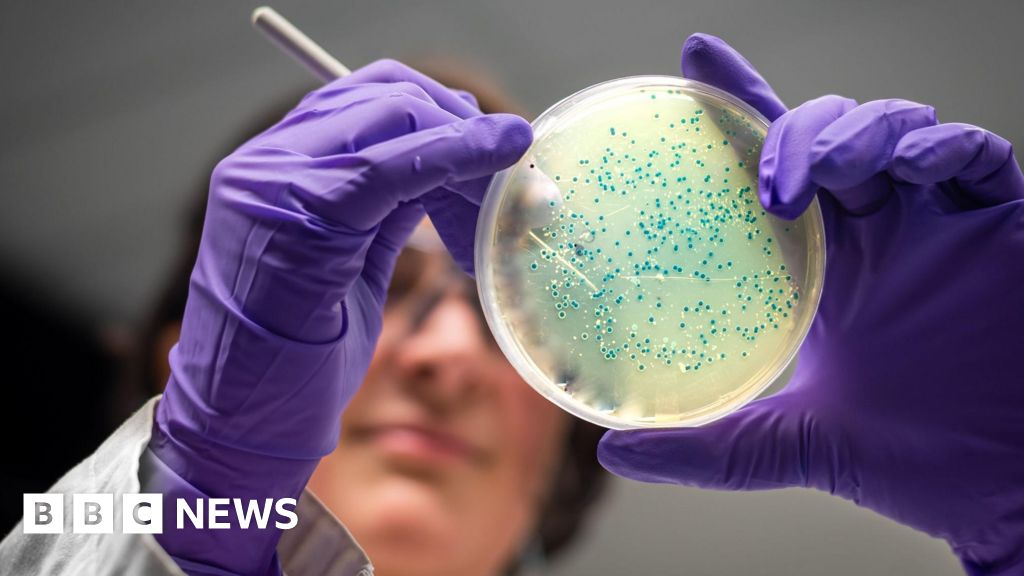
Getty ImagesArtificial intelligence has invented two new potential antibiotics that could kill drug-resistant gonorrhoea and MRSA, researchers have revealed.The drugs were designed atom-by-atom by the AI and killed the superbugs in laboratory and animal tests.The two compounds still need years of refinement and clinical trials before they could be prescribed.

But the Massachusetts Institute of Technology (MIT) team behind it say AI could start a "second golden age" in antibiotic discovery.Antibiotics kill bacteria, but infections that resist treatment are now causing more than a million deaths a year.Overusing antibiotics has helped bacteria evolve to dodge the drugs' effects, and there has been a shortage of new antibiotics for decades.

Researchers have previously used AI to trawl through thousands of known chemicals in an attempt to identify ones with potential to become new antibiotics.Now, the MIT team have gone one step further by using generative AI to design antibiotics in the first place for the sexually transmitted infection gonorrhoea and for potentially-deadly MRSA (methicillin-resistant Staphylococcus aureus).

Their study, published in the journal Cell, interrogated 36 million compounds including those that either do not exist or have not yet been discovered.Scientists trained the AI by giving it the chemical structure of known compounds alongside data on whether they slow the growth of different species of bacteria.

The AI then learns how bacteria are affected by different molecular structures, built of atoms such as carbon, oxygen, hydrogen and nitrogen.Two approaches were then tried to design new antibiotics with AI. The first identified a promising starting point by searching through a library of millions of chemical fragments, eight to 19 atoms in size, and built from there.

The second gave the AI free rein from the start.The design process also weeded out anything that looked too similar to current antibiotics. It also tried to ensure they were inventing medicines rather than soap and to filter out anything predicted to be toxic to humans.Scientists used AI to create antibiotics for gonorrhoea and MRSA, a type of bacteria that lives harmlessly on the skin but can cause a serious infection if it enters the body.

Once manufactured, the leading designs were tested on bacteria in the lab and on infected mice, resulting in two new potential drugs.MITProf James Collins, one of the researchers at MIT"We're excited because we show that generative AI can be used to design completely new antibiotics," Prof James Collins, from MIT, tells the BBC."

AI can enable us to come up with molecules, cheaply and quickly and in this way, expand our arsenal, and really give us a leg up in the battle of our wits against the genes of superbugs."However, they are not ready for clinical trials and the drugs will require refinement – estimated to take another one to two year's work – before the long process of testing them in people could begin.

Dr Andrew Edwards, from the Fleming Initiative and Imperial College London, said the work was "very significant" with "enormous potential" because it "demonstrates a novel approach to identifying new antibiotics".But he added: "While AI promises to dramatically improve drug discovery and development, we still need to do the hard yards when it comes to testing safety and efficacy."

That can be a long and expensive process with no guarantee that the experimental medicines will be prescribed to patients at the end.Some are calling for AI drug discovery more broadly to improve. Prof Collins says "we need better models" that move beyond how well the drugs perform in the laboratory to ones that are a better predictor of their effectiveness in the body.

There is also an issue with how challenging the AI-designs are to manufacture. Of the top 80 gonorrhoea treatments designed in theory, only two were synthesised to create medicines.Prof Chris Dowson, at the University of Warwick, said the study was "cool" and showed AI was a "significant step forward as a tool for antibiotic discovery to mitigate against the emergence of resistance".

However, he explains, there is also an economic problem factoring into drug-resistant infections - "how do you make drugs that have no commercial value?"If a new antibiotic was invented, then ideally you would use it as little as possible to preserve its effectiveness, making it hard for anyone to turn a profit.

Analysis

Conflict+
Related Info+
Core Event+
Background+
Impact+
Future+

Related Podcasts