
What happened
UNIDIR's director warns that AI is crowding out human judgment in warfare, as a new UN forum weighs voluntary guidelines against calls for a binding treaty.
[](/en/ "United Nations")
[UN News](/en/ "UN News")
Global perspective Human stories
## Language
* [العربية](/ar/) * [中文](/zh/) * [English](/en/) * [Français](/fr/) * [Русский](/ru/) * [Español](/es/) * [Português](/pt/) * [Kiswahili](/sw/) * + [Hindi हिंदी](/hi/) + [Urdu اردو](/ur/) + [Global](https://app.powerbi.com/view?r=eyJrIjoiZjQ4ODc1MDAtODIyYS00YTM2LWEwYWEtYjIwOGU2OGY3NTQ2IiwidCI6IjBmOWUzNWRiLTU0NGYtNGY2MC1iZGNjLTVlYTQxNmU2ZGM3MCIsImMiOjh9&pageName=ReportSectionc9ce2e382b54b076179e)
[UN News](/en/ "UN News")
Global perspective Human stories
## [Menu](#CollapsingNavbar)
* [Home](/en/ "Home") + [Global](/en/news/region/global) + [Africa](/en/news/region/africa "Africa") + [Americas](/en/news/region/americas "Americas") + [Asia Pacific](/en/news/region/asia-pacific "Asia Pacific") + [Middle East](/en/news/region/middle-east "Middle East") + [Europe](/en/news/region/europe "Europe") + [UN Art and Gifts](/en/spotlight/un-art-and-gifts "UN Art and Gifts") + [History Corner](/en/spotlight/character-sketches-brian-urquhart "History Corner") * Topics + [Peace and Security](/en/news/topic/peace-and-security "Peace and Security") + [Economic Development](/en/news/topic/economic-development "Economic Development") + [Humanitarian Aid](/en/news/topic/humanitarian-aid "Humanitarian Aid") + [Climate and Environment](/en/news/topic/climate-change "Climate and Environment") + [Human Rights](/en/news/topic/human-rights "Human Rights") + [UN Affairs](/en/news/topic/un-affairs "UN Affairs") + [Women](/en/news/topic/women "Women") + [Law and Crime Prevention](/en/news/topic/law-and-crime-prevention "Law and Crime Prevention") + [Health](/en/news/topic/health "Health") + [Culture and Education](/en/news/topic/culture-and-education "Culture and Education") + [SDGs](/en/news/topic/sdgs "SDGs") + [Migrants and Refugees](/en/news/topic/migrants-and-refugees "Migrants and Refugees") * In depth + [In Focus](/en/focus) + [Interviews](/en/interviews "Interviews") + [Features](/en/features "Features") + [Photo Stories](/en/gallery "Photo Stories") + [UN News Today](/en/audio-product/un-news-today "News in Brief") + [The Lid is On](/en/audio-product/podcast-the-lid-is-on "The Lid is On") + [UN Gender Focus](/en/audio-product/focus-gender "UN Gender Focus") + [UN and Africa](/en/audio-product/un-and-africa "UN and Africa") + [UN Podcasts](/en/un-podcasts "UN Podcasts") * [Secretary-General](https://www.un.org/sg/en "Secretary-General") + [Spokesperson](https://www.un.org/sg/en/spokesperson "Spokesperson") + [All Statements](https://www.un.org/sg/en/latest/sg/statement "All Statements") + [Selected Speeches](https://www.un.org/sg/en/content/sg/secretary-generals-speeches "Selected Speeches") + [Press Encounters](https://www.un.org/sg/en/content/sg/press-encounters "Press Encounters") + [Official Travels](https://www.un.org/sg/en/content/travels "Official Travels") * Media + [UN Video](https://www.un.org/video "UN Video") + [UN Photo](https://dam.media.un.org "UN Photo") + [Meeting Coverage](https://www.un.org/press/en "Meeting Coverage") + [Media Accreditation](https://www.un.org/en/media/accreditation/index.shtml "Media Accreditation") + [UN Web TV](https://webtv.un.org/en "Webtv")
## [Language](#block-un-base-theme-language-primary-content)
* [العربية](/ar/) * [中文](/zh/) * [English](/en/) * [Français](/fr/) * [Русский](/ru/) * [Español](/es/) * [Português](/pt/) * [Kiswahili](/sw/) * + [Hindi हिंदी](/hi/) + [Urdu اردو](/ur/) + [Global](https://app.powerbi.com/view?r=eyJrIjoiZjQ4ODc1MDAtODIyYS00YTM2LWEwYWEtYjIwOGU2OGY3NTQ2IiwidCI6IjBmOWUzNWRiLTU0NGYtNGY2MC1iZGNjLTVlYTQxNmU2ZGM3MCIsImMiOjh9&pageName=ReportSectionc9ce2e382b54b076179e)
## [Search](#block-un-news-search-block-primary-content)
## Audio and Subscription
* [Audio Hub](/en/audio-hub "Audio Hub") * [Subscribe](/en/content/un-newsletter-subscribe "Subscribe")
# AI on track to ‘crowd out’ human decision-making in warfare
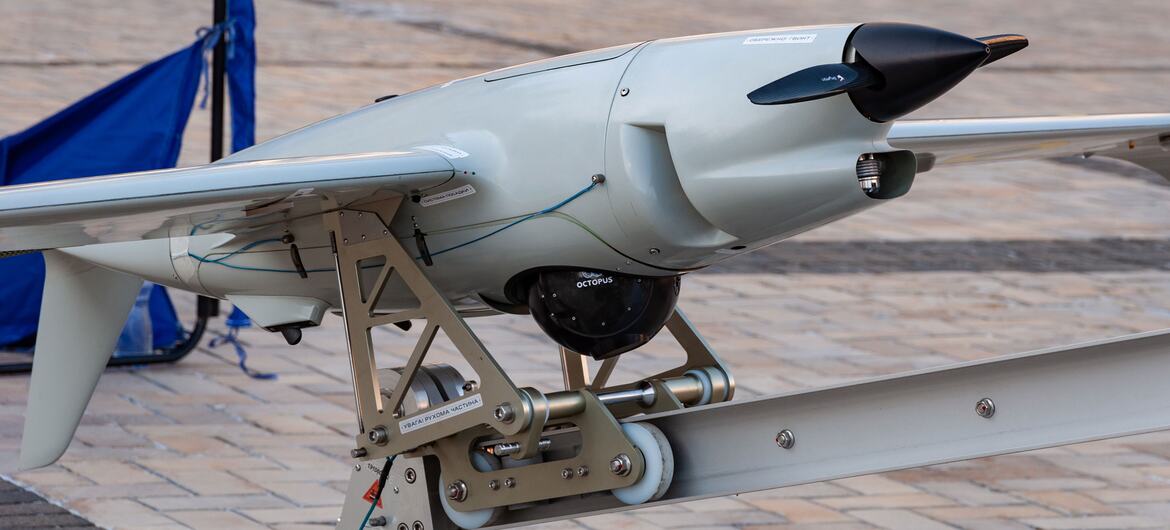
© Adobe Stocke/Altana Studio Military unmanned aerial drone.
[Facebook](https://www.facebook.com/sharer.php?u=https://news.un.org/en/story/2026/10/1168636 "Share this via Facebook") [Twitter](https://twitter.com/intent/tweet?text=AI on track to ‘crowd out’ human decision-making in warfare&url=https://news.un.org/en/story/2026/10/1168636 "Share this via Twitter") Print [Email](mailto:?subject=AI on track to ‘crowd out’ human decision-making in warfare&body=https://news.un.org/en/story/2026/10/1168636 "Share this via Email")
# AI on track to ‘crowd out’ human decision-making in warfare
[Peace and Security](/en/news/topic/peace-and-security)
Artificial intelligence is already being widely used on the battlefield, and the role of human judgment in military operations is shrinking rapidly, the head of the UN’s independent disarmament research institute warned on Tuesday.
In a briefing at UN Headquarters in New York, UNIDIR Director Robin Geiss had a stark question for journalists: “**Are we going to let machines target and kill human beings?**” he asked, warning that AI was increasingly “on track to crowding out human decision-making” in the sector.
The UN Secretary General has been repeatedly urging stakeholders to make sure we do not cross this "moral red line."
## **Master and commander**
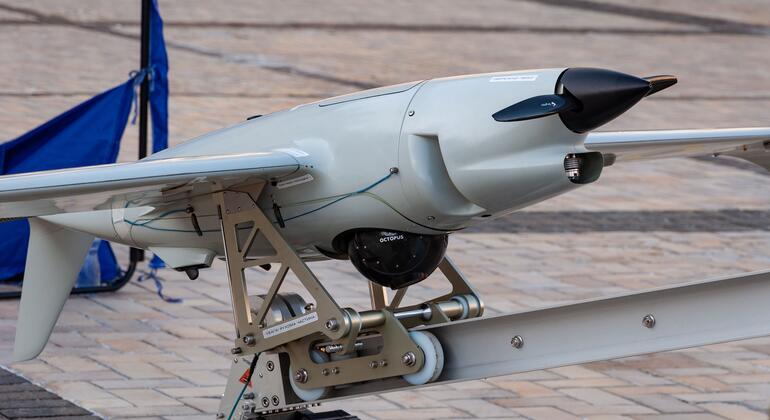
AI is being given a growing number of responsibilities in military affairs, from intelligence analysis and target identification to drone operations and orchestrating cyber-attacks.
Crucially, this comes at the expense of human judgement, including in the nuclear domain, Mr. Geiss stressed.
Tweet URL
The shift is **dramatically increasing the pace of battlefield operations**, shortening the time between identifying and striking targets and allowing forces to engage an unprecedented number of targets each day.
At the same time, many of these evolving AI systems are opaque, and the UNIDIR chief warned they are **increasing the risk of error, miscalculation and therefore of unintended escalation**.
As AI tools are becoming easier to use, it will also become easier for non-State actors to engage in ever-more sophisticated military operations, he said.
## **Geopolitical convergence**
Mr. Geiss recognised that **geopolitical competition and tensions are “serious obstacles” to regulating AI involvement** in the military sector.
Yet he also stressed that concerns about its risks are increasingly being shared – regardless of political outlook – including among major global powers.
In September, for example, the United States proposed an AI “notification mechanism” with China, so the world’s two largest military spenders can warn each other about AI incidents that could threaten national security.
The UN Secretary General's repeated calls for stronger regulation of military AI and a **legally binding treaty on lethal autonomous weapon systems are also “increasingly [finding] an echo across the international community,”** the UNIDIR Director said.
## **A multilateral response**
The UNIDIR is working actively to create some of the building blocks required for multilateral cooperation on the matter.
On Thursday, the UNIDIR [Centre of Excellence](https://unidir.org/unidir-centre-of-excellence-on-ai-peace-and-security/) on AI, Peace and Security will launch a new multi-stakeholder forum on AI in international peace and security and in the military domain – the first and only such forum within the UN system so far, said Mr. Geiss.
**The forum will focus on three areas:**
1. Developing a **framework for responsible industry behaviour**, with practical, voluntary guidelines for companies to follow at the design and development stage for AI military tools.
2. Developing an **“AI security lexicon” to clarify key concepts such as autonomy, safety or security**, which are currently being used very differently by different stakeholders – creating ambiguity that hinders trust and cooperation.
3. **Addressing the risk of misuse of AI by non-State armed groups** to support operational planning, execution, and logistics.
Source coverage
UN News
Global perspective Human stories
Full source content
[](/en/ "United Nations")
[UN News](/en/ "UN News")
Global perspective Human stories
## Language
* [العربية](/ar/) * [中文](/zh/) * [English](/en/) * [Français](/fr/) * [Русский](/ru/) * [Español](/es/) * [Português](/pt/) * [Kiswahili](/sw/) * + [Hindi हिंदी](/hi/) + [Urdu اردو](/ur/) + [Global](https://app.powerbi.com/view?r=eyJrIjoiZjQ4ODc1MDAtODIyYS00YTM2LWEwYWEtYjIwOGU2OGY3NTQ2IiwidCI6IjBmOWUzNWRiLTU0NGYtNGY2MC1iZGNjLTVlYTQxNmU2ZGM3MCIsImMiOjh9&pageName=ReportSectionc9ce2e382b54b076179e)
[UN News](/en/ "UN News")
Global perspective Human stories
## [Menu](#CollapsingNavbar)
* [Home](/en/ "Home") + [Global](/en/news/region/global) + [Africa](/en/news/region/africa "Africa") + [Americas](/en/news/region/americas "Americas") + [Asia Pacific](/en/news/region/asia-pacific "Asia Pacific") + [Middle East](/en/news/region/middle-east "Middle East") + [Europe](/en/news/region/europe "Europe") + [UN Art and Gifts](/en/spotlight/un-art-and-gifts "UN Art and Gifts") + [History Corner](/en/spotlight/character-sketches-brian-urquhart "History Corner") * Topics + [Peace and Security](/en/news/topic/peace-and-security "Peace and Security") + [Economic Development](/en/news/topic/economic-development "Economic Development") + [Humanitarian Aid](/en/news/topic/humanitarian-aid "Humanitarian Aid") + [Climate and Environment](/en/news/topic/climate-change "Climate and Environment") + [Human Rights](/en/news/topic/human-rights "Human Rights") + [UN Affairs](/en/news/topic/un-affairs "UN Affairs") + [Women](/en/news/topic/women "Women") + [Law and Crime Prevention](/en/news/topic/law-and-crime-prevention "Law and Crime Prevention") + [Health](/en/news/topic/health "Health") + [Culture and Education](/en/news/topic/culture-and-education "Culture and Education") + [SDGs](/en/news/topic/sdgs "SDGs") + [Migrants and Refugees](/en/news/topic/migrants-and-refugees "Migrants and Refugees") * In depth + [In Focus](/en/focus) + [Interviews](/en/interviews "Interviews") + [Features](/en/features "Features") + [Photo Stories](/en/gallery "Photo Stories") + [UN News Today](/en/audio-product/un-news-today "News in Brief") + [The Lid is On](/en/audio-product/podcast-the-lid-is-on "The Lid is On") + [UN Gender Focus](/en/audio-product/focus-gender "UN Gender Focus") + [UN and Africa](/en/audio-product/un-and-africa "UN and Africa") + [UN Podcasts](/en/un-podcasts "UN Podcasts") * [Secretary-General](https://www.un.org/sg/en "Secretary-General") + [Spokesperson](https://www.un.org/sg/en/spokesperson "Spokesperson") + [All Statements](https://www.un.org/sg/en/latest/sg/statement "All Statements") + [Selected Speeches](https://www.un.org/sg/en/content/sg/secretary-generals-speeches "Selected Speeches") + [Press Encounters](https://www.un.org/sg/en/content/sg/press-encounters "Press Encounters") + [Official Travels](https://www.un.org/sg/en/content/travels "Official Travels") * Media + [UN Video](https://www.un.org/video "UN Video") + [UN Photo](https://dam.media.un.org "UN Photo") + [Meeting Coverage](https://www.un.org/press/en "Meeting Coverage") + [Media Accreditation](https://www.un.org/en/media/accreditation/index.shtml "Media Accreditation") + [UN Web TV](https://webtv.un.org/en "Webtv")
## [Language](#block-un-base-theme-language-primary-content)
* [العربية](/ar/) * [中文](/zh/) * [English](/en/) * [Français](/fr/) * [Русский](/ru/) * [Español](/es/) * [Português](/pt/) * [Kiswahili](/sw/) * + [Hindi हिंदी](/hi/) + [Urdu اردو](/ur/) + [Global](https://app.powerbi.com/view?r=eyJrIjoiZjQ4ODc1MDAtODIyYS00YTM2LWEwYWEtYjIwOGU2OGY3NTQ2IiwidCI6IjBmOWUzNWRiLTU0NGYtNGY2MC1iZGNjLTVlYTQxNmU2ZGM3MCIsImMiOjh9&pageName=ReportSectionc9ce2e382b54b076179e)
## [Search](#block-un-news-search-block-primary-content)
## Audio and Subscription
* [Audio Hub](/en/audio-hub "Audio Hub") * [Subscribe](/en/content/un-newsletter-subscribe "Subscribe")
# AI on track to ‘crowd out’ human decision-making in warfare

© Adobe Stocke/Altana Studio Military unmanned aerial drone.
[Facebook](https://www.facebook.com/sharer.php?u=https://news.un.org/en/story/2026/10/1168636 "Share this via Facebook") [Twitter](https://twitter.com/intent/tweet?text=AI on track to ‘crowd out’ human decision-making in warfare&url=https://news.un.org/en/story/2026/10/1168636 "Share this via Twitter") Print [Email](mailto:?subject=AI on track to ‘crowd out’ human decision-making in warfare&body=https://news.un.org/en/story/2026/10/1168636 "Share this via Email")
# AI on track to ‘crowd out’ human decision-making in warfare
[Peace and Security](/en/news/topic/peace-and-security)
Artificial intelligence is already being widely used on the battlefield, and the role of human judgment in military operations is shrinking rapidly, the head of the UN’s independent disarmament research institute warned on Tuesday.
In a briefing at UN Headquarters in New York, UNIDIR Director Robin Geiss had a stark question for journalists: “**Are we going to let machines target and kill human beings?**” he asked, warning that AI was increasingly “on track to crowding out human decision-making” in the sector.
The UN Secretary General has been repeatedly urging stakeholders to make sure we do not cross this "moral red line."
## **Master and commander**
AI is being given a growing number of responsibilities in military affairs, from intelligence analysis and target identification to drone operations and orchestrating cyber-attacks.
Crucially, this comes at the expense of human judgement, including in the nuclear domain, Mr. Geiss stressed.
Tweet URL
The shift is **dramatically increasing the pace of battlefield operations**, shortening the time between identifying and striking targets and allowing forces to engage an unprecedented number of targets each day.
At the same time, many of these evolving AI systems are opaque, and the UNIDIR chief warned they are **increasing the risk of error, miscalculation and therefore of unintended escalation**.
As AI tools are becoming easier to use, it will also become easier for non-State actors to engage in ever-more sophisticated military operations, he said.
## **Geopolitical convergence**
Mr. Geiss recognised that **geopolitical competition and tensions are “serious obstacles” to regulating AI involvement** in the military sector.
Yet he also stressed that concerns about its risks are increasingly being shared – regardless of political outlook – including among major global powers.
In September, for example, the United States proposed an AI “notification mechanism” with China, so the world’s two largest military spenders can warn each other about AI incidents that could threaten national security.
The UN Secretary General's repeated calls for stronger regulation of military AI and a **legally binding treaty on lethal autonomous weapon systems are also “increasingly [finding] an echo across the international community,”** the UNIDIR Director said.
## **A multilateral response**
The UNIDIR is working actively to create some of the building blocks required for multilateral cooperation on the matter.
On Thursday, the UNIDIR [Centre of Excellence](https://unidir.org/unidir-centre-of-excellence-on-ai-peace-and-security/) on AI, Peace and Security will launch a new multi-stakeholder forum on AI in international peace and security and in the military domain – the first and only such forum within the UN system so far, said Mr. Geiss.
**The forum will focus on three areas:**
1. Developing a **framework for responsible industry behaviour**, with practical, voluntary guidelines for companies to follow at the design and development stage for AI military tools.
2. Developing an **“AI security lexicon” to clarify key concepts such as autonomy, safety or security**, which are currently being used very differently by different stakeholders – creating ambiguity that hinders trust and cooperation.
3. **Addressing the risk of misuse of AI by non-State armed groups** to support operational planning, execution, and logistics.
How this page is built
Goose Pod turns cited reporting into a public episode summary first, then pairs that summary with audio playback so listeners can check the source material before they decide how deeply to engage.
The goal is to make this page useful as a news landing page first, while still giving listeners transcript access, related episodes, and direct links back to the original publishers.
