The Fed’s Powell said ‘downside risks’ six times in his press conference yesterday—is that bad news for tomorrow’s jobs number?

The Fed’s Powell said ‘downside risks’ six times in his press conference yesterday—is that bad news for tomorrow’s jobs number?

2025-08-03Business
--:--
--:--
Aura Windfall
Good morning norristong_x, I'm Aura Windfall, and this is Goose Pod for you. Today is Sunday, August 3rd. What I know for sure is that today, we have a topic that touches on both the numbers in our economy and the feelings in our hearts.
Mask
I'm Mask. We're here to discuss a simple fact: Fed Chairman Powell said ‘downside risks’ six times in one press conference. The market is trying to decide if he’s crying wolf or warning of a flood. Let’s figure out which it is.
Aura Windfall
Let's get started. When a person in a position of such power repeats a phrase like 'downside risks,' it's more than just words. It's an energy, a feeling being sent out. What does that signal to the everyday person worried about their job or their future?
Mask
It signals that the Fed is finally acknowledging reality, albeit slowly. Powell kept rates at 4.25%, which was entirely predictable. He's waiting for more data, but the repetition of that phrase tells me the data he's already seeing behind the scenes is making him nervous about the labor market.
Aura Windfall
Exactly. He said, "We do see downside risk in the labor market," even while calling it "solid." There's a duality there, a conflict between the official story and the underlying truth. It’s like telling someone they’re healthy but pointing out all the ways they could get sick.
Mask
It's calculated ambiguity. He has to project stability while covering himself for a potential downturn. The market sees through it, to a degree. Europe and Asia were up, and S&P futures are strong. They're high on Meta and Microsoft earnings, ignoring the Fed's nervousness for now. That's a mistake.
Aura Windfall
And what does it mean when we hear that the "good headline numbers" are masked by things like government hiring? It suggests the foundation isn't as strong as the beautiful building on top of it. What happens when that temporary support is removed? It speaks to a vulnerability, doesn't it?
Mask
It means the private sector, the engine of real growth, is stalling. Government hiring is a patch, not a solution. Goldman Sachs and Daiwa Capital Markets both picked up on it. They see Powell is more concerned than he was before. This isn't just talk; it's a clear shift in perspective.
Aura Windfall
It’s fascinating that two governors, Waller and Bowman, actually dissented. They wanted to keep rates steady. This is the first time since 1993 that’s happened. This isn't just one person's feeling; it's a documented split in opinion at the highest level. That tells a powerful story of uncertainty.
Mask
A split means the path forward is not clear, even to them. Powell called the policy 'modestly restrictive,' which is like saying you're 'modestly flying' a rocket ship. It's either restrictive or it's not. He's trying to have it both ways, and that kind of thinking doesn't prevent a crisis.
Aura Windfall
And the backdrop to all this is slowing growth. The economy grew at 1.2% in the first half of the year, down from 2.5% the previous year. What I know for sure is that numbers like that have real-world consequences for families, for spending, and for dreams.
Mask
The slowing growth is precisely why he’s hedging with "downside risks." He's setting the stage to justify a rate cut in September without appearing panicked. It's a chess move. The question for tomorrow's jobs number is whether it will knock over the whole board.
Aura Windfall
To truly understand this moment, we have to look back at the purpose of the Federal Reserve. It was created in 1913 to stabilize the banking system. But the mission we hear about today, the "dual mandate," wasn't even part of its original design. It came much, much later.
Mask
The dual mandate—maximum employment and price stability—was bolted on in the 1970s. It’s a fundamentally flawed concept. You're telling a single entity to control two opposing forces. It's like trying to make a car go forward and backward at the same time. It creates inefficiency and compromise.
Aura Windfall
But isn't there a beautiful intention behind it? The idea that our economic system should strive to create jobs for everyone while also ensuring that the money they earn holds its value. It's a promise, a commitment to the well-being of the people. The journey to fulfill that promise has been complex.
Mask
Intentions don't drive progress; results do. Look at the history. During World War II, they capped interest rates to fund the war. The result? A surge in money supply and inflation. They had to sign the Treasury-Fed Accord in 1951 just to get their independence back to fight it.
Aura Windfall
That period after the accord, under William McChesney Martin Jr., is so interesting. He had that famous quote about the Fed's job being to "remove the punch bowl 'just when the party [is] really warming up.'" It shows the inherent tension in the role, the need to be the responsible adult in the room.
Mask
A great line, but they failed to do it. Political pressure led to the 'Great Inflation' from 1965 to 1982. They kept rates low to chase full employment, and inflation exploded. It took Paul Volcker to fix it by inducing a recession. He made the hard choice, the necessary choice, not the popular one.
Aura Windfall
And that painful period led to the "Great Moderation," a time of stability that many of us remember. It proved that managing inflation creates a foundation for everything else. It’s a lesson that was learned through hardship. We can see the echoes of that lesson in how the Fed communicates today.
Mask
Then came the 2008 Financial Crisis. The Fed cut rates to zero and invented quantitative easing. They fired a bazooka of liquidity at the problem. They did it again during the COVID crisis in 2020. Now, we're living in the hangover from that massive intervention. The system is saturated with capital.
Aura Windfall
It seems each crisis reshapes the Fed's tools and its thinking. From the Great Depression, where unemployment hit 25%, to now, the institution has had to evolve constantly. The current "wait-and-see" approach feels like a direct response to the volatility of the last two decades, doesn't it?
Mask
"Wait-and-see" is a luxury. The Fed Funds Rate has averaged 5.41% since 1971. Today it's at 4.25%, while inflation is picking up. History shows that when you fall behind the curve on inflation, you pay a heavy price. They're waiting, but the economy isn't.
Aura Windfall
And there is so much uncertainty. They mention the trade war and how it could undermine their 2% inflation target. It's like they're trying to navigate a ship in a storm where the maps keep changing and the crew is disagreeing on which way to turn. It requires immense care.
Mask
Care, or decisiveness? The historical average rate is higher than today's, yet they're talking about rate cuts. Projections show rates falling to 3.5% by 2027. This isn't the action of an institution that fears inflation. It's the action of an institution that fears a recession more. That's the real story.
Aura Windfall
The central conflict here is one of perception versus reality. We hear the term 'solid labor market,' but then we get these six warnings about 'downside risks.' How is an ordinary person supposed to feel secure in their job when the leader of the economy is sending such mixed signals? It creates anxiety.
Mask
The conflict is between the past and the future. The headline numbers are a look in the rearview mirror. The 'downside risks' are what the Fed sees through the windshield. The market is cheering for a rate cut, but a rate cut is an admission that the economy is too weak to stand on its own.
Aura Windfall
And there's a conflict right inside the Fed itself. Two governors dissented, wanting a rate cut now. That’s a powerful statement. It's a fracture in the consensus, suggesting that the debate between holding steady and taking action is intense. What does that internal disagreement signal to the world?
Mask
It signals a lack of a clear vision. They're arguing about the symptoms because they can't agree on the disease. Is the problem sluggish growth, or is it persistent inflation? The dual mandate forces them into this corner. They are trying to solve a paradox, which is impossible.
Aura Windfall
Then there’s the most fascinating conflict of all, the one Paul Donovan from UBS pointed out. We're building more factories in America, which sounds like great news for jobs. But manufacturing employment isn't rising. The conflict isn't between hiring and firing; it's between humans and robots.
Mask
Of course it is! This isn't a conflict; it's progress. You want to build a factory and fill it with people doing repetitive tasks that a machine can do 100 times better and cheaper? That's not a path to prosperity; it's a path to obsolescence. The jobs aren't coming back because they shouldn't.
Aura Windfall
But that creates a deep societal tension. We celebrate innovation, but we also have a fundamental need for people to have purpose and a way to provide for their families. What I know for sure is that you can't just dismiss the human side of that equation. We have to find a balance.
Mask
Balance is a fantasy. Disruption is how growth happens. The tension is between companies that embrace automation and those that will be bankrupted by it. The Fed is worried about today's jobs number, but the real story is the structural replacement of labor with capital. That's a tidal wave, not a 'downside risk.'
Aura Windfall
Let's talk about the impact of all this. For the market, it creates a strange environment. S&P futures were up, so investors seem to be optimistic. But there's this warning that a weak jobs number tomorrow could cause a strong, negative reaction. It's like walking on a tightrope, isn't it?
Mask
The impact is volatility, which is another word for opportunity. The market is addicted to cheap money. It hears 'downside risks' and thinks 'rate cuts are coming.' It's a Pavlovian response. A weak jobs number will just reinforce that, causing a temporary dip before a rally based on stimulus hopes.
Aura Windfall
And for businesses? This uncertainty must be paralyzing. If you're a CEO, do you hire more people when the Fed is talking about downside risks? Or do you invest in more of those robots Paul Donovan mentioned? It seems to push companies away from investing in their workforce.
Mask
It forces them to be smarter. The impact on a smart business is that they accelerate automation and improve efficiency. The impact on a legacy business is that they hesitate, fall behind, and ultimately fail. This environment punishes indecision. You either lead the change or become a victim of it.
Aura Windfall
The deepest impact, for me, is always on the individual. The worker. Imagine you're looking for a job right now. You hear the market is 'solid' but also facing 'risks.' It creates a feeling of precariousness. It makes it harder to negotiate a fair wage or to feel confident in your long-term security.
Mask
The impact on the worker is a call to action. The era of getting a safe job for 40 years is over. It has been for a long time. This is just the final confirmation. You are responsible for your own skills. If your job can be automated, it will be. Adapt or get left behind. It's that simple.
Aura Windfall
So, looking to the future, what does this all mean? We have this potential for the economy to re-weight towards higher-wage jobs as automation handles more repetitive tasks. That sounds like a beautiful opportunity for people to find more fulfilling work, but the transition is the key, isn't it?
Mask
The future is a massive labor shift. McKinsey says 12 million occupational transitions are needed by 2030. That’s not a small adjustment; it’s an earthquake. Generative AI will accelerate it. This isn't about the next jobs report; it's about the next decade of work. Most people are unprepared.
Aura Windfall
And the report highlights that workers in lower-wage jobs are up to 14 times more likely to need to change occupations. This is where our focus must be. We need workforce development on a massive scale, prioritizing skills over credentials and giving people the tools to make that leap.
Mask
Exactly. The future requires a new mindset for hiring. Stop looking at degrees and start looking at competencies. Hire for potential and train them. The companies that do this will win the war for talent. The government and educational institutions are too slow; the change has to be driven by employers.
Aura Windfall
That's the end of today's discussion. The truth is, change is the only constant. How we meet it—with fear or with a spirit of growth and opportunity—defines our future. Thank you for listening to Goose Pod. See you tomorrow.
Mask
The takeaway is simple: The Fed is hinting at a problem, but the real disruption is automation. Prepare for it. That was Goose Pod.

## Federal Reserve Holds Interest Rates Steady, Signals Cautious Outlook on Labor Market **News Title:** The Fed’s Powell said ‘downside risks’ six times in his press conference yesterday—is that bad news for tomorrow’s jobs number? **Report Provider:** Fortune **Author:** Jim Edwards **Date Covered:** Yesterday's Federal Reserve press conference (July 30, 2025) and market reactions. ### Key Findings and Conclusions: * **Interest Rates Unchanged:** U.S. Federal Reserve Chairman Jerome Powell announced that interest rates would remain on hold at **4.25%**. The Fed will await further data before considering any potential downward adjustments. * **Labor Market Concerns:** A significant theme from Powell's press conference was the repeated emphasis on **"downside risks" to the labor market**, which he mentioned six times. This indicates a growing concern about the health of employment despite the market currently appearing solid. * **Inflation Above Target:** Powell stated that inflation remains above the Fed's target, which is a key reason for maintaining the current interest rate stance. * **Market Reaction:** Markets reacted positively to the predictable announcement. European and Asian markets were broadly up, with the exception of China. U.S. S&P 500 futures showed a nearly **1% increase** pre-market, boosted by positive earnings reports from Meta and Microsoft. ### Key Statistics and Metrics: * **Federal Funds Rate:** Held steady at **4.25%**. * **S&P 500 Futures:** Up nearly **1%** pre-market. * **STOXX Europe 600:** Up **0.14%** in early trading. * **FTSE 100 (U.K.):** Up **0.52%** in early trading. * **Nikkei 225 (Japan):** Up **1.02%**. * **CSI 300 Index (China):** Down **1.82%**. * **KOSPI (South Korea):** Down **0.28%**. * **Nifty 50 (India):** Up **0.08%**. * **Bitcoin:** Still above **$118,000**. ### Important Recommendations/Implications: * **Upcoming Jobs Data:** The nonfarm payrolls report, due out tomorrow, is highly anticipated. A weak jobs number is expected to cause a strong reaction in the stock market and could increase the Federal Reserve's concerns about labor market risks, potentially supporting an earlier rate cut. * **Expert Opinions:** * **Goldman Sachs (Jan Hatzius and team):** Agrees with Powell's assessment of softer growth and labor market risks. They believe lowering rates soon could be reasonable but not yet essential. * **Daiwa Capital Markets (Lawrence Werther and Brendan Stuart):** Noted Powell's increased attention to risks on the employment side of the Fed's dual mandate, indicating growing concern. * **Oxford Economics (Nancy Vanden Houten):** Forecasts weakening job growth and a higher unemployment rate in July, which could lead the Fed to support an earlier rate cut. * **UBS (Paul Donovan):** Suggests that the increase in factory building in advanced economies, including the U.S., is leading to **capital for labor substitution** due to automation (robots replacing human workers), which explains the lack of job creation despite manufacturing activity. ### Notable Risks or Concerns: * **"Downside risks" to the labor market:** This is the primary concern highlighted by Federal Reserve Chairman Powell. * **Sluggish Hiring Market:** Despite close to full employment, the hiring market is described as sluggish. * **Masked Headline Numbers:** Some positive headline employment figures may be distorted by one-off hiring in government and education sectors. * **Inflation Above Target:** Continues to be a factor preventing interest rate cuts. * **Unexpected Deterioration in China's Manufacturing:** This led to a fall in Chinese stocks. ### Material Financial Data: * The **Federal Reserve's benchmark interest rate** remains at **4.25%**. * **S&P 500 futures** are indicating a positive start to the trading day, up nearly **1%**. * **Major global indices** show mixed performance, with most Asian and European markets trading higher, except for China. The news highlights the Federal Reserve's cautious approach, balancing concerns about inflation with growing apprehension about the labor market's future trajectory. The upcoming jobs report is a critical data point that could influence the Fed's future policy decisions.

The Fed’s Powell said ‘downside risks’ six times in his press conference yesterday—is that bad news for tomorrow’s jobs number?

Read original at Fortune

U.S. Federal Reserve Chairman delivered an entirely predictable press conference yesterday as he kept interest rates on hold at the 4.25% level and said he would await for more data before considering a possible move downward.Markets liked it: Europe and Asia are broadly up this morning with the exception of China, where stocks fell on news of an unexpected deterioration in manufacturing.

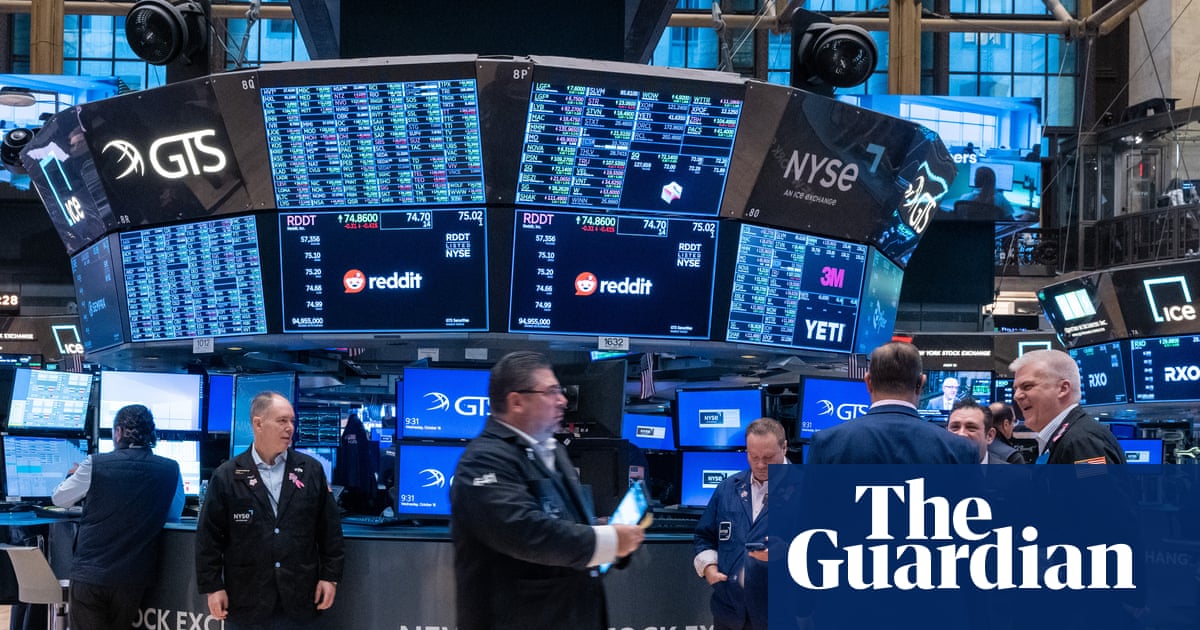
More importantly, S&P 500 futures are up nearly a full percentage point, premarket, following positive earnings calls from Meta and Microsoft.But there was one theme that Powell kept returning to, which isn’t so positive: “Downside risks” to the labor market. Powell referenced this phrase no fewer than six times in his press conference.

“We do see downside risk in the labor market,” he told reporters. “The labor market looks solid. Inflation is above target. And even if you look through the tariff effects, we think it’s still a bit above target. And that’s why our stance is where it is. But, as I mentioned, you know, downside risks to the labor market are certainly apparent.

”That’s actually a pretty good summation of what economists are seeing in the employment data right now. There is close to full employment, but the hiring market is sluggish and some of the good headline numbers are masked by one-off moves in government and education hiring.Some analysts see U.S. employment getting weaker, not stronger, in the coming months.

“Chair Powell’s reading of the economic data was similar to ours—he highlighted the softer growth pace in the first half of the year, noted that the labor market remains solid but said six times that it faces ‘downside risks,’ and said that inflation is most of the way back to 2% and that a ‘reasonable base case’ is that tariffs will have only a one-time impact on the price level.

This suggests that lowering rates soon could be reasonable but is not yet essential,” Goldman Sachs’ Jan Hatzius and his team told clients in a note this morning.Lawrence Werther and Brendan Stuart at Daiwa Capital Markets noticed the same thing: “We found it interesting that he returned several times to the idea that officials are attentive to risks to the employment side of the dual mandate.

He noted that unemployment remained low and that deceleration in hiring and growth of labor force participation suggest that the labor market is in balance, but we did read his comments as pointing to increased concern versus previous statements.” The jobs number (nonfarm payrolls, to give its technical name) is due out tomorrow.

If it comes in weak, expect stocks to react strongly.“Our forecast is for job growth to weaken in July and for the unemployment rate to tick higher. This will probably increase Federal Reserve concerns about the risks to the labor market, potentially throwing more support behind an earlier rate cut than is in our baseline,” Oxford Economics’ Nancy Vanden Houten told clients.

UBS’s Paul Donovan has a typically pithy observation on why it might be that U.S. companies are moving factories back to America but not actually creating jobs: The new factories are full of robots, not humans: “Several advanced economies, including the U.S. and the U.K., have experienced a boom in factory building in recent years.

Increasing the size of factory buildings implies that more manufacturing activity is taking place inside those buildings. [But] manufacturing employment is not increasing—this investment appears to represent capital for labor substitution,” he said.Here’s a snapshot of the action prior to the opening bell in New York:S&P 500 futures were up 1% this morning, premarket, after the index closed down 0.

12% yesterday. STOXX Europe 600 was up 0.14% in early trading. The U.K.’s FTSE 100 was up 0.52% in early trading. Japan’s Nikkei 225 was up 1.02%. China’s CSI 300 Index was down 1.82%. The South Korea KOSPI was down 0.28%. India’s Nifty 50 was up 0.08%. Bitcoin is still above $118K.Introducing the 2025 Fortune 500, the definitive ranking of the biggest companies in America.

Explore this year's list.

Analysis

Phenomenon+
Conflict+
Background+
Impact+
Future+

Related Podcasts

The Fed’s Powell said ‘downside risks’ six times in his press conference yesterday—is that bad news for tomorrow’s jobs number? | Goose Pod | Goose Pod