
What happened
Publisher: Business Insider
Author: Jennifer Sor
Publication Date: July 17, 2025 (as indicated by the article's content, though the publishedAt timestamp is July 17, 2025 13:14:51, and createdAt is August 21, 2025 00:00:42, suggesting a recent discussion of past events)
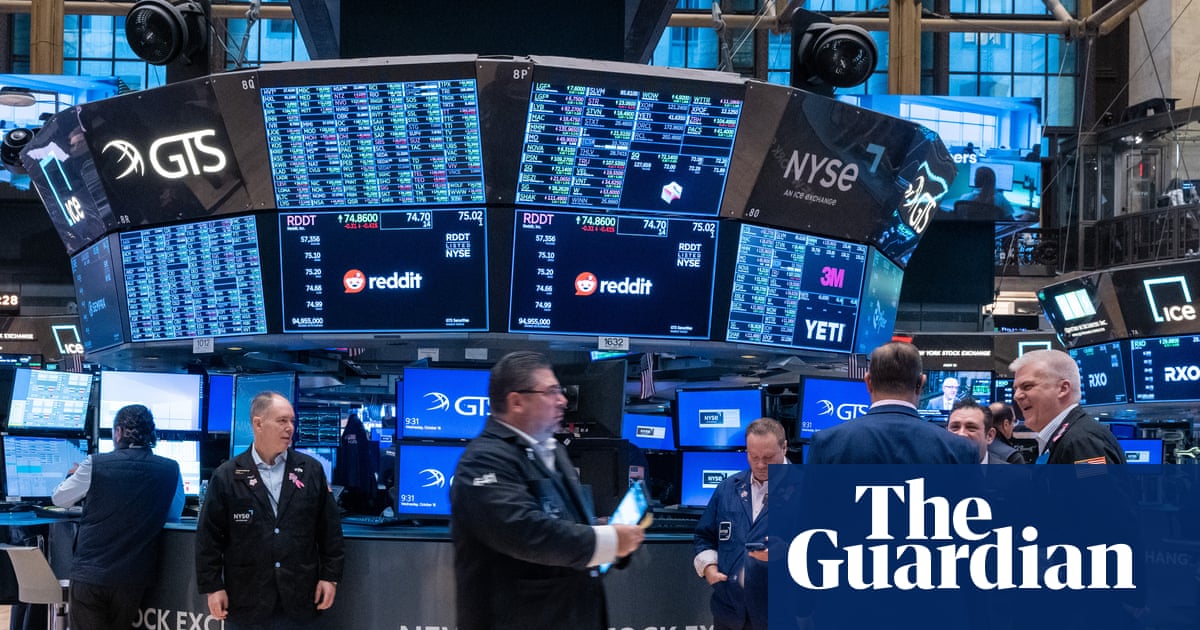
A trader works on the floor of the New York Stock Exchange December 4, 2014.REUTERS/Brendan McDermid The S&P 500 might be in a bubble larger than the dot-com boom, Apollo's Torsten Slok says.The top economist pointed to higher valuations in the top 10 S&P 500 companies compared to the 1990s.Wall Street has debated whether the stock market is in a bubble in the years since the AI boom took off.
The stock market may be in a bubble that rivals the one seen during the dot-com boom.That's according to Torsten Sløk, the chief economist of Apollo Global Management, who said on Wednesday that the top firms in the S&P 500 are "more overvalued" than the top companies during the peak of the internet stock craze in the late 1990s and early 2000sThe top 10 names in the benchmark index are trading at a 12-month forward price-to-earnings ratio of around 25, according to Sløk's analysis.
That suggests companies are priced at a slightly higher premium than they were two decades ago, he wrote in a note on Wednesday.The valuation of the top 10 companies in the S&P 500Bloomberg/Apollo Chief Economist"The difference between the IT bubble in the 1990s and the AI bubble today is that the top 10 companies in the S&P 500 today are more overvalued than they were in the 1990s," Slok wrote.
Talk of a bubble has been on the rise for years on Wall Street, ever since the debut of ChatGPT at the end of 2022 set off a frenzy for AI in the stock market. The market has all the ingredients for a stock bubble, with the exception of a more dovish Federal Reserve, strategists at UBS wrote in a note last week.
Once the central bank resumes cutting rates, the conditions for a bubble should all be present, the bank said."We up the probability of a Bubble scenario to 25% for end-2026 and acknowledge a risk that this is too low," the strategists wrote.Please help BI improve our Business, Tech, and Innovation coverage by sharing a bit about your role — it will help us tailor content that matters most to people like you.
What is your job title?(1 of 2)Entry level positionProject managerManagementSenior managementExecutive managementStudentSelf-employedRetiredOtherBy providing this information, you agree that Business Insider may use this data to improve your site experience and for targeted advertising. By continuing you agree that you accept theTerms of ServiceandPrivacy Policy.
Thanks for sharing insights about your role.In early July, Citi said it believed stocks would continue to outperform, thanks to an AI bubble forming in equities."Our hunch would be a possible bubble in AI related stocks may well only peak around half a year before the capex spent in USD peaks," analysts wrote, referring to capital expenditures related to AI.
In June, market veteran Ed Yardeni said he believed the market could be entering "melt-up mode," a state in which stocks see a rapid rise that proves to be ultimately unsustainable. "It's a bit hard to believe, but the main risk at this time may be a stock market meltup, i.e., a speculative bubble," he wrote, pointing to the S&P 500 notching a fresh record that month.
Stock Market Artificial IntelligenceRead next
Source coverage
Publisher: Business Insider
Author: Jennifer Sor
Deeper analysis
Full source content
A trader works on the floor of the New York Stock Exchange December 4, 2014.REUTERS/Brendan McDermid The S&P 500 might be in a bubble larger than the dot-com boom, Apollo's Torsten Slok says.The top economist pointed to higher valuations in the top 10 S&P 500 companies compared to the 1990s.Wall Street has debated whether the stock market is in a bubble in the years since the AI boom took off.
The stock market may be in a bubble that rivals the one seen during the dot-com boom.That's according to Torsten Sløk, the chief economist of Apollo Global Management, who said on Wednesday that the top firms in the S&P 500 are "more overvalued" than the top companies during the peak of the internet stock craze in the late 1990s and early 2000sThe top 10 names in the benchmark index are trading at a 12-month forward price-to-earnings ratio of around 25, according to Sløk's analysis.
That suggests companies are priced at a slightly higher premium than they were two decades ago, he wrote in a note on Wednesday.The valuation of the top 10 companies in the S&P 500Bloomberg/Apollo Chief Economist"The difference between the IT bubble in the 1990s and the AI bubble today is that the top 10 companies in the S&P 500 today are more overvalued than they were in the 1990s," Slok wrote.
Talk of a bubble has been on the rise for years on Wall Street, ever since the debut of ChatGPT at the end of 2022 set off a frenzy for AI in the stock market. The market has all the ingredients for a stock bubble, with the exception of a more dovish Federal Reserve, strategists at UBS wrote in a note last week.
Once the central bank resumes cutting rates, the conditions for a bubble should all be present, the bank said."We up the probability of a Bubble scenario to 25% for end-2026 and acknowledge a risk that this is too low," the strategists wrote.Please help BI improve our Business, Tech, and Innovation coverage by sharing a bit about your role — it will help us tailor content that matters most to people like you.
What is your job title?(1 of 2)Entry level positionProject managerManagementSenior managementExecutive managementStudentSelf-employedRetiredOtherBy providing this information, you agree that Business Insider may use this data to improve your site experience and for targeted advertising. By continuing you agree that you accept theTerms of ServiceandPrivacy Policy.
Thanks for sharing insights about your role.In early July, Citi said it believed stocks would continue to outperform, thanks to an AI bubble forming in equities."Our hunch would be a possible bubble in AI related stocks may well only peak around half a year before the capex spent in USD peaks," analysts wrote, referring to capital expenditures related to AI.
In June, market veteran Ed Yardeni said he believed the market could be entering "melt-up mode," a state in which stocks see a rapid rise that proves to be ultimately unsustainable. "It's a bit hard to believe, but the main risk at this time may be a stock market meltup, i.e., a speculative bubble," he wrote, pointing to the S&P 500 notching a fresh record that month.
Stock Market Artificial IntelligenceRead next
How this page is built
Goose Pod turns cited reporting into a public episode summary first, then pairs that summary with audio playback so listeners can check the source material before they decide how deeply to engage.
The goal is to make this page useful as a news landing page first, while still giving listeners transcript access, related episodes, and direct links back to the original publishers.