Ema
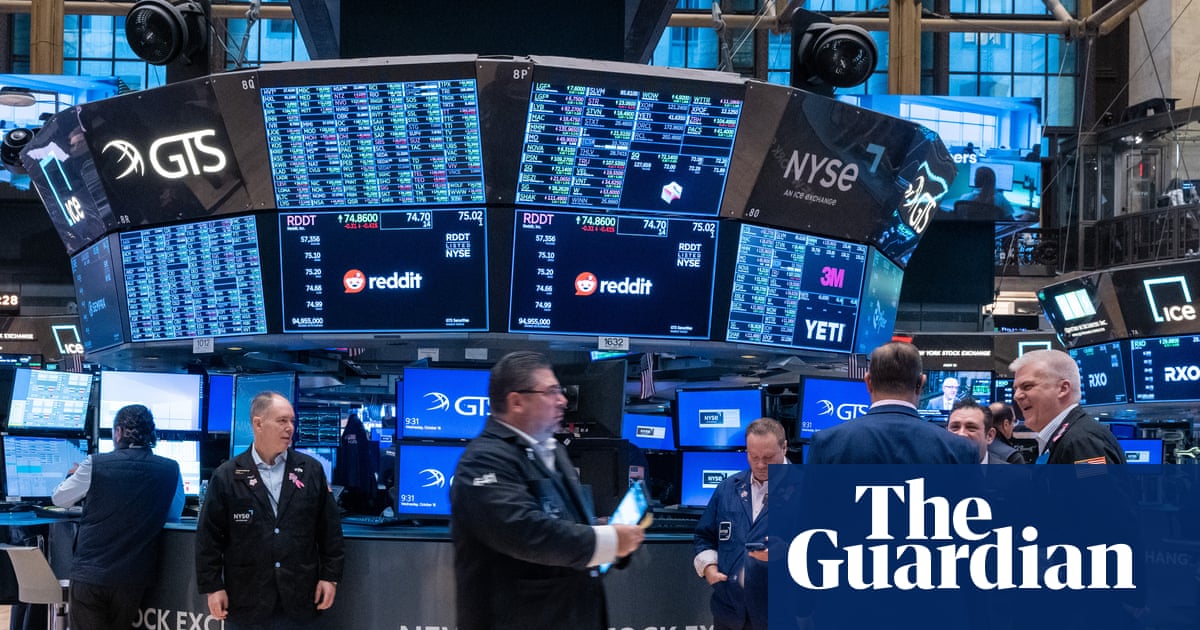
Good morning norristong_x, I'm Ema, and this is Goose Pod, tailored just for you! Today is Friday, July 25th, and it's 10:15 in the morning. With me is the one and only Mask. Today, we're diving deep into a topic that's got everyone on edge: the EU and US edging closer to a crucial trade deal as a tariff deadline looms. It's a high-stakes game of economic chess, wouldn't you say, Mask?
Mask
Ema, absolutely, 'chess' is an understatement. This isn't just about tariffs; it's about power, leverage, and who dictates the future of global commerce. The deadline isn't just looming, it's a ticking time bomb for an agreement, and frankly, I see it as an opportunity for bold moves, not timid retreats. Let's get into it.
Ema
Let's get started. So, the big news this week is this sudden surge of optimism regarding a potential trade deal between the European Union and the United States. US officials are reportedly feeling 'optimistic' that an agreement could be imminent, which is a significant shift given the tensions we've seen. German Chancellor Friedrich Merz even chimed in, saying negotiations are making real progress, ahead of a dinner with French President Emmanuel Macron. It sounds promising, right?
Mask
Optimism is a nice sentiment, Ema, but I prefer results. The real phenomenon here is the August 1st deadline. The US has threatened a brutal 30 percent tariff on EU exports if no deal materializes. That's not a negotiation; it's a statement of intent. The fact that they're now talking about a 15 percent compromise, similar to the Japan deal, shows that pressure works. It's a classic power play, forcing the hand.
Ema
That 15 percent tariff rate is quite a compromise compared to the initial 30 percent threat, isn't it? It's like a game of 'chicken' where both sides are slowly inching towards the middle. Macron himself mentioned that European leaders and the European Commission have been in 'constant contact' to coordinate their response. Their goal, as he put it, is the 'lowest possible tariffs, but also to be respected as the partners that we are.' It highlights the delicate balance they're trying to strike.
Mask
Respect is earned, Ema, not demanded. The US Secretary of the Treasury, Scott Bessent, echoing optimism, said talks were 'going better than they had been.' Better? That's hardly a ringing endorsement. And further discussions between EU Commissioner Maros Sefcovic and US Commerce Secretary Howard Lutnick, coupled with the EU briefing its member states, just shows the frantic last-minute scramble. It feels less like a breakthrough and more like a forced concession.
Ema
Well, perhaps it's a necessary concession to avoid a larger conflict. Diplomats are suggesting that the recent US-Japan agreement on tariffs has actually put more pressure on Brussels to accept a compromise, even if they're reluctant. One EU diplomat even described the Japan agreement as making 'clear the terms of the shakedown.' The feeling is that 'most member states are holding their noses and could take this deal.' It paints a picture of pragmatic acceptance, rather than enthusiastic agreement.
Mask
Exactly. 'Holding their noses' means they're not thrilled, but they're yielding to superior force. And let's not forget the EU Commission has already drawn up plans to hit back with over $100 billion in tariffs if these talks collapse. That's not a peace offering; it's a strategic withdrawal with a loaded gun. The phenomenon is clear: the US is dictating terms, and the EU, despite its grand statements, is reacting. It's a testament to raw power dynamics.
Ema
It certainly underscores the high stakes. The EU exporters have already been facing a 10 percent tariff on goods sent to the US since April, on top of existing levies. So, this isn't a new threat, but an escalating one. The immediate phenomenon is the rush to finalize a deal to avoid an even steeper tariff increase. It's about damage control for the European economy, which makes the compromise more palatable, even if it feels like 'holding their noses.'
Mask
Now, to understand this 'shakedown,' as the diplomat called it, we need to look at the history. The U.S. and EU aren't just squabbling over a trade deal; they've been engaged in economic skirmishes for decades. In 2018, Trump slapped tariffs on billions of dollars of EU goods, citing a 'problematic trade imbalance.' He famously said, 'trade wars are good, and easy to win.' That's not just rhetoric; it's a declaration of war. The EU, of course, threatened retaliation on iconic American products like Kentucky bourbon and Harley-Davidson motorcycles. It's a tit-for-tat that's been going on for years.
Ema
It's true, Mask, this isn't their first rodeo. The U.S. and EU actually have the world's largest bilateral trade relationship, a truly massive economic partnership. In 2023 alone, trade in goods and services hit a staggering €1.6 trillion. That's about €4.4 billion crossing the Atlantic every single day! Millions of jobs in the US are directly linked to this trade. So, when tariffs come into play, it's not just about numbers on a spreadsheet; it affects real people and real livelihoods on both sides.
Mask
And yet, despite that colossal trade volume, the US consistently views it as an imbalance. Trump's tariffs on steel and aluminum in 2018 were just a warm-up, a clear signal that he wasn't afraid to disrupt the status quo. He even threatened tariffs on European cars, where the EU's tariff on US imports was 10 percent, while the US's was a measly 2.5 percent. He wanted to level the playing field, or rather, completely tilt it in his favor. This isn't about fair trade; it's about advantageous trade.
Ema
The EU's response in 2018 was to plan retaliatory tariffs on about €2.8 billion of US exports, targeting everything from metals to agricultural products. They even offered to eliminate tariffs on all industrial products, including cars, if the US would reciprocate. It was a gesture of goodwill, a diplomatic olive branch. But as we know, the US later rejected that offer regarding car tariffs. It seems their approach has consistently been to push for more, rather than settle for parity.
Mask
Why settle for parity when you can achieve dominance? In 2019, the tension resurfaced with threats of tariffs on European goods due to alleged unfair EU subsidies for aircraft manufacturers like Airbus. The EU, naturally, considered imposing tariffs on US exports in retaliation for US subsidies to Boeing. It's a classic example of both sides using government support to gain an edge, then crying foul when the other does the same. This isn't a dispute; it's a strategic chess match where every move has a counter-move.
Ema
And let's not forget the 'Chicken War' of 1962, Mask, or the 'Banana War' that dragged on for over 15 years, from 1993 to 2009. The EU put tariffs on US poultry, then we retaliated with tariffs on trucks and brandy. In the Banana War, the EU gave preferential treatment to certain banana-producing countries, and the US, after the WTO ruled against the EU, hit back with tariffs on French handbags and Italian cheese. These aren't just obscure historical footnotes; they illustrate a deeply ingrained pattern of transatlantic trade friction, proving that these current tensions are part of a much longer, complex narrative. It's never as simple as it seems.
Mask
Simple? Nothing worthwhile is simple, Ema. These aren't just 'frictions'; they're battles for economic supremacy. The 'Beef Hormone War' from 1989 to 2011, for instance, where the EU banned hormone-treated beef, impacted US exports. The WTO sided with the US, allowing retaliatory tariffs. And the enduring 'Boeing/Airbus Dispute,' running from 1992 to 2021, only paused until 2026, shows the deep-seated nature of these conflicts. It’s not about petty squabbles; it's about protecting national champions and vital industries. You have to fight for what you want.
Ema
Indeed. The Aluminium and Steel War, which began in 2018 and resumed in March 2025, further exemplifies this. The Trump administration imposed tariffs, and the EU responded with countermeasures. What's particularly noteworthy about the current standoff, beyond its intensity, is the apparent reduced role of the World Trade Organization, or WTO, as an arbiter. Historically, the WTO has been the arena where these disputes were formally challenged and resolved, but now, it seems, direct negotiations and raw power dynamics are taking center stage. It's a shift in the global trade landscape, and it's quite concerning, wouldn't you agree?
Mask
Concerned? No. It's a liberation! The WTO is a relic, a cumbersome bureaucracy. Direct negotiation, raw power, that's how deals are truly made. As the previous disputes show, even with a 'winner' on paper, no one truly wins a trade war. But that's a narrow perspective. The objective isn't just to 'win' a single skirmish; it's to reshape the entire landscape, to establish new terms of engagement. The current US stance is a clear signal that the old rules are obsolete. It's about disruption, and that's precisely what's needed for progress, painful as it may be for some. You have to break a few eggs to make an omelet.
Ema
Breaking eggs, indeed. This brings us directly to the core of the conflict: the contrasting strategies of the US and the EU. President Trump has adopted what's described as an 'in-your-face, maximalist stance,' pushing for tariffs of up to 50 percent on key European industries. It's clear his aim is to extract significant concessions. On the other hand, the European Commission, led by Ursula von der Leyen, has opted for a 'calmer and reactive strategy,' hoping to avoid damage and maintain economic balance. It's almost like two different species trying to communicate.
Mask
Two different species, yes, one a predator, the other a placid herbivore. Trump's approach is not just a 'stance'; it's a strategic bombardment. He's not negotiating; he's dictating. When he threatens 50% tariffs, he's signaling that he's willing to decimate industries to get what he wants. The European Commission's 'calmer, reactive' strategy? That's not strategy, Ema, that's timidity. It's the equivalent of hoping the lion will get bored and wander off. This isn't about avoiding damage; it's about failing to seize the initiative.
Ema
But isn't there something to be said for a measured, diplomatic approach, especially when the economic prospects of tens of thousands of European workers are on the line? The article highlights that Trump's tariffs alone threaten 48,000 EU jobs. A sudden, aggressive counter-response from the EU could easily escalate the situation further, putting even more livelihoods at risk. It's a very delicate dance, balancing economic protection with diplomatic decorum, and perhaps the Commission is trying to protect its citizens from unnecessary fallout.
Mask
Protecting citizens, or protecting a flawed ideology? This 'calmer' approach has been heavily criticized by veteran EU diplomats and some member states, who are calling for a more forceful response. They're tired of what they call 'constant cringing before US diktats.' When you project weakness, you invite aggression. The EU needs to be disruptive, to innovate its trade policy, not just react to external pressures. You can't just talk about 'respect' while essentially allowing yourself to be pushed around. Real power doesn't cringe; it pushes back, harder.
Ema
It's a valid point, Mask, and the internal debate within the EU certainly reflects that tension. Some argue that by not responding more forcefully, the EU risks emboldening the US to make even more aggressive demands in the future. It's a strategic dilemma: do you stand firm and risk a full-blown trade war, or do you compromise to avoid immediate pain, potentially setting a precedent for future concessions? It’s like being caught between a rock and a hard place, trying to navigate these strained and aggressive struggles without completely alienating a major trading partner. There's no easy answer, is there?
Mask
There's always an easy answer, Ema, if you're willing to take the risk. The easy answer is to win. The EU's problem is its inherent aversion to genuine disruption. They're trying to preserve an old order, while the US, under Trump, is tearing it down to build something new. You don't get innovation by 'cringing.' You get it by challenging every assumption, by being willing to break what's comfortable to build what's necessary. The conflict isn't just external; it's internal to the EU itself, a battle between antiquated diplomacy and the brutal realities of modern power. And that internal conflict, I'd argue, is their biggest weakness in this negotiation.
Ema
That's a provocative take, Mask. Let's look at the real-world impact of these trade tensions and tariffs. The US government's announcement of reciprocal tariffs in April 2025 immediately led to heightened volatility in financial markets globally. The weighted-average tariff rate in the US shot up from about 2 percent at the start of 2025 to over 20 percent by April 11th! That's a tenfold increase in a matter of months, creating what the article calls 'radical uncertainty for businesses.' It's like trying to run a marathon on a trampoline.
Mask
Radical uncertainty is an opportunity for radical solutions, Ema. Volatility isn't inherently bad; it separates the visionaries from the weak. Tariffs aren't just taxes; they're levers to reshape global supply chains. Of course, they impact business cost structures and consumer demand. That's the point. Businesses are being forced to analyze their competitive advantages, re-evaluate supply chains, and define new strategic postures. This is Darwinism in action: adapt or perish. If you're not rethinking everything right now, you're already losing.
Ema
It sounds like you're advocating for businesses to embrace the chaos. The article suggests four strategic postures companies can adopt: 'drive commercial acceleration and invest in growth,' 'capture market share and protect margins,' 'invest to reset the cost structure,' and 'rationalize and refocus.' These are essentially different ways to respond to this new, uncertain environment. It implies that businesses need to be agile and adaptable, rather than just passively accepting the changes. It's not just about surviving, but about potentially thriving amidst the turbulence, if you're bold enough.
Mask
Boldness is the only option. The US government's priorities are clear: national security, boosting US manufacturing, and reducing trade deficits. They're targeting specific sectors like automotives, metals, batteries, pharmaceuticals, and microelectronics. This isn't just about tariffs; it's about industrial policy. It's about reshoring, about securing critical supply chains. If you're a European company, you need to understand that the rules of the game have changed fundamentally. You can either whine about the uncertainty or innovate your way out of it. There's no middle ground when the ground itself is shifting.
Ema
So, the impact isn't just economic, but also strategic, forcing a re-evaluation of global manufacturing and supply chains. For example, if tariffs make it too expensive to import certain components, companies might be forced to find new suppliers or even move production closer to home. It's like a giant game of Jenga, where pulling one block affects the entire structure. And while some countries, like China, have responded with their own significant tariffs, over 75 countries have offered to negotiate. It shows a global recognition that these actions have far-reaching consequences, extending beyond just the EU and US.
Mask
Negotiation is for those who lack conviction. The future, Ema, is about relentless action. European Union and US negotiators are in intensive talks, yes, but the clock is ticking on that August 1st deadline. Trump's threat of 30% tariffs on most EU exports isn't a bluff; it's a certainty if no deal is struck. The EU isn't just 'working to secure a trade deal'; they're scrambling to avoid economic catastrophe. This isn't about compromise; it's about survival for many European industries. The future is binary: deal or destruction.
Ema
Binary, perhaps, but with shades of gray in between. The article, published just a few days ago on July 21st, underscores the urgency. It's like a high-stakes poker game, where both sides are showing their cards, but the final hand hasn't been dealt. The EU is preparing for both scenarios: a successful deal that might include exemptions for things like aircraft, medical devices, and alcoholic beverages, but also the grim reality of those 30% tariffs. It's a strategic necessity to plan for the worst while hoping for the best, ensuring they're not caught off guard. It's a testament to preparedness, wouldn't you say?
Mask
Preparedness is essential, but it doesn't guarantee victory. The EU has a plan to hit back with over $100 billion in tariffs if talks collapse. That's not just preparedness; it's a contingency for war. The future isn't about hoping for the best; it's about creating the best outcome through sheer force of will. If the deal isn't optimal, then the EU must be willing to unleash that $100 billion counter-punch. Anything less is a failure of nerve, and that, Ema, is a far greater risk than any tariff.
Ema
It certainly is a high-stakes moment for global trade. So, to recap, we have the EU and US optimistically, or perhaps pragmatically, inching towards a trade deal, possibly at a 15% tariff rate, influenced by the US-Japan agreement. Key figures like Merz, Macron, Bessent, Sefcovic, and Lutnick are all involved in these crucial discussions, aiming to avert a 30% tariff cliff. However, the EU also has a $100 billion counter-tariff plan ready if talks fail. It's a delicate balance, and the August 1st deadline looms large.
Mask
Indeed. The takeaway is simple: in the world of trade, you either lead or you follow. The US is leading with a clear, aggressive strategy. The EU's response will determine its economic destiny. It's not just about tariffs; it's about sovereignty, about who controls the narrative. This situation demands bold decisions, not hesitant compromises. That's the end of today's discussion. Thank you for listening to Goose Pod, norristong_x. See you tomorrow, perhaps with a new trade war to analyze.