

What happened
Report Provider: The Times of India (TOI Tech Desk)
Publication Date: July 29, 2025
This report details a groundbreaking initiative by Germany, spearheaded by the tech startup SWARM Biotactics, to transform live cockroaches into sophisticated surveillance tools. The innovation involves equipping cockroaches with AI-powered "backpacks" that integrate sensors, cameras, and neural stimulators,...
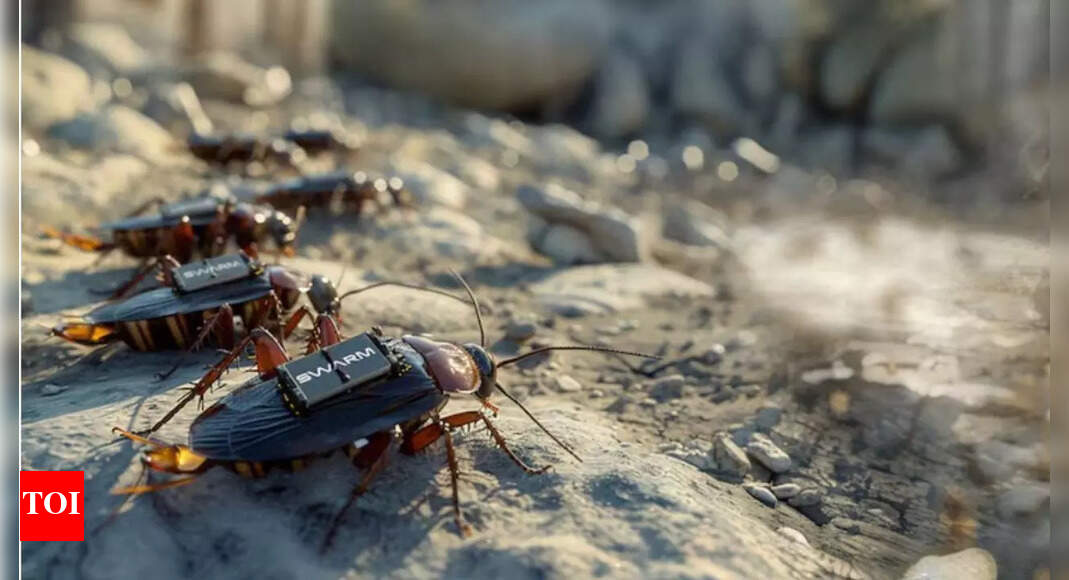
In a move straight out of a science fiction novel, Germany is pioneering the use of live cockroaches as covert surveillance tools. A tech startup called SWARM Biotactics, based in Kassel, is developing AI-powered "backpacks" that are mounted on real cockroaches, effectively turning them into biologically integrated spy agents.
These miniature devices are equipped with sensors, cameras, and neural stimulators, allowing remote control and autonomous swarming in tight or inaccessible environments, according to Reuters. Backed by over €13 million in funding, this innovation is set to redefine the future of surveillance and battlefield intelligence.
From lab to battlefield: How the spy cockroach worksSWARM Biotactics’ technology involves fitting Madagascar hissing cockroaches with ultra-lightweight, AI-enabled backpacks. These include:Tiny cameras for real-time reconnaissanceEnvironmental sensors to detect gas, radiation, or heatNeural stimulators that send signals to the insect's nervous system to direct movementWireless communication modules for operator control or swarm-level coordinationThis tech allows the bugs to slip through rubble, walls, or tight spaces where conventional drones fail—making them ideal for urban combat zones, hostage rescues, or disaster response, according to Reuters.
Why cockroaches? A perfect spy in the shadowsCockroaches are small, durable, and capable of navigating cramped, complex terrain—traits that make them the perfect living platform for micro-surveillance. Unlike mechanical robots, they require no energy to move and can survive in extreme conditions, all while carrying payloads of up to 3 grams.
Their movements can be guided using low-voltage impulses to the antenna or cerci, making them semi-autonomous with human override. Combined with AI, these biological machines are designed to act individually or as a swarm to map, monitor, or infiltrate hard-to-reach areas.Funded for the future: Germany’s defense-tech pushSWARM Biotactics recently secured €13 million in funding, including €10 million in a seed round aimed at transitioning this bio-robotic tech from laboratory research to field deployment.
According to Reuters, the initiative aligns with Germany’s broader effort to integrate cutting-edge startups into its defense innovation ecosystem, much like the U.S. DARPA model.This startup is also collaborating with security agencies and research institutions to develop protocols for field operations, ethical deployment, and swarm integration in live missions.
While the primary use is for military surveillance and reconnaissance, the company also sees applications in disaster relief, such as locating survivors in collapsed buildings or chemical hazard detection in industrial zones. These AI-equipped insects could soon become part of firefighting, urban planning, and search-and-rescue operations.
With insects becoming intelligent tools, Germany is rewriting the rules of covert operations. As the line between biology and robotics blurs, warfare may never look the same again.A new era of surveillance is crawling closerGermany’s cockroach-cyborg initiative signals a new frontier in espionage and robotics—one that merges biology with artificial intelligence.
While still in its early stages, the technology has already captured the attention of defense strategists worldwide. As development progresses, these living surveillance agents might soon redefine how wars are fought and crises are managed—one silent scurry at a time.
Source coverage
Report Provider: The Times of India (TOI Tech Desk)
Publication Date: July 29, 2025
Deeper analysis
Full source content
In a move straight out of a science fiction novel, Germany is pioneering the use of live cockroaches as covert surveillance tools. A tech startup called SWARM Biotactics, based in Kassel, is developing AI-powered "backpacks" that are mounted on real cockroaches, effectively turning them into biologically integrated spy agents.
These miniature devices are equipped with sensors, cameras, and neural stimulators, allowing remote control and autonomous swarming in tight or inaccessible environments, according to Reuters. Backed by over €13 million in funding, this innovation is set to redefine the future of surveillance and battlefield intelligence.
From lab to battlefield: How the spy cockroach worksSWARM Biotactics’ technology involves fitting Madagascar hissing cockroaches with ultra-lightweight, AI-enabled backpacks. These include:Tiny cameras for real-time reconnaissanceEnvironmental sensors to detect gas, radiation, or heatNeural stimulators that send signals to the insect's nervous system to direct movementWireless communication modules for operator control or swarm-level coordinationThis tech allows the bugs to slip through rubble, walls, or tight spaces where conventional drones fail—making them ideal for urban combat zones, hostage rescues, or disaster response, according to Reuters.
Why cockroaches? A perfect spy in the shadowsCockroaches are small, durable, and capable of navigating cramped, complex terrain—traits that make them the perfect living platform for micro-surveillance. Unlike mechanical robots, they require no energy to move and can survive in extreme conditions, all while carrying payloads of up to 3 grams.
Their movements can be guided using low-voltage impulses to the antenna or cerci, making them semi-autonomous with human override. Combined with AI, these biological machines are designed to act individually or as a swarm to map, monitor, or infiltrate hard-to-reach areas.Funded for the future: Germany’s defense-tech pushSWARM Biotactics recently secured €13 million in funding, including €10 million in a seed round aimed at transitioning this bio-robotic tech from laboratory research to field deployment.
According to Reuters, the initiative aligns with Germany’s broader effort to integrate cutting-edge startups into its defense innovation ecosystem, much like the U.S. DARPA model.This startup is also collaborating with security agencies and research institutions to develop protocols for field operations, ethical deployment, and swarm integration in live missions.
While the primary use is for military surveillance and reconnaissance, the company also sees applications in disaster relief, such as locating survivors in collapsed buildings or chemical hazard detection in industrial zones. These AI-equipped insects could soon become part of firefighting, urban planning, and search-and-rescue operations.
With insects becoming intelligent tools, Germany is rewriting the rules of covert operations. As the line between biology and robotics blurs, warfare may never look the same again.A new era of surveillance is crawling closerGermany’s cockroach-cyborg initiative signals a new frontier in espionage and robotics—one that merges biology with artificial intelligence.
While still in its early stages, the technology has already captured the attention of defense strategists worldwide. As development progresses, these living surveillance agents might soon redefine how wars are fought and crises are managed—one silent scurry at a time.
How this page is built
Goose Pod turns cited reporting into a public episode summary first, then pairs that summary with audio playback so listeners can check the source material before they decide how deeply to engage.
The goal is to make this page useful as a news landing page first, while still giving listeners transcript access, related episodes, and direct links back to the original publishers.