
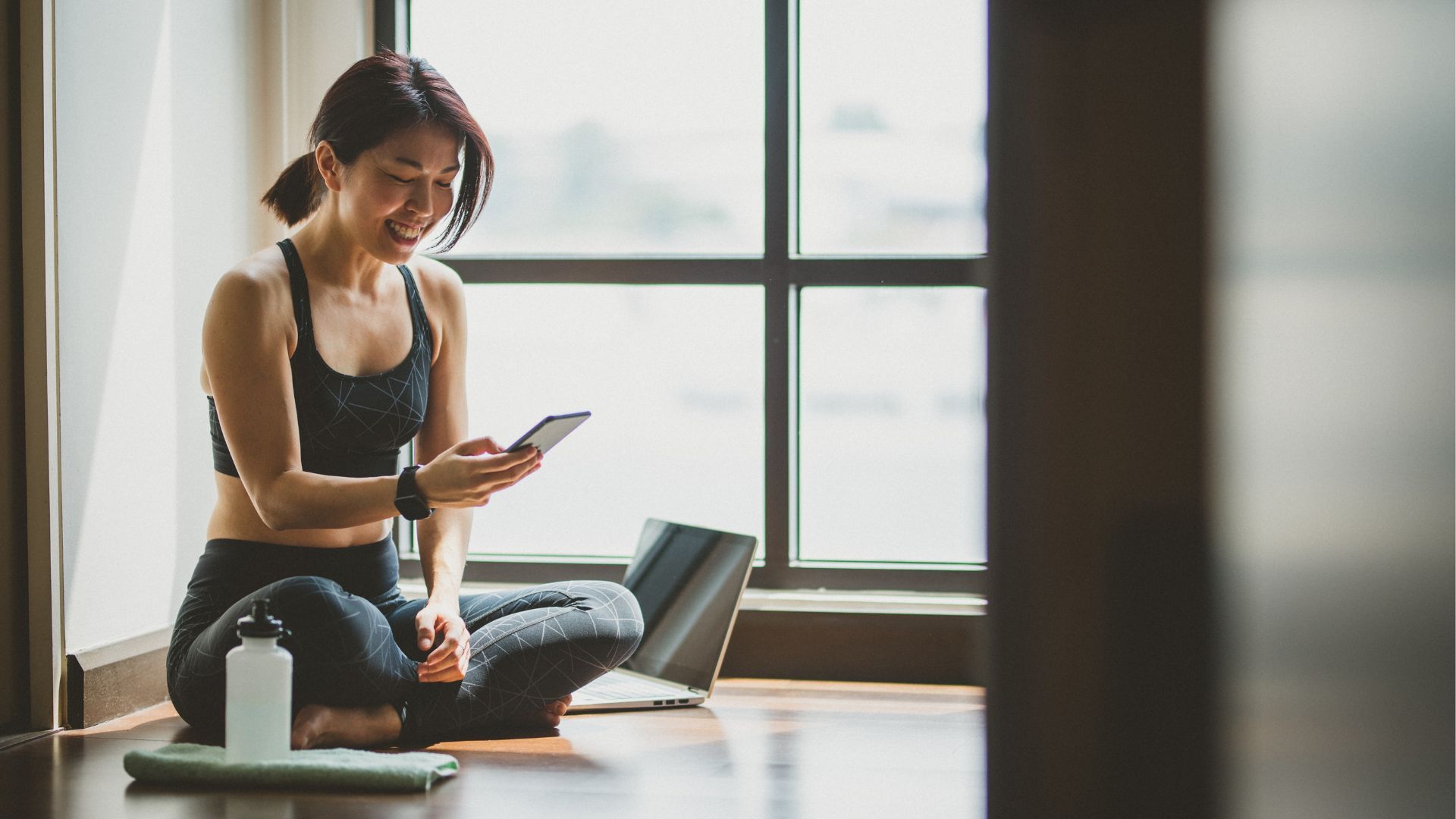
A personal trainer says this is the best exercise to build strength as it uses 'so many muscle groups'

A personal trainer says this is the best exercise to build strength as it uses 'so many muscle groups'

2026-02-04health
--:--
--:--
Taylor
Good evening Project, I am Taylor, and this is Goose Pod, your personalized audio experience. It is Wednesday, February 04th, at 11:00 PM. I am here with my wonderful co-host, Holly, to dive into a topic that is essentially the ultimate efficiency hack for your physical health and longevity.
Holly
How absolutely lovely to be here with you. I am Holly, and today we are exploring why a top personal trainer claims one specific exercise is the absolute gold standard for building strength. It is all about maximizing your effort by engaging so many muscle groups at once.
Taylor
We are talking about the squat, and specifically the insights from Caroline Idiens. She is a powerhouse trainer with over two million followers who focuses on functional, compound movements. From a strategic perspective, squats are like the high-growth stocks of the fitness world because they provide a massive return on investment.
Holly
It sounds quite marvelous when you put it that way. Caroline explains that compound movements are those that involve multiple muscles simultaneously. Instead of just working one tiny muscle in your leg, you are engaging your quads, glutes, and even your core, mimicking how we move in our daily lives.
Taylor
Exactly. It is about narrative efficiency. Why spend hours on isolation moves when you can do a movement that mirrors sitting in a chair or climbing stairs? Caroline suggests starting with just your body weight, focusing on feet shoulder-width apart and sitting back as if there is an invisible chair.
Holly
The technique is so important, isn't it? She mentions keeping your knees parallel to your toes and ensuring your thighs are parallel to the floor. It is such a graceful, grounded movement. And once twelve repetitions feel quite easy, she suggests adding weights like dumbbells or even a barbell to keep growing.
Taylor
That is the concept of progressive overload, which is a classic mastermind move. You are forcing your muscles to adapt to new challenges. But squats are just the beginning. The article also highlights the five-by-five workout, a strength program that uses five core compound exercises to boost metabolism and strength.
Holly
The five-by-five routine sounds very structured and purposeful. It includes the squat, bench press, bent-over row, overhead press, and deadlift. You perform five sets of five repetitions for each. It is fascinating how focusing on just these few movements three times a week can yield such significant results.
Taylor
It really reframes the idea that you need to spend all day in the gym. Expert Michael Hamlin notes that strength is about quality and intentional effort, not just duration. Even a focused twelve-minute session can be effective if you are applying the right amount of tension and engagement to the muscles.
Holly
It is quite refreshing to hear that we do not need to reinvent ourselves. Caroline says it is about finding small, achievable habits. For those of us who are busy, a ten-minute session of squats, press-ups, and lunges can be the perfect starting point for a stronger, healthier life.
Taylor
The press-up and the lunge are those other key pillars. The press-up can be scaled from your knees, and the lunge targets the hips and legs. Together, these movements recruit most of the major muscle groups. It is a lean, mean, strategic approach to fitness that prioritizes functionality over fluff.
Holly
And the plank too! While we often think of it as just for the core, it actually recruits the shoulders and upper back. It is so wonderful how these simple movements, when done with intention, can create a cohesive unit of strength throughout the entire body, supporting us as we age.
Taylor
It is all about that time under tension. If you are doing a squat and you are really present in the movement, you are building a foundation that supports everything else you do. It is not just about the gym, it is about being able to live a high-performance life outside of it.
Holly
I find it so sincere and encouraging. We often feel overwhelmed by complex fitness fads, but returning to these fundamental, compound movements feels like coming home to what our bodies were designed to do. It is a simple, elegant solution for anyone looking to feel more capable and vibrant.
Taylor
It is the ultimate master plan for physical agency. By focusing on these big moves, you are essentially streamlining your health. You are getting the cardio benefits from the high heart rate, the hormonal benefits from the heavy lifting, and the functional benefits of moving through a full range of motion.
Holly
It truly is a holistic approach. I love how it emphasizes the quality of the movement over the quantity of time spent. It makes the goal of getting stronger feel so much more attainable for everyone, regardless of how full their daily schedules might be at the moment.
Taylor
To really understand why the squat is king, we have to look at the history of lifting. This isn't just a modern trend. Humanity has been fascinated by physical prowess since the dawn of recorded history. Ancient Chinese texts even mention lifting tests for soldiers to prove their tactical worth.
Holly
How absolutely fascinating! And then there is the legend of Milo of Croton in Ancient Greece. He is said to have carried a newborn calf on his back every single day until it was fully grown. It is such a charming and literal example of what we now call progressive resistance training.
Taylor
Milo was a strategic genius. He understood that as the calf grew, his body had to adapt. The Greeks also used something called halteres, which were early versions of dumbbells. They weren't just for lifting, though. They used them in the long jump to provide extra momentum and explosive power.
Holly
The imagery of those ancient athletes is so striking. They used large stones for lifting challenges, often inscribing their names into the rock once they succeeded. It shows such a deep, historical connection between our physical strength and our sense of identity and achievement. It is truly quite moving.
Taylor
The equipment evolved slowly from those stones to hollow, fillable barbells in the nineteenth century, and finally to the plate-loading barbells we see today. Weightlifting actually debuted at the very first modern Olympics in 1896, though it was part of track and field back then before becoming its own event.
Holly
It took a while to find its own unique place in the sporting world. I was surprised to learn that exercise machines didn't really become popular until the 1960s. Before that, it was all about free weights and natural, compound movements that required the whole body to work in harmony.
Taylor
The 70s were the real turning point for the masses, largely thanks to the movie Pumping Iron and Arnold Schwarzenegger. It brought the narrative of the bodybuilder into the mainstream. But since the late 90s, the most exciting shift has been the surge of women participating in weight training.
Holly
It is a wonderful evolution. By the late 1990s, nearly one in five women in the US were engaging in regular weight training. We have moved away from the idea that lifting is only for men, embracing the strength and empowerment that comes from being physically capable and strong.
Taylor
That shift is huge. It is a move from aesthetics to agency. Historically, physical training focused on general health and a shape that was ready for anything, whether it was warfare or athletics. They prioritized agility, speed, and explosive power, which all stem from those multi-joint, compound movements we are discussing.
Holly
The ancient Romans also had a very disciplined approach, training with weapons that were double the weight of ordinary ones. It is a clever form of contrast loading. They knew that if you could move a heavy weight with grace, you would be much more effective in real situations.
Taylor
Even in Medieval Europe, strength was tested by pushing heavy stones or vaulting over horses in full plate armor. Can you imagine the core strength required for a somersault in armor? It is the ultimate functional movement. They weren't doing bicep curls, they were doing full-body, high-stakes compound maneuvers.
Holly
It sounds so intense and yet so purposeful. During the Renaissance, they even practiced with heavy weapons and held dumbbells while performing stepping movements and torso twists. It is fascinating to see how the core principles of compound training have been woven through different cultures and eras for centuries.
Taylor
Between 1750 and 1950, we saw the formalization of gymnastics and Olympic lifting. The use of kettlebells, cable exercises, and weighted sled pulls became more common. All of these tools were designed to challenge the body as a cohesive unit, rather than as a collection of isolated parts.
Holly
The term compound exercise itself reflects how our bodies naturally function. We don't just use one muscle to pick up a child or a heavy bag of groceries. Our brain coordinates several muscle groups and joints to work in concert. It is a beautiful, synchronized performance of biology.
Taylor
That coordination is key. Compound movements improve neuromuscular coordination, which is basically the brain getting better at talking to the muscles. It is like upgrading the operating system of your body. You get smoother, more powerful movements and a significantly lower risk of injury because you are balanced.
Holly
And the range of motion is so important for flexibility and joint health. Compound exercises often encourage a greater range of motion than machines, which can be a bit restrictive. It is about keeping the joints supple and strong, which is so vital as we navigate the journey of aging.
Taylor
Exactly. The historical focus was always on achieving an in shape physique that was actually useful. If you look at ancient statues, they have well-developed torsos and large gluteal muscles. That wasn't for show, it was the result of training for explosive power and endurance through dynamic, multi-joint actions.
Holly
It is quite lovely to think that by doing squats today, we are participating in a tradition of strength that spans thousands of years. We are using the same fundamental principles that the ancient Greeks and Romans used to build bodies that were not only beautiful but incredibly capable and resilient.
Taylor
It is a timeless strategy. Whether you are a knight in armor or a CEO in a boardroom, having that physical foundation is a game-changer. It gives you a sense of confidence and presence that carries over into every other aspect of your life. It is about being a master of your own vessel.
Holly
I couldn't agree more. It is about finding that balance between strength and grace, between power and poise. The history of lifting shows us that strength is a universal human pursuit, and the compound movement is the most natural and effective way to achieve it across all of time.
Holly
I have heard some people find squats quite taxing, almost as if they are too much for the body to handle at times. Some worry about the strain on their back or the difficulty of getting the form exactly right. It can feel a bit daunting if you are not feeling confident.
Taylor
But of course, where there is a gold standard, there is always a debate. In the fitness community, there is a recurring argument about whether the squat is truly indispensable or if it can be replaced by something like the leg press. It is a classic case of efficiency versus comfort.
Taylor
That is exactly the point of tension. Some lifters argue that the leg press allows them to push more weight and stimulate their quads more directly without being limited by their lower back or their cardiovascular stamina. They see it as a more targeted, strategic way to build muscle mass in the legs.
Holly
However, wouldn't they be missing out on all those wonderful secondary benefits we discussed? Squats engage the core and require so much more balance. It seems like the leg press is a bit of a shortcut that might leave other parts of the body feeling a bit neglected and weak.
Taylor
That is the core of the conflict. Critics of the leg press argue that it doesn't challenge the central nervous system the same way. There is a fear that by skipping squats, you are missing out on the hormonal surge and the functional stability that comes from supporting a heavy load on your back.
Holly
And then there is the great debate about how deep one should actually squat! Some say you must go as low as possible for it to count, while others worry that going too deep might be harmful to the knees. It is all very confusing for someone just trying to be healthy.
Taylor
The science on squat depth is actually quite nuanced. Research suggests that while deeper squats generally lead to more muscle growth in the glutes and thighs, the best depth is actually relative to your own mobility. Forcing a deep squat with bad form is a recipe for disaster, not strength.
Holly
That makes so much sense. It is about finding the largest range of motion that you can achieve safely and without pain. It shouldn't be a depth-at-all-costs approach. We should listen to our bodies and respect our individual limits while still striving to improve our flexibility over time.
Taylor
Exactly. Another layer of the conflict is the idea that squats are the only way to build athletic power. Some studies show that for trained athletes, heavy quarter squats might actually be better for improving vertical jump and sprinting speed than full deep squats. It is about matching the movement to the goal.
Holly
How interesting! So, there isn't just one perfect way to do it. It depends on what you are trying to achieve. If you want general health and longevity, a full range of motion is lovely, but if you are a high-performance athlete, you might use different depths for different strategic reasons.
Taylor
Spot on. The conflict really arises when people try to apply a one-size-fits-all rule. The savvy approach is to recognize that the squat is a tool. For some, the leg press is a valid alternative if they have specific injuries, but for most, the squat offers a holistic benefit that is hard to replicate.
Holly
It seems the key is to avoid the fads and the rigid thinking. Whether it is a bodyweight squat or a weighted one, the focus should be on consistent, intentional movement. We shouldn't let the fear of doing it perfectly stop us from doing it at all, shouldn't we?
Taylor
Absolutely. There is also the debate about machines versus free weights. Many experts argue that barbells and dumbbells are superior because they force you to stabilize the weight yourself. It is the difference between a guided tour and navigating the wilderness on your own. One builds more survival skills.
Holly
I love that analogy! Navigating the wilderness sounds much more adventurous and rewarding. Using free weights for compound movements seems to train the body to be more resilient and adaptable to the unpredictable movements we encounter in the real world every day. It is quite empowering.
Taylor
It really is. The conflict often boils down to a misunderstanding of what strength really is. Is it just the size of the muscle, or is it the ability of the entire system to work together under pressure? When you look at it that way, the compound squat usually comes out on top.
Holly
It is a more integrated view of the human body. Instead of seeing ourselves as a collection of parts to be fixed or enlarged, we see ourselves as a whole being. That perspective shift makes the effort of a challenging squat feel much more meaningful and worthwhile in the long run.
Taylor
The impact of incorporating these compound movements, especially squats, goes far beyond just getting stronger legs. It is a total system upgrade. One of the most significant effects is the release of anabolic hormones like testosterone and growth hormone, which are essential for muscle recovery and fat burning.
Holly
That is so impressive! It is like a natural fountain of youth hidden within our own muscles. And I have read that squats are also one of the best ways to protect our knees and maintain our mobility as we get older. It helps us stay active and independent for much longer.
Taylor
It is the ultimate longevity strategy. Think of it as muscle banking. By building strength now, you are making a deposit into a physical savings account that you will draw from for decades. Studies show that pre-existing fitness significantly reduces mortality risk and improves recovery from illness later in life.
Holly
Muscle banking is such a lovely way to describe it. It makes every workout feel like an investment in our future selves. And it isn't just about the muscles, is it? Squats and other weight-bearing exercises are also vital for strengthening our bones and preventing things like osteoporosis.
Taylor
Exactly. It is about bone density and metabolic health. Strength training improves insulin sensitivity, which helps manage blood sugar and reduces the risk of type two diabetes. It is essentially preventive healthcare that you perform in the gym. It is a proactive way to reclaim agency over your physical well-being.
Holly
And we mustn't forget the mental health benefits. There is such a sense of accomplishment and poise that comes from mastering a difficult movement. It can improve our mood, our sleep quality, and even our cognitive function. It is a holistic boost for the entire person, mind and body.
Taylor
The cardiovascular impact is also surprising. Because squats use so many large muscle groups, your heart has to work hard to pump blood to all of them. If you do them in a circuit or with minimal rest, you are getting a serious cardio workout alongside your strength training. It is incredibly efficient.
Holly
It is the best of both worlds! For those of us who might find traditional cardio a bit tedious, knowing that we are getting those heart-health benefits while building strength is so encouraging. It makes the whole process feel much more integrated and purposeful for our overall health.
Taylor
The societal implication is huge, too. As the population ages, the focus is shifting toward maintaining function. Sarcopenia, which is age-related muscle loss, is a major cause of fragility. Squats are a primary weapon against that decline, helping people stay strong, stable, and mobile throughout their entire lives.
Holly
It is about empowering people to live their lives to the fullest at any age. Whether it is playing with grandchildren or carrying groceries, having that foundation of strength makes every daily task easier and more joyful. It is a beautiful way to reclaim our vitality and our independence.
Taylor
It really is a shift in the narrative of aging. We don't have to accept a slow decline into fragility. By embracing compound movements, we are choosing a path of resilience. It is a strategic move that pays dividends for the rest of our lives, both physically and mentally.
Holly
It feels like such a sincere act of self-care. Every time we choose to move our bodies in this way, we are saying yes to our health and our future. It is a powerful statement of intent that resonates through every cell of our being, creating a stronger, more vibrant life.
Taylor
Looking toward 2026 and beyond, the future of strength training is shifting from aesthetics to longevity. We are moving away from weight loss promises and toward building strength for life. Gyms are evolving into functional zones that prioritize mobility and preventive healthcare rather than just heavy machines.
Holly
It is such a wonderful trend. I love the idea of trainers becoming educators and problem-solvers. And technology is playing a part too, isn't it? I heard about a man in Swansea who used AI to create a personalized workout plan and achieved his strongest self ever. How absolutely modern!
Taylor
The AI trend is fascinating. It offers accessibility and personalization that was once only available to elite athletes. But the real future lies in how we integrate that data with the timeless wisdom of compound movements. We are going to see more tech-enabled setups that track our range of motion and form.
Holly
It will be so helpful to have that feedback to ensure we are moving with grace and safety. The future gym will be smarter and more inclusive, focusing on movement without pain and helping us maintain our independence for decades. It is a future that feels very bright and hopeful.
Taylor
The strategic focus will be on explosive, compound movements with heavy loads and full recovery. This approach drives high cardiac output and keeps the workout predominantly aerobic, which is fantastic for mitochondrial health. It is about working smarter, not just harder, to reverse age-related functional decline.
Holly
It is quite a sophisticated way of looking at our training. By 2026, I imagine we will all be focusing more on balance, flow, and core strength, using these ancient principles in a very modern, tech-supported way. It is a perfect harmony of the old and the new for our well-being.
Taylor
That brings us to the end of today's deep dive into the power of the squat and compound movements. Remember, Project, it is about those small, achievable habits that build long-term resilience. Thank you for listening to Goose Pod and investing in your future self. I am Taylor.
Holly
And I am Holly. It has been such a joy to share this time with you. Focus on moving with intention and grace, and you will see the wonderful benefits in your daily life. Thank you for being with us on Goose Pod. See you tomorrow.

A personal trainer highlights the squat as the ultimate strength-building exercise due to its extensive muscle group engagement. This compound movement, mimicking daily actions, offers high efficiency. Experts emphasize intentional effort over duration, with the squat and other core compound exercises forming a powerful, functional fitness strategy for longevity and overall well-being.

A personal trainer says this is the best exercise to build strength as it uses 'so many muscle groups'

Read original at Woman and Home Magazine

When building strength, compound movements should be at the base of any workout routine. These are movements that involve multiple muscles simultaneously. Not only is it more time-efficient (who wants to spend hours working the micro-muscles in their legs?), but it also closely mirrors everyday movement."

I think a squat is possibly the best exercise because you're using so many muscle groups," says personal trainer Caroline Idiens, who regularly shares her workouts with her two million Instagram followers, and who spoke exclusively to woman&home.How to do a squat• Stand with your feet shoulder-width apart, turning your feet slightly out.

• When you're ready, sit down into a squat - as if you are sitting down on a chair behind you.• Make sure your knees run parallel to your toes, without going over the top of them.• At the bottom of the movement, your tights should be parallel to the floor, or as close as possible.• From here, push up through your feet to return to standing.

If you find a bodyweight squat very easy (you'll know it's easy if you can do 12 repetitions of the squat for three sets without much trouble), then add weights. You can use dumbbells, a barbell if you're in the gym, or kettlebells. You can also use resistance bands.Adding resistance will make the exercise harder, forcing your muscles to work harder and grow over time to meet the new challenge.

This is known as progressive overload.What exercises should you do with a squat?"Start with body weight, compound, functional movement," says Caroline. Squats are perhaps the first exercise that comes to mind when we think of functional exercise. We use the same position to sit down and stand from a chair, climb stairs, and even to pick something up off the floor.

Sign up to our free daily email for the latest royal and entertainment news, interesting opinion, expert advice on styling and beauty trends, and no-nonsense guides to the health and wellness questions you want answered.When it comes to the best exercises for longevity, it doesn't get much better than this.

But to add more to your routine, the PT suggests:• Press up: You can do a full press-up or from your knees and graduate as you get stronger.• Plank: While the plank is famously a core exercise, it also recruits muscles in the shoulders and upper back.• Lunge: Another excellent lower-body movement, the lunge targets the glutes and the legs and hips.

Together, these work most of the major muscle groups in the body, and it's all you need to get stronger - especially if you're new to strength training."It's not about reinventing yourself. It's about finding very small but achievable, relatable habits you can stick to," she told us.

Analysis

Conflict+
Related Info+
Core Event+
Background+
Impact+
Future+

Related Podcasts

A personal trainer says this is the best exercise to build strength as it uses 'so many muscle groups' | Goose Pod | Goose Pod