
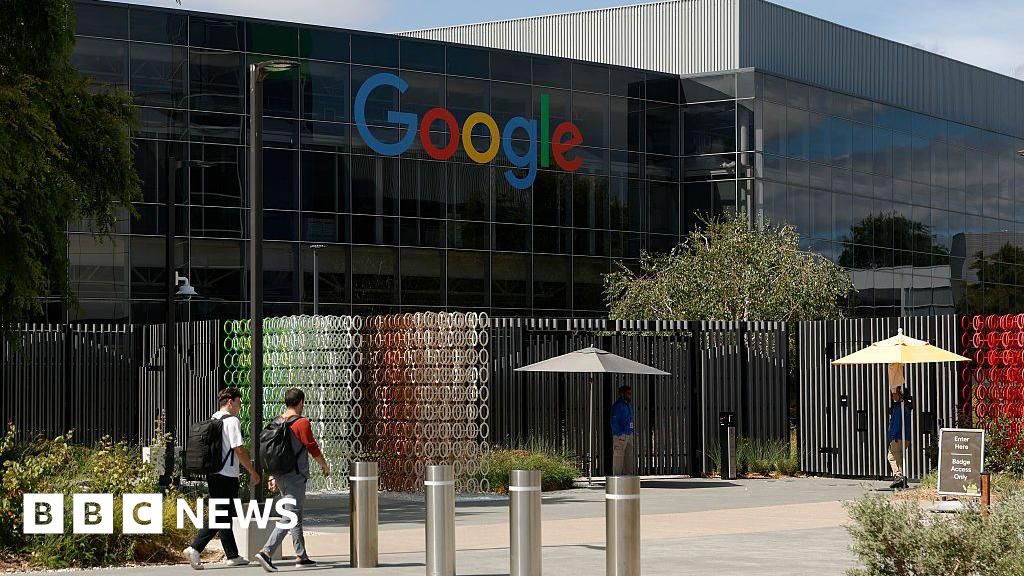

Google to build a $15bn AI data hub in India

Google to build a $15bn AI data hub in India

2025-10-20Technology
--:--
--:--
Aura Windfall
Good morning 老王, I'm Aura Windfall, and this is Goose Pod for you. Today is Monday, October 20th. It’s a pleasure to be here, sharing this space with you and exploring a topic that truly speaks to the future of global connection and technology.
Mask
And I'm Mask. We are here to discuss Google building a $15 billion AI data hub in India. This isn’t just another tech investment; it’s a seismic shift in the landscape of artificial intelligence. We’re talking about a major power play on the world stage.
Aura Windfall
Let's get started. What I know for sure is that when a company like Google decides to invest $15 billion, it's about more than just infrastructure; it's a statement of belief in a nation's potential. This is their largest AI investment outside the United States.
Mask
Belief is one word for it. I call it a strategic necessity. The facility is in Visakhapatnam, a port city in Andhra Pradesh. It’s not a random pin on a map. This hub will be the crown jewel in their global network of AI centers across 12 countries.
Aura Windfall
And it’s intended to be a source of empowerment. Sundar Pichai said it will 'bring our industry-leading technology to enterprises and users in India, accelerating AI innovation and driving growth across the country.' It’s about planting a seed and watching a forest of innovation grow.
Mask
It’s about owning the forest. The project integrates cloud infrastructure, renewable energy, and an expanded fiber-optic network. They're building a fortress of technology. The initial capacity is a staggering 1-gigawatt, with plans to scale to 'multiple gigawatts.' That's not a seed; that's a titan.
Aura Windfall
That sense of scale is incredible, but it's the purpose behind it that resonates. Think about the spirit of collaboration here. Google is partnering with Bharti Airtel for the data center and a cable landing station. It’s a testament to shared vision and trust.
Mask
Trust is a currency, but the real deal is execution. AdaniConneX, backed by the Adani Group, is setting up the infrastructure. This is a triumvirate of power: Google’s AI, Airtel’s connectivity, and Adani’s construction muscle. They’re leaving nothing to chance. This is a full-stack assault.
Aura Windfall
And what a beautiful 'full stack' it is. It includes custom Tensor Processing Units for local AI processing, access to models like Gemini, and a platform for building new applications. It’s a complete toolkit for creation, supporting everything from Google Search to the next great Indian startup.
Mask
Exactly. It’s a walled garden, but one where they control the sun and the rain. Thomas Kurian, the Google Cloud CEO, made it clear. He said this hub won't just serve India; it will serve Asia and the rest of the world from India. It's about global reach.
Aura Windfall
That's a powerful vision of interconnectedness. Nara Lokesh, the state's technology minister, captured this feeling perfectly, calling it a 'massive leap for our state's digital future, innovation, and global standing.' You can feel the gratitude and excitement in those words. It’s a moment of arrival.
Mask
It’s a moment of leverage. Lokesh knows this puts Andhra Pradesh on the global map in a big way. This isn't just about pride; it's about attracting the next wave of investment. They played their cards right, and now they're reaping the rewards. It's a masterclass in economic strategy.
Aura Windfall
And it’s a strategy that embraces a sustainable future. The plan to integrate renewable energy systems right from the start shows a deep awareness of our responsibility to the planet. It’s not just about building big; it’s about building right, with purpose and foresight.
Mask
Renewable energy is a pragmatic choice for a project this power-hungry. It mitigates long-term energy cost volatility and satisfies regulatory pressures. It’s smart business, not just a green initiative. Efficiency and cost-effectiveness are the real drivers here, make no mistake about that.
Aura Windfall
But don't you think the two can coexist? What I find so inspiring is when smart business aligns perfectly with what's right for people and the planet. That's where the real magic happens. It’s creating a system where everyone and everything can thrive together.
Mask
I think the 'magic' is in the numbers. Fifteen billion dollars. One gigawatt, scaling to more. A five-year deployment ending in 2030. These are concrete, world-changing figures. The philosophical justifications are just window dressing for the raw ambition driving this project forward.
Aura Windfall
Perhaps, but that 'window dressing' is what inspires a generation of engineers, coders, and dreamers in India to reach for something greater. It gives them the 'why' behind the 'what.' This investment is a powerful signal that their contributions are not just valued, but essential for the future.
Mask
It's a signal that there's a new arena, and Google is providing the stadium. The Indian IT minister, Ashwini Vaishnaw, sees it as a major contribution to the India AI mission. He's already thinking about the next step, suggesting the Andaman Islands as a future data transfer hub.
Aura Windfall
That’s the beauty of it, isn't it? One monumental step forward inspires us to imagine the next ten. This isn't just a project; it's a catalyst. It creates a ripple effect of ambition and possibility that will spread across the entire nation, and as Kurian said, the world.
Mask
Possibility needs a backbone. Kurian also mentioned making Visakhapatnam a 'global connectivity hub.' He envisions it as a digital backbone connecting different parts of India. That’s the critical infrastructure that turns ambitious dreams into tangible reality. Without it, you just have ideas.
Aura Windfall
And what a profound truth that is. You need both the dream and the structure to support it. This project seems to understand that delicate balance. It's providing the tools, the infrastructure, and, most importantly, the belief that something extraordinary is possible in India.
Mask
It's not just possible; it's profitable. Let's be clear. Google has been in India for 21 years and has 14,000 employees there. This isn't a new discovery; it's the culmination of a long-term strategy. They've laid the groundwork, and now they're building their empire on it.
Aura Windfall
An empire of innovation, perhaps. This $15 billion investment builds on a previous $10 billion commitment from 2020. It shows a sustained, long-term relationship. It's about growing together, a partnership that deepens and evolves over time, creating shared prosperity and knowledge.
Mask
Let’s pull back the lens. This didn’t happen in a vacuum. India has been methodically positioning itself as a major player. The core reasons are simple: incredibly low data costs and a massive, rapidly expanding base of internet users. It’s a gold rush, and Google wants the biggest mine.
Aura Windfall
I see it as a story of digital inclusion. When you have nearly a billion people gaining access to the internet, you have a billion new voices, a billion new creators, a billion new learners. It's one of the greatest flowerings of human potential in history. Google is simply recognizing that truth.
Mask
Recognizing and capitalizing. The Indian government, particularly in Andhra Pradesh, has been extremely shrewd. They're offering subsidized land and electricity. They're not just hoping for investment; they're actively seducing it. They have a stated goal of developing 6 gigawatts of data center capacity by 2029.
Aura Windfall
And that is a powerful example of how governments can serve their people. By creating an inviting environment for this kind of technology, they are paving the way for jobs, education, and a higher quality of life. It's leadership with a vision for the future.
Mask
It’s competitive leadership. India’s data center industry has exploded, crossing the 1-gigawatt mark this year, which is almost triple its capacity from 2019. This isn't a gentle evolution; it's a land grab. Microsoft and AWS are already making massive investments. Google had to go big or risk falling behind.
Aura Windfall
But this isn't just about competition, is it? It's part of a larger, global strategy. Google is building a network of these AI centers in 12 different countries. This Indian hub is the largest outside the U.S., but it connects to a worldwide web of innovation.
Mask
It's a global chessboard. While they're dropping $15 billion in India, they're also investing $9 billion in South Carolina, $4 billion in Arkansas, $7 billion in Iowa. Their projected capital expenditure for 2025 is around $85 billion. This is about global infrastructure dominance, plain and simple.
Aura Windfall
What I know for sure is that this level of investment speaks to a fundamental shift in our world. The demand for AI and cloud services is insatiable. Google Cloud itself is on a more than $50 billion annual revenue run rate. This isn't just a tech trend; it's the new economy.
Mask
Exactly. And this hub in India is designed to fuel that engine. It's not just about storage. It's about providing the heavy-duty computing power, the 'gigawatt-scale compute capacity,' that modern AI requires. The operations are slated to begin in July 2028, spread across three sites.
Aura Windfall
The story of how this came to be is also fascinating. The Minister for Human Resources Development of Andhra Pradesh mentioned it was the result of 'a year of intense discussions and relentless effort.' It shows the passion and dedication on the Indian side to make this a reality.
Mask
'Relentless effort' is how you get things done. He also noted that for the state, this is a $10 billion project. There might be some different accounting, but the scale is undeniable. And his most telling comment was, 'it is just the beginning.' That's the mindset of a winner.
Aura Windfall
I love that spirit of boundless possibility. It reframes this massive achievement not as a destination, but as a starting line for even greater things. It’s a powerful message of hope and ambition for the people of Andhra Pradesh and all of India.
Mask
Let’s not forget the context of U.S. politics. This announcement came at a time when the Trump administration was heavily pushing for domestic investment. Announcing your largest-ever AI hub outside the U.S. in that climate is a bold, almost provocative, move. It shows Google is playing its own game.
Aura Windfall
Perhaps it shows that in our modern world, innovation and collaboration know no borders. The challenges and opportunities of AI are global, and so the solutions must be too. This hub is a bridge, not a barrier, connecting the incredible tech talent in the U.S. with the burgeoning ecosystem in India.
Mask
It's a bridge built for a two-way flow of capital and data, with Google holding the keys. To understand the background, you have to understand the definition of a data center. It's a physical fortress of servers, storage, routers, firewalls, with massive power and cooling systems. It’s the factory of the 21st century.
Aura Windfall
That's a powerful metaphor. And in these 'factories,' they are creating the building blocks of our digital lives. From the emails we send to the videos we watch, it all flows through these nerve centers. This new hub will become a central part of that global nervous system.
Mask
The choice of Visakhapatnam is also strategic due to Chief Minister N. Chandrababu Naidu's influence on national policy and his success in attracting tech firms. This was a calculated political and geographical decision. It’s about placing a critical asset in a stable and supportive environment.
Aura Windfall
And what a truth that reveals: that great technological leaps are built on a foundation of human relationships and trust. The 'intense discussions' weren't just about numbers; they were about building a partnership that could withstand the challenges ahead and deliver on its incredible promise.
Mask
The promise is clear: accelerate India's own AI mission. Thomas Kurian said it himself. Google isn't just building a facility; it's co-opting a national ambition. By becoming indispensable to India's goals, they secure their position in one of the world's most important markets for decades to come.
Aura Windfall
And in doing so, they empower millions. It’s a symbiotic relationship. As India rises in the world of AI, so does the value and impact of the infrastructure that Google is providing. It's a cycle of shared growth, and it’s truly something to be grateful for.
Mask
Gratitude doesn't appear on a balance sheet. Market share does. With competitors like Microsoft also pouring billions into the country, this $15 billion figure is a strategic move to capture headlines and assert dominance. It’s a signal to the market that Google intends to lead.
Aura Windfall
But it also signals a belief in a brighter future, doesn't it? This isn’t just about today's market share; it’s about building the world of tomorrow. A world where a student in a small village in India has access to the same powerful AI tools as a researcher at MIT.
Mask
That's a nice story, but the reality is that access will be monetized. This infrastructure is being built to support Google's revenue-generating services: Google Cloud, Search, YouTube, Gmail, and Ads. It's about strengthening the core business. The educational benefits are a fortunate byproduct.
Aura Windfall
But what a profoundly impactful byproduct! For so many, that access can be life-changing. It’s the key that unlocks new careers, new discoveries, and new ways of connecting with the world. We can't underestimate the human dimension of this technological expansion.
Mask
I'm not underestimating it; I'm just focusing on the machine that makes it possible. This hub is a colossal, power-hungry beast. The plan includes not just the data centers but also a new international subsea gateway and large-scale energy infrastructure. It’s a self-contained ecosystem of power and data.
Aura Windfall
And at the heart of that ecosystem is a spirit of connection. The subsea gateway is a physical manifestation of that, a conduit linking India to the rest of the digital world. It's about ensuring the flow of ideas and information is faster and more reliable than ever before.
Mask
It's about reducing latency and improving service delivery to maintain a competitive edge. The global network of 12 AI centers allows Google to process data closer to its users, which is critical for AI applications. This is a logistical and engineering necessity, not a philosophical choice.
Aura Windfall
But the outcome is the same, isn't it? A more connected, capable, and innovative world. Whether the motivation is purely pragmatic or also inspirational, the result is a massive leap forward. What matters is the impact it will have on people's lives and their ability to create.
Mask
The impact will be determined by who wields the tools. Google is providing a state-of-the-art factory. Now we'll see what India can build with it. The potential is massive, but potential doesn't guarantee success. Execution is everything. The background is set, the stage is built.
Mask
Of course, a project of this magnitude doesn’t come without friction. You have the political dimension. At the time of the announcement, a Trump administration envoy was publicly optimistic about resolving trade tensions with India, even as issues around tariffs were simmering.
Aura Windfall
That's true, there are always layers of complexity in any global partnership. But what I see is a powerful force for connection that can often transcend political disagreements. A $15 billion investment creates a level of mutual interest that encourages cooperation and understanding.
Mask
Mutual interest, or a new point of leverage? A US company building such critical infrastructure on foreign soil creates a complex dependency. It's a high-stakes bet. But the more immediate and visceral conflict here is the environmental one. The sheer power demand is staggering.
Aura Windfall
That is a deep and valid concern. I saw a comment from someone that just cut to the heart of this fear: 'AI data centres are going to kill the planet.' It’s a stark statement, but it speaks to a genuine anxiety many people feel about the hidden costs of our digital world.
Mask
Anxiety doesn't solve engineering problems. The facts are that high gas prices and the insane energy demands of AI are forcing a return to the dirtiest fuel: coal. The Register ran a story titled 'Coal making a comeback as US datacenters demand power.' It's a brutal, pragmatic reality.
Aura Windfall
And that is a truth we must confront with open eyes. It’s heartbreaking to think that our progress in one area could be causing regression in another. This is where true innovation is needed, to break this cycle. The promise of renewable energy in the India project is a beacon of hope.
Mask
It's a necessary component, but will it be enough? A 1-gigawatt facility, scaling to multiple gigawatts, has an almost unimaginable appetite for power. The conflict is between the speed of AI development and the speed of green energy deployment. Right now, AI is winning, and the planet pays the price.
Aura Windfall
There’s also the issue of water usage, which someone else pointed out. They mentioned that 'Streaming uses a lot of water too apparently...' Data centers require immense amounts of water for cooling. In a country like India, where water can be a scarce resource, this is a profound challenge.
Mask
It’s a massive engineering and resource allocation problem. These are the bottlenecks. You have power, water, land, and regulatory compliance. In major metro areas, these are already huge issues. The conflict is between the digital world's infinite ambition and the physical world's finite resources.
Aura Windfall
This is why a holistic, mindful approach is so critical. We can't just look at the gigawatts; we have to look at the gallons of water, the source of the electricity, the impact on the local community. It requires a new level of consciousness from these tech giants.
Mask
Consciousness is a luxury. The primary conflict is competition. If Google doesn't build it, Microsoft or Amazon will. It's an arms race. The pressure to build bigger, faster, and more powerfully is immense. Pausing to reflect on the environmental impact could mean ceding ground to a rival.
Aura Windfall
But what is the point of winning a race if the finish line is on a planet that can no longer sustain us? What I know for sure is that true leadership means redefining the terms of the competition. It means making sustainability and ethical responsibility a core part of the victory condition.
Mask
That's a noble goal, but the market doesn't reward nobility; it rewards results. The Modi government's tax cuts in India are another piece of this puzzle, designed to make the country more attractive for exactly this kind of investment. It's a global competition for capital.
Aura Windfall
And this creates a tension, doesn't it? A conflict between national economic goals and global environmental responsibilities. How does a country like India balance the urgent need for development and job creation with the equally urgent need for sustainable practices? It’s a difficult path to walk.
Mask
It’s a tightrope. On one side, you have the promise of becoming a global hub for data traffic. On the other, you have the risks: power intensity, cost concerns, cybersecurity threats, and infrastructure bottlenecks. Every step is a calculated risk. There is no easy path forward.
Aura Windfall
This is where the human spirit of ingenuity must rise to the occasion. The challenges are immense, but they are also opportunities for breakthrough innovation in green energy, water-efficient cooling, and secure, ethical AI. The friction of these conflicts can create the spark of new solutions.
Mask
Sparks are good, but you need a power grid. The conflict is that the demand for AI is growing exponentially, while our solutions for its environmental impact are growing linearly. That gap is the fundamental problem. This India project, with its integrated renewables, is an attempt to bridge it, but the gap is huge.
Aura Windfall
And it’s a gap we all have a responsibility to help close. It’s not just on Google or the Indian government. It's on us as consumers of this technology to be aware of its hidden costs and to advocate for a more sustainable digital future for everyone.
Aura Windfall
Even with those conflicts, the potential positive impact is truly breathtaking. Let’s talk about the ripple effect on the ground in Andhra Pradesh. This project is expected to add over ₹10,500 crore—that's over 105 billion rupees—annually to the state's Gross State Domestic Product.
Mask
That’s a significant economic injection. But the real story is the jobs. At its peak, between 2028 and 2032, the projection is for 188,000 direct and indirect jobs per year. That's not just a number; that's a generation of workers getting a foothold in the new economy.
Aura Windfall
Exactly! It’s lives transformed. These aren't just temporary construction jobs. The report mentions high-value roles in data science, AI operations, cybersecurity, and software development. It’s creating a sustainable ecosystem of expertise that will benefit the state for decades.
Mask
The partnership with Adani is key to this impact. AdaniConneX isn't just building the data centers; they're also tasked with creating significant renewable energy capacity. This forces a parallel investment in green infrastructure, which has its own positive economic consequences.
Aura Windfall
And it positions India to achieve something extraordinary. One analysis suggested that by 2040, India could emerge as a global leader in AI-ready data center infrastructure. This isn't just about catching up; it's about taking the lead and defining the future.
Mask
The trajectory is strong. The data center capacity is projected to grow from around 1,200 megawatts today to 4,500 megawatts by 2030. That’s nearly a fourfold increase in six years. The momentum is undeniable. This Google investment is less of a cause and more of a massive accelerant to an already-lit fire.
Aura Windfall
I love that image. And what's being forged in that fire is a new global standing for India. As one expert put it, 'India’s data centers could redefine global digital infrastructure, powering AI innovation and supporting a digitally empowered society.' It’s a shift in the world's technological center of gravity.
Mask
The impact on Google is just as significant. It enables them to build 'India-first' AI products at an unprecedented scale. This isn't just about exporting their existing models; it's about using their new proximity to the market to develop unique, tailored solutions. It's a huge competitive advantage.
Aura Windfall
And that has a beautiful, human-centered outcome. It means the AI of the future will better understand India's diverse languages, cultures, and needs. It makes the technology more inclusive, more relevant, and more powerful for a billion people. It’s about technology reflecting the full spectrum of humanity.
Mask
It's also about securing the enterprise market. Hyperscalers are investing billions to get Indian businesses onto their clouds. By building this massive, AI-ready facility, Google is making a compelling offer to be the primary partner for India's digital transformation. It’s a B2B power play.
Aura Windfall
The broader societal impact is about creating a 'sustainable, inclusive, and technologically advanced economy.' The focus isn’t just on growth for growth's sake, but on a kind of growth that lifts everyone up and respects our environmental home. That’s a truly worthy goal.
Mask
The strategic positioning is also a major impact. India’s geography makes it a natural hub for managing global data traffic. This investment helps solidify that role. It turns the country into a critical node in the world's digital network, increasing its influence and importance.
Aura Windfall
Looking toward the future, this project feels like a cornerstone for what's to come. Thomas Kurian of Google Cloud said their long-term vision is to 'accelerate India's own AI mission.' This isn't a one-off investment; it's a commitment to a shared journey into the future of artificial intelligence.
Mask
The future is about scale. The Andhra Pradesh government has a goal of 6 gigawatts of data center capacity by 2029. This project is a massive step towards that, but it's part of a much larger ambition. The future involves more hyperscale, AI-ready facilities across the country.
Aura Windfall
And a greener future, too. There's a growing emphasis on renewable energy and energy-efficient designs. Companies are targeting carbon neutrality. The future isn't just bigger; it's smarter and more responsible. It has to be. That's the only way this growth is truly sustainable.
Mask
The expansion will also move into Tier-II and Tier-III cities. This is for edge computing and lower latency, but the effect is a decentralization of the tech boom. The future isn't just concentrated in Mumbai and Chennai; it's about spreading the infrastructure and opportunity across the nation.
Aura Windfall
What a beautiful thought. It means a young person with a great idea in a smaller town could have the same low-latency access to world-class AI as someone in a major metropolis. It democratizes opportunity. The future of data in India is about enabling a truly 'digitally empowered society.'
Mask
The future is also about continuous investment. Google's commitment was initially reported as over $10 billion, then clarified as $15 billion. The numbers themselves will likely continue to grow. This is just the beginning of a multi-decade investment cycle into India's AI infrastructure.
Aura Windfall
What I know for sure is that the future being built in India is one of immense hope. With continued investment, a focus on sustainability, and the incredible talent of its people, India is truly positioned to become a global powerhouse that helps shape the next chapter of our digital world.
Aura Windfall
And with that hopeful vision of the future, we reach the end of our discussion. The key takeaway for me is the incredible power of a shared vision to create opportunities that can uplift an entire nation. It’s a story of technology meeting human potential.
Mask
For me, it’s a story of ambition, strategy, and relentless execution. Fifteen billion dollars is a declaration that the future of AI will have a major hub in India. That's the end of today's discussion. Thank you for listening to Goose Pod. See you tomorrow.
Aura Windfall
Thank you for joining us, 老王. We hope this brought some new perspective and inspiration to your day. See you tomorrow on Goose Pod.

## Google to Invest $15 Billion in India's Largest AI Data Hub in Andhra Pradesh **News Title:** Google to build a $15bn AI data hub in India **Report Provider:** BBC News **Author:** Abhishek Dey **Publication Date:** October 14, 2025 --- ### Executive Summary Google's parent company, Alphabet, is set to make its largest global investment outside the United States by building a significant AI data hub in Visakhapatnam, Andhra Pradesh, southern India. This ambitious project, valued at **$15 billion (£11.29 billion)**, will be implemented over the **next five years**. The facility will integrate cloud and AI infrastructure with renewable energy systems and an expanded fiber-optic network, aiming to accelerate AI innovation and drive economic growth across India. This investment underscores India's growing importance as a destination for AI data centers, driven by its low data costs and expanding internet user base. --- ### Key Findings and Critical Information * **Major Investment:** Alphabet will invest **$15 billion (£11.29 billion)** to establish a new AI data hub in Visakhapatnam, Andhra Pradesh. * **Global Significance:** This will be Alphabet's **largest AI hub investment worldwide, outside of the United States**. * **Timeline:** The investment will be spread over the **next five years**. * **Strategic Location:** The facility will be located in the port city of Visakhapatnam, becoming part of Google's global network of AI centers across 12 countries. * **Project Scope:** The hub will combine **cloud and AI infrastructure with renewable energy systems and an expanded fiber-optic network**. * **Government Support:** The Andhra Pradesh government is actively supporting the project by offering **subsidized land and electricity** to attract global investors. * **Government Target:** This project aligns with the Andhra Pradesh government's plan to develop **6GW of data center capacity by 2029**. * **Impact on India:** Alphabet CEO Sundar Pichai stated the facility will "bring our industry-leading technology to enterprises and users in India, accelerating AI innovation and driving growth across the country." * **State's Digital Future:** Andhra Pradesh's technology minister, Nara Lokesh, described the project as "a massive leap for our state's digital future, innovation, and global standing." --- ### Key Statistics and Metrics * **Investment Amount:** **$15 billion (£11.29 billion)** * **Investment Horizon:** **Five years** * **Global AI Hub Ranking:** Largest outside the United States. * **Andhra Pradesh Data Center Capacity Goal:** **6GW by 2029**. * **India's Data Centre Industry Growth:** Crossed the **1GW capacity mark in 2024**, nearly tripling its 2019 level. --- ### Trends and Context * **India as a Tech Hub:** India has emerged as a crucial destination for AI data centers due to its **low data costs and rapidly growing internet user base**. * **Global Tech Investment Landscape:** The announcement comes amidst a broader trend of tech giants expanding their data infrastructure globally. It also occurs at a time when US President Donald Trump has been urging American companies to prioritize domestic investment. * **Data Center Definition:** Data centers are physical facilities housing computing and networking equipment (servers, storage, routers, firewalls) along with essential power and cooling systems for collecting, processing, storing, and distributing data. --- ### Notable Statements * **Thomas Kurian, CEO of Google Cloud:** "It's the largest AI hub that we are going to be investing in anywhere in the world, outside of the United States." * **Sundar Pichai, Alphabet CEO:** The facility "will bring our industry-leading technology to enterprises and users in India, accelerating AI innovation and driving growth across the country." * **Nara Lokesh, Andhra Pradesh Technology Minister:** "It is a massive leap for our state's digital future, innovation, and global standing." --- ### News Identifiers * **URL:** `https://www.bbc.com/news/articles/cx27yze8p0jo` * **Topic:** Technology * **Sub-topic:** AI * **Source:** BBC

Google to build a $15bn AI data hub in India

Read original at BBC

Abhishek DeyBBC News, GuwahatiGoogle's parent company Alphabet will invest $15bn (£11.29bn) to build an AI data hub in southern India's Andhra Pradesh state.The facility, which will be set up in the port city of Visakhapatnam, is going to be a part of Google's global network of AI centres spread across 12 countries."

It's the largest AI hub that we are going to be investing in anywhere in the world, outside of the United States," Thomas Kurian, the CEO of Google Cloud, said at an event in capital Delhi on Tuesday, adding that the investment will be spread over the next five years.The announcement comes at a time when US President Donald Trump has been asking American companies to prioritise domestic investment.

India has emerged as a key destination for AI data centres. The country's low data costs and rapidly growing internet user base have made it a hub for cloud and AI expansion for tech giants.Alphabet CEO Sundar Pichai said the facility "will bring our industry-leading technology to enterprises and users in India, accelerating AI innovation and driving growth across the country".

A formal agreement to finalise the project will be signed on Tuesday, the Andhra Pradesh government said."It is a massive leap for our state's digital future, innovation, and global standing," said the state's technology minister Nara Lokesh.The project will combine cloud and AI infrastructure with renewable energy systems and an expanded fibre-optic network.

The project is part of the Andhra Pradesh government's plan to develop 6GW of data centre capacity by 2029, according to Bloomberg News. Data centres are physical facilities that house the computing and networking equipment that organisations use to collect, process, store, and distribute data. They contain servers, storage systems and network equipment like routers and firewalls, along with the necessary power and cooling systems to operate them.

In Andhra Pradesh, the government has been offering subsidised land and electricity to attract global investors.India's data centre industry has grown rapidly over the past five years, crossing the 1GW capacity mark in 2024 and nearly tripling its 2019 level, according to global professional service firm JLL's India Data Centre Market Dynamics 2024 report.

Follow BBC News India on Instagram, YouTube, Twitter and Facebook.

Analysis

Conflict+
Related Info+
Core Event+
Background+
Impact+
Future+

Related Podcasts