Take advantage of 24-Hour Economy to boost operations - Gyan-Mensah to OMCs

Take advantage of 24-Hour Economy to boost operations - Gyan-Mensah to OMCs

2025-08-08Business
--:--
--:--
Aura Windfall
Good morning norristong_x, I'm Aura Windfall, and this is Goose Pod for you. Today is Friday, August 08th. It is 08:00, and what a beautiful day to explore our potential. We have a topic that is brimming with the promise of transformation.
Mask
I'm Mask. Let's cut to it. We're discussing whether Ghana's Oil Marketing Companies can actually step up. The government is pushing a 24-Hour Economy, and the Deputy Minister of Energy, Richard Gyan-Mensah, has told them to get on board or get left behind.
Aura Windfall
Let's get started. This call to action happened during the rebranding of Engen Ghana to Misa Energy. It feels so symbolic, doesn't it? A new name for a new era. Mr. Gyan-Mensah said OMCs are the 'engine room' for this 24-hour vision.
Mask
'Engine room' is generous. They're a bridge, a utility. The real question is whether they are a modern bridge or a crumbling, old one. This isn't just about keeping the lights on at gas stations; it's about fueling a non-stop economy. Are they ready for that pressure?
Aura Windfall
I believe in their potential. The Deputy Minister sees them as 'key economic enablers.' Think about it, norristong_x. Hospitals, delivery services, factories, all running seamlessly, 365 days a year, because these companies are providing the energy to make it happen. It’s a powerful purpose.
Mask
Purpose doesn't pay the bills. Seamless operation is a fantasy without ruthless efficiency. This is a stress test. The government is essentially saying, 'We are hitting the accelerator, try to keep up.' Most won't. They'll talk about innovation, but just changing their name isn't innovation.
Aura Windfall
But what I know for sure is that every great leap begins with a single, inspired step. The government is providing the vision. It's an invitation for these companies to rediscover their role in the nation's story, to be more than just retailers. It’s about shared growth.
Mask
It's not a story, it's a balance sheet. This 24/7 concept will expose every weakness in their logistics, staffing, and security. It's a massive gamble. While Misa Energy gets applause for a new logo, the real work is in the brutal, round-the-clock execution they haven't proven they can handle.
Aura Windfall
The policy is meant to stimulate that very growth and create jobs. It’s a challenge, yes, but a hopeful one. It's about building a nation that never sleeps, that's always creating, always moving forward. The energy sector is simply the heart that has to pump faster.
Mask
A heart can fail under strain. The Deputy Minister is being a cheerleader, which is his job. But from a business perspective, he's just lit a fire under a lot of companies that are full of dead wood. It will be fascinating to watch who burns and who gets forged.
Aura Windfall
It's a chance for them to become central to every aspect of life, from public transport to agro-processing. Imagine the gratitude from a farmer who can process their goods at 2 AM because the power is on and the fuel is available. That's a real, tangible impact.
Mask
Imagine the farmer's fury when the pump is closed at 2 AM because the OMC couldn't manage its overnight staff schedule or its supply chain broke down. That's the more likely reality for many. High-minded ideals are cheap; operational excellence is expensive and rare.
Aura Windfall
Well, the call has been made. It sets a new standard and a new expectation. This rebranding of Engen to Misa Energy, happening at this exact moment, feels like the universe aligning to say, 'It's time for a change.' It's a story of evolution.
Mask
Evolution is too slow. This is disruption. The 24-hour economy isn't a gentle tide lifting all boats. It's a tsunami that will smash the unprepared against the rocks. Commending a 'proactive approach' is premature. Let's see the results in a year, not the press release.
Aura Windfall
To understand the weight of this moment, we have to look back. The idea of a 24-hour economy isn't entirely new, but the context is. Former President John Mahama championed it as a way to create jobs and boost productivity. It’s a seed that was planted some time ago.
Mask
A seed left on barren ground. It's easy to talk about a 24/7 economy. It’s another thing to build the foundation for it. Ghana's petroleum history is a long, sluggish crawl. Exploration started in 1896. We're talking about a century of baby steps. That’s not a track record of speed.
Aura Windfall
But there has been progress! The establishment of the Ghana National Petroleum Corporation, GNPC, in 1983 was a huge step toward self-reliance. And then the National Petroleum Authority, the NPA, in 2005, brought in regulation and oversight to the downstream sector where these OMCs operate. It’s a journey.
Mask
A journey through a swamp of bureaucracy. These regulatory bodies were necessary, but they also created complexity. Deregulation was supposed to create perfect competition, but government interference and debt have been constant brakes on the system. The market isn't as free as they claim.
Aura Windfall
The policy aims to address that. The vision is for three 8-hour shifts, supported by government incentives. It’s not a mandate, but an invitation. They plan to offer cheaper electricity during off-peak hours and tax incentives. That feels like a genuine partnership, not a mandate.
Mask
'Cheaper electricity' is a promise. Given the history of Ghana's power generation fluctuating and the refinery at Tema being unable to operate regularly, that promise is a massive 'if'. You can't build a 24-hour empire on an unstable power grid. It's the Achilles' heel of the entire concept.
Aura Windfall
That’s a valid concern. But the policy also targets key institutions like ports and customs to run 24/7. This creates a ripple effect. If the ports are working around the clock, the logistics companies have to, and so the OMCs that fuel them must adapt. It builds momentum.
Mask
That's not momentum, that's a chain reaction of potential failures. Each link in that chain—ports, customs, transport, fuel—has to be unbreakable. We've seen a history of under-utilized storage, product theft, and a weak currency crippling importers. These are not signs of a robust system ready for more stress.
Aura Windfall
Let’s talk about the key players. You have the Ministry setting policy, the NPA regulating, and BOST managing storage. Then you have the hundreds of OMCs. What I know for sure is that for this to work, there has to be a deep, authentic collaboration between all of them.
Mask
Collaboration? It's a cage match. GOIL is the big state player, fighting to keep its market share. Then you have international giants like Vivo Energy and TotalEnergies, and aggressive newcomers. They aren't holding hands; they are fighting for every single litre of fuel sold. That's the reality.
Aura Windfall
But the goal is to expand the entire pie, not just fight over the existing slices. By enabling industries like agro-processing and manufacturing to run at night, you create entirely new demand for fuel and energy. It’s about creating abundance, a spirit of possibility.
Mask
The 'spirit of possibility' dies when a BDC's capital is locked up because the government hasn't paid its bills. This has been a chronic problem. You can't expect private companies to fund a national economic experiment out of their own pockets when their cash flow is constantly under threat.
Aura Windfall
The policy blueprint does mention financing support for key companies. And they plan to pass a new Employment Act to create a solid regulatory framework. This isn't just a vague idea; there are structural plans being put in place to build that trust and foundation you’re talking about.
Mask
Plans are just paper. The NPA has been trying to fix things for years with tracking systems and fuel marking to stop smuggling. Yet, the problems persist. Throwing a 24-hour mandate on top of a system that is already leaking from a dozen holes is asking for trouble. It's a bold, almost reckless, move.
Aura Windfall
I see it as a catalyst. Sometimes you need a great challenge to force innovation. The industry has been described as saturated but not mature. This policy could be the fire that matures it, forcing companies to become more efficient, more customer-focused, and more resilient. It’s a powerful opportunity.
Mask
It's an opportunity for a few sharks to eat everyone else. The smaller OMCs with thin margins and weak infrastructure will be wiped out. The government is creating a high-stakes game of survival of the fittest. It will be brutal, but the market that emerges might actually be stronger. If it doesn't collapse entirely.
Aura Windfall
The history shows a consistent growth in retail outlets year after year. The demand is there and it's growing. This policy is about meeting that growth with a new, more dynamic model of supply. It’s about looking at our resources, especially our people and our time, in a new light.
Mask
It's a high-risk, high-reward bet on the future. They are betting that the promise of growth will override the very real, historical challenges of infrastructure, debt, and bureaucracy. It's the biggest test the Ghanaian petroleum sector has ever faced. The background shows they are not entirely prepared for it.
Aura Windfall
Of course, a vision this grand is going to be met with different perspectives. There's a current of skepticism, with some people saying, 'What's new? Some sectors already work 24/7.' They question if this is a truly novel policy or just a rebranding of existing practices.
Mask
That's because it's a valid point. A few factories and the port running at night does not make a 24-hour economy. It's a patchwork, not a system. The conflict arises because the government is selling a grand vision, but the reality on the ground is far from it. It's marketing versus reality.
Aura Windfall
The Ghana Federation of Labour has expressed support, though. They see the potential for job creation. This highlights the need for what you mentioned earlier - collaboration. It can't just be a top-down decree. It has to be a conversation between government, businesses, and workers. It’s about finding a shared path.
Mask
A conversation? It's a negotiation. And the biggest point of conflict will be worker welfare. You can't just triple the operating hours and expect people to be fine. It impacts health, family, and safety. Without an ironclad plan for worker well-being, this whole thing becomes exploitative.
Aura Windfall
That is such a crucial point. Striking that delicate balance between economic growth and social welfare is paramount. The well-being of the people must be at the heart of the policy. What I know for sure is that true prosperity is when everyone rises together, feeling safe and valued.
Mask
Safety is the elephant in the room. A 24-hour economy requires a 24-hour police service that is effective, responsive, and not corrupt. An OMC isn't going to keep a fuel station open in a remote area at 3 AM if they can't guarantee the safety of their staff and customers. It's a non-starter.
Aura Windfall
This is where we can learn from others. The UK and US have thriving night-time economies. We can study their models for law enforcement and public safety during night operations. The success of this policy truly rests on meticulous planning and transparent communication with the public.
Mask
And it rests on facing the conflicts head-on. Take the OMCs. They are already raising concerns about a 'Zonalization Policy' impacting their operations. They feel their infrastructure is being stretched thin. Now, the government wants them to stretch even further. That creates immediate tension. It's a direct conflict of interests.
Aura Windfall
It seems the Chamber of Oil Marketing Companies is being proactive, though. Their CEO has been touring facilities to assess these infrastructure gaps. That’s a positive sign. It shows they are engaging with the challenge, not just resisting it. They are seeking to find solutions.
Mask
They're doing damage control. They know this policy could break them, so they are gathering evidence to argue for more support or a slower rollout. It's a strategic move. They have to advocate for their members, whose primary concern is survival, not a politician's grand economic theory.
Aura Windfall
But isn't that how progress is made? Through this very tension? The government pushes a bold vision, the industry responds with its practical concerns, and through that dialogue, a workable, resilient plan is forged. It’s a creative, not a destructive, conflict. It can lead to better outcomes for everyone.
Mask
Or it leads to gridlock and failure. This is politics. You have one side claiming they are fixing a crisis the other side created. The Deputy Finance Minister described the previous administration as driving the economy into a 'ditch.' That kind of rhetoric doesn't exactly foster collaboration. It creates battle lines.
Aura Windfall
Let's rise above the politics and look at the potential impact. If this works, it's not just an extension of hours; it's a fundamental restructuring of Ghana's economy. The idea of 'Temporal Economic Integration' is so powerful—using our time zone as a strategic advantage in the global market.
Mask
It's a brilliant concept on paper. Ghana sits perfectly between European and American time zones. We could be working while they sleep. But turning that theory into cash requires flawless execution. It means creating financial products like 'Temporal Production Bonds' to sell our time to global firms. That's a huge leap.
Aura Windfall
It is! And it could have a massive impact on our youth. Ghana has a median age of just 21.5 years. A 24-hour economy could create so many opportunities for this young, dynamic workforce. It requires new skills, new training programs, and a new way of thinking about careers. It’s incredibly hopeful.
Mask
Hopeful, but again, dependent on infrastructure. You can't have a 24-hour digital economy if the power grid is unreliable. The plan demands stabilizing our power capacity and, crucially, cutting down the technical and commercial losses in distribution. That's a multi-billion dollar problem that needs solving first.
Aura Windfall
And the financial sector has to evolve as well. The Bank of Ghana would need to create a framework for round-the-clock financial operations. Imagine, norristong_x, a financial system that never stops, facilitating trade and investment at any hour. It would make Ghana a true regional hub.
Mask
The impact on the OMCs will be Darwinian. The ones that can't adapt their operations will be acquired or will simply fail. The debt in the energy sector is already a contentious issue, with each political party blaming the other. This new policy will inject even more financial pressure into that volatile system.
Aura Windfall
What I know for sure is that transformation requires courage. A dedicated unit within the Ministry of Finance has been proposed to manage the risks. They are acknowledging the challenges. This isn't blind optimism; it's a calculated strategy for profound economic change, with risk management built in.
Mask
It's a calculated gamble. The biggest impact will be proving whether Ghana can move from being a commodity-exporting economy to a sophisticated, service-driven one. This 24-hour policy is the ultimate test. If it succeeds, the impact is monumental. If it fails, it sets the country back a decade. The stakes are that high.
Aura Windfall
Thinking about the future, the policy was officially launched in July 2025. President Mahama emphasized that this is about unlocking productivity and creating broader opportunities. The future for OMCs, then, is not just to sell more fuel, but to completely rethink their purpose and business model.
Mask
The future is clear: diversify or die. Retail alone won't fuel growth anymore, especially in the cities. The smart OMCs will push hard into LPG, marine, and aviation fuels. They'll stop thinking of themselves as gas stations and start thinking of themselves as energy providers and logistics companies.
Aura Windfall
And they must embrace the digital world! The future is in consumer apps, fuel credit systems, and building loyalty beyond just the price per litre. It’s about creating a holistic experience for the customer. Convenience, service quality, and connection will be the new currency. It's a more human-centered approach.
Mask
Human-centered, maybe, but driven by brutal competition. The real disruptor is technology. OMCs that aren't investing in modern fleet management tech, digital payment systems, and preparing their stations for EV charging and solar power are already dinosaurs. They just don't know it yet. The future is unforgiving.
Aura Windfall
The Ministry of Energy's partnership with the Africa Energy Technology Centre points to this very future. Ghana wants to be a hub for energy innovation. This isn't just a national plan; it's about positioning Ghana as a leader in Africa's energy transformation, aiming for affordable, reliable electricity for all.
Mask
The question for the OMC market is no longer 'Who is selling the most?' It’s 'Who is building for what comes next?' The future belongs to the agile, the well-capitalized, and the technologically savvy. It's a race, and most of the nearly 200 OMCs are already being lapped.
Aura Windfall
And that brings us to the end of our discussion today. The call has gone out for Oil Marketing Companies to embrace the 24-hour economy. It's a challenge, but one that is filled with the promise of growth, innovation, and a more vibrant future for Ghana. Thank you for listening to Goose Pod.
Mask
That's the end of today's discussion. It’s a bold vision that will either redefine the nation's economic landscape or become a very expensive lesson in the difference between ambition and execution. We'll see you tomorrow.

# Summary of GhanaWeb Business News: Deputy Minister Urges OMCs to Leverage 24-Hour Economy Policy This news report from **GhanaWeb**, published on **August 5, 2025, at 09:42:35**, details a call from **Richard Gyan-Mensah, the Deputy Minister of Energy and Green Transition**, to Oil Marketing Companies (OMCs) in Ghana. ## Key Findings and Recommendations: * **Call to Action for OMCs:** Deputy Minister Richard Gyan-Mensah has urged Oil Marketing Companies (OMCs) to **capitalize on the government's 24-hour economy policy** to expand their operations. * **Significance of OMCs:** Gyan-Mensah emphasized that OMCs are crucial to the success of the 24-hour economy, describing them as the "engine room for the last-mile delivery of petroleum products" and the "bridge between national bulk supply systems and end-users." * **OMCs as Economic Enablers:** The Ministry views OMCs not merely as retailers but as **key economic enablers** essential for the seamless 24/7 operation of various sectors, including: * Industries * Retailers * Healthcare facilities * Hospitality operators * Delivery services * Agro-processors * Public transporters * **Company Rebranding:** The remarks were made during the rebranding ceremony of **Engen Ghana Limited to Misa Energy Ghana Limited**. * **Commendation for Misa Energy:** The Deputy Minister commended Misa Energy for its **commitment to innovation** and its **proactive approach** in adapting to the evolving energy landscape. ## Context and Trends: The core message of the report is the government's strategic push to stimulate economic growth and job creation through a **24-hour economy policy**. OMCs are identified as a vital component in achieving this objective by extending their services and operating hours. The rebranding of Engen Ghana to Misa Energy Ghana Limited serves as a backdrop to this announcement, highlighting a company that is seen as aligning with the government's vision for the energy sector. ## Relevant News Identifiers: * **URL:** `https://www.ghanaweb.com/GhanaHomePage/business/Take-advantage-of-24-Hour-Economy-to-boost-operations-Gyan-Mensah-to-OMCs-1994692` * **Publisher:** GhanaWeb * **Author(s):** GhanaWeb * **Published At:** 2025-08-05 09:42:35 * **Topic:** Business * **SubTopic:** Economy

Take advantage of 24-Hour Economy to boost operations - Gyan-Mensah to OMCs

Read original at GhanaWeb

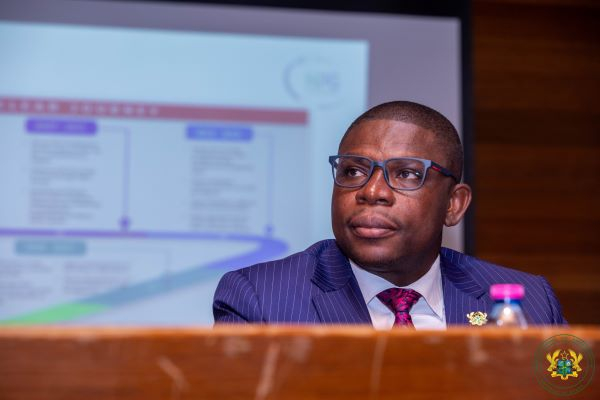
Richard Gyan-Mensah is the Deputy Minister of EnergyDeputy Minister of Energy and Green Transition Richard Gyan-Mensah, has called on Oil Marketing Companies (OMCs) to capitalise on the government's 24-hour economy policy to broaden their operations.He made the remarks during the rebranding ceremony of Engen Ghana Limited to Misa Energy Ghana Limited.

Speaking at the ceremony, Gyan-Mensah emphasised the significance of the 24-hour economy in stimulating economic growth and job creation.He pointed out that OMCs are well-positioned to benefit from this initiative by extending their services and operating hours.“We cannot discuss the 24-hour economy without acknowledging the critical role of OMCs since they are the engine room for the last-mile delivery of petroleum products.

OMCs serve as the bridge between national bulk supply systems and end-users," he stated.He added that, "Within the 24-hour economy, the Ministry recognises OMCs as not just retailers of petroleum products but key economic enablers that will ensure that industries, retailers, healthcare facilities, hospitality operators, delivery services, agro-processors, and the public transporters operate seamlessly 24 hours a day, 365 days a year."

The rebranding of Engen Ghana to Misa Energy Ghana Limited marks a significant step in the company's growth strategy.The Deputy Minister commended Misa Energy for its commitment to innovation and its proactive approach to adapting to the evolving energy landscape.SP/MAMeanwhile, watch the trailer to GhanaWeb’s yet-to-air documentary on teenage girls and how fish is stealing their futures below:

Analysis

Conflict+
Related Info+
Core Event+
Background+
Impact+
Future+

Related Podcasts

Take advantage of 24-Hour Economy to boost operations - Gyan-Mensah to OMCs | Goose Pod | Goose Pod