
UK inflation rises unexpectedly to 3.6% driven by food and fuel prices

UK inflation rises unexpectedly to 3.6% driven by food and fuel prices

2025-07-18Business
--:--
--:--
David
Good morning 跑了松鼠, I'm David, and this is Goose Pod for you. Today is Friday, July 18th. We're diving into a topic that's causing a stir across the pond.
Ema
And I'm Ema! We're here to discuss why UK inflation has unexpectedly risen to 3.6%, a twist that has economists and politicians buzzing. We'll break down what's driving it and what it means for everyone.
David
Let's get started. The headline figure is that the UK's Consumer Prices Index, or CPI, rose by 3.6% in June. This was a surprise because economists, and even the Bank of England, had predicted it would hold steady at the previous month's 3.4%.
Ema
Exactly, and that 0.2% difference might sound tiny, but in economic terms, it's like expecting a gentle slope and finding a surprise hill. It tells us that the pressure on prices isn't easing up as quickly as everyone had hoped. It’s a significant deviation from the script.
David
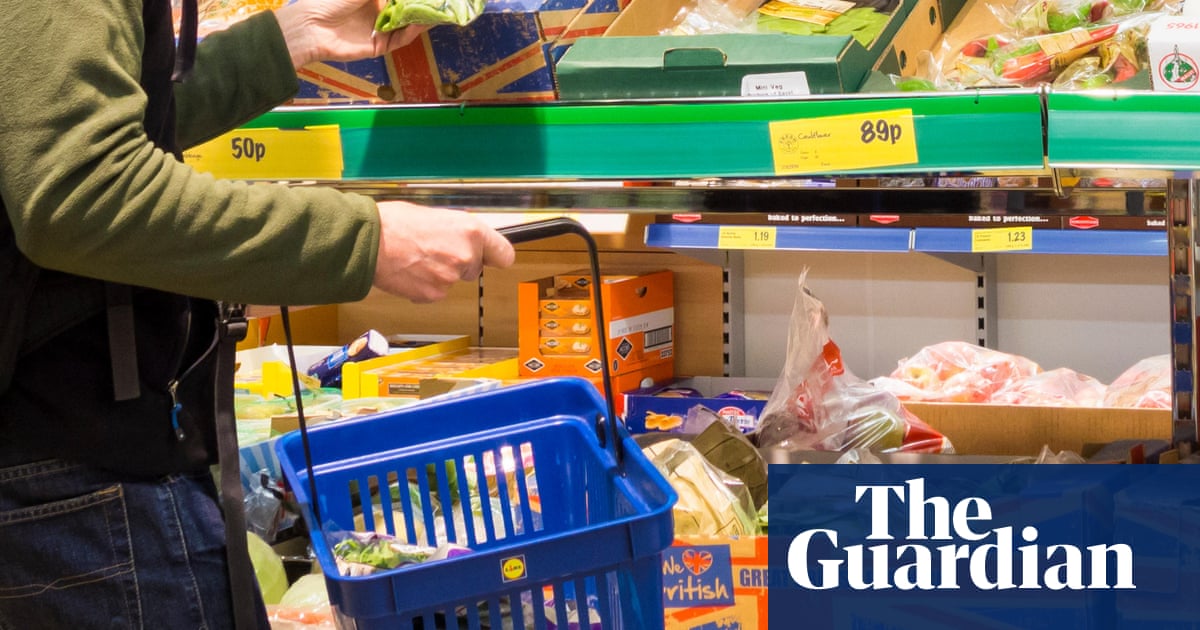
Two main culprits are behind this unexpected jump: food and motor fuel. Food and drink inflation climbed to 4.5%, the highest it's been since February of last year. We're talking about essentials like milk and eggs, but also things like cakes and cheddar cheese.
Ema
And the fuel situation is interesting. It’s not that prices skyrocketed, but that they fell much more slowly this year compared to last year. Imagine you're rolling down a hill. Last June, you got a massive push and sped up your descent. This June, you only got a tiny nudge.
David
That’s a great way to put it. Because the price drop was smaller this year, it actually contributes to pushing the annual inflation rate up. It's a statistical effect that has a very real impact on the overall inflation figure everyone is watching so closely.
Ema
So, we have more expensive groceries and a quirky effect at the petrol pumps pushing the headline number further away from the Bank of England's 2% target. It really sets the stage for a tricky economic puzzle that the new government now has to solve.
David
It certainly does. This isn't just an abstract number; it has tangible consequences for household budgets and for the broader economic policy decisions that will affect the country for months to come. It’s a clear signal that the fight against high inflation isn’t over yet.
Ema
And it raises so many questions. Is this just a temporary blip, or is it a sign of a more stubborn, 'sticky' inflation? That's what we need to dig into. It feels like the final chapter of this inflation story is proving to be a real page-turner.
David
To understand why this is such a big deal, we need a bit of context. This isn't happening in a vacuum. Just back in October 2022, the UK was grappling with an inflation rate of 11.1%, a staggering 40-year high. That was the real peak of the crisis.
Ema
Wow, 11.1%! That really puts today's 3.6% into perspective. That massive spike was largely fueled by the global surge in energy prices after the pandemic and Russia's invasion of Ukraine. So, the Bank of England had to step in and slam on the brakes, right?
David
Precisely. The Bank's primary tool for this is the base interest rate. They hiked it repeatedly, pushing it all the way to 5.25%, a 16-year high. The goal was to make borrowing more expensive, which in turn cools down spending across the economy and eases price pressures.
Ema
It’s the classic economic medicine. It tastes bad because it can slow down the economy and make mortgages more expensive, but it's meant to cure the fever of high inflation. And for a while, it seemed like the patient was recovering quite nicely, wasn't it?
David
Yes, the medicine was working. Inflation fell steadily from that peak. The situation improved so much that the Bank of England began to reverse course, cutting the interest rate four times over the past year. By May, the rate was down to 4.25%.
Ema
So, the thinking was that the worst was over. The path was clear to gently guide inflation back to the 2% target while starting to ease the pressure on the economy. Everything seemed to be going according to plan, like a smooth landing after a turbulent flight.
David
Exactly. But this unexpected rise to 3.6% in June is like hitting some sudden turbulence just before you touch the runway. It suggests that some inflationary pressures are more persistent, or 'sticky', than previously thought. The final descent is proving to be the most challenging part.
Ema
You mentioned 'sticky' inflation. Is that like when you think you've cleaned up a jam spill, but you keep finding sticky spots on the counter for days? What's causing this stickiness in the UK economy? It sounds like a frustrating problem for policymakers.
David
That’s a perfect analogy. A key area is 'services inflation'—this includes everything from a haircut to a restaurant meal or a plane ticket. This measure has been stuck at 4.7%. These prices are often less about global commodity costs and more about domestic wage pressures and business costs.
Ema
And that brings in the political dimension, doesn't it? The UK has a relatively new Labour government, and their first budget has come under the microscope. I read that it included a significant increase in employment taxes, to the tune of £25 billion. That sounds like a big move.
David
It was a very significant move. And critics, particularly from the business community, warned about the potential consequences. They argued that when the cost of employing people goes up, businesses face a tough choice: either accept lower profits or pass those costs onto their customers.
Ema
So, a policy designed to raise funds for the government could have the unintended side effect of making a simple trip to a cafe or a weekend hotel stay more expensive for everyone. It shows how interconnected everything is. It’s never just one thing, is it?
David
Never. And there are early signs that this 'cost-push' inflation is indeed happening. The data shows rising prices for restaurant meals and hotel stays, suggesting that some businesses are already passing on those higher employment costs. This adds another layer of complexity to the background of our current situation.
David
This unexpected inflation figure has ignited a fierce debate. There are deeply conflicting views on who or what is to blame, and more importantly, how to fix it. We essentially have three camps: the Labour government, the Conservative opposition, and the business community, each with a different perspective.
Ema
Let's unpack that. It sounds like a classic whodunnit. What's the government's story? How is the Chancellor, Rachel Reeves, explaining this? Is she admitting that her new budget might have contributed to the problem, or is she pointing fingers elsewhere? What's her defence?
David
The government is taking a dual approach. Publicly, Chancellor Reeves acknowledges the struggle, stating, "I know working people are still struggling with the cost of living." She's highlighting the measures they've taken to help, like increasing the minimum wage and extending the £3 bus fare cap.
Ema
So, her immediate focus is on the symptom—the cost-of-living pain—rather than the cause of the inflation itself. It's like saying, 'I know the roof is leaking, and while we figure out how to patch it, here's a bucket and a towel.' It’s a practical but perhaps not a fundamental solution.
David
That's one interpretation. For the longer-term solution, she talks about boosting economic growth by "cutting red tape." However, the opposition isn't buying it. Mel Stride, the Shadow Chancellor, places the blame squarely on the government's shoulders. His view is much more direct and confrontational.
Ema
I can imagine! Politics is never shy about pointing fingers. What's his exact accusation? Is he connecting this inflation spike directly to that £25 billion employment tax hike we talked about earlier? That seems to be the main point of contention, doesn't it?
David
Yes, that's the core of his argument. He said, "Labour’s decision to tax jobs and ramp up borrowing is killing growth and stoking inflation – making everyday essentials more expensive." It’s a powerful political attack that frames the government's own policies as the direct cause of the problem.
Ema
So you have the government saying they're helping people who are struggling, and the opposition saying the government's actions are the very reason people are struggling. It's a complete deadlock of narratives. What about the third group, the business leaders? Do they bring a different perspective?
David
They do, and it’s a more nuanced one. Kris Hamer, from the British Retail Consortium, creates a bridge between these two political viewpoints. He acknowledges the "ongoing impact of the last budget" but also points to "poor harvests caused by the extreme weather." This introduces an external factor.
Ema
Ah, the weather! The one thing no politician can control. So, if a bad harvest means less wheat for cakes or feed for dairy cows, prices for those goods will go up, regardless of tax policy. That really muddies the waters of the blame game, doesn't it?
David
It complicates the narrative significantly. And it creates a profound dilemma for the Bank of England. Their main tool, raising interest rates, is designed to curb demand. But as some analysts have pointed out, this tool is less effective against supply-side shocks like a poor harvest.
Ema
Right, you can't really stop people from buying essential food items just by making their mortgage more expensive. The Bank of England is in a real bind. They're trying to use a hammer to fix what might be a plumbing issue. It's a fundamental conflict of tools versus problems.
Ema
Okay, so we've got this economic and political tug-of-war. But let's bring it down to the ground level. What is the real, tangible impact of this 3.6% inflation rate on the everyday lives of people across the UK, including our listener, 跑了松鼠?
David
The impact is significant and widespread. The most direct effect is on the cost of living. A recent British Social Attitudes survey painted a stark picture: 26% of people now say they are struggling to live on their current income. To put that in perspective, that figure was just 16% before the pandemic.
Ema
That's a massive increase. It means that more than a quarter of the population is finding it difficult to make ends meet. This isn't just about forgoing luxuries; for many, it's about the stress of affording basic necessities. The financial anxiety behind that number must be immense.
David
It is. And the same survey found that 67% of people—a full two-thirds—feel that their income has not kept pace with the relentless rise in prices. Even if someone gets a pay raise, it's being eaten up by higher costs for food, fuel, and housing before it even hits their bank account.
Ema
And what about the other side of the coin—the businesses? We touched on them passing costs on, but that must be a scary decision. If you raise your prices too much, you risk losing customers to competitors or just losing them altogether if they can no longer afford your product.
David
Absolutely. This uncertainty has a chilling effect on business planning and investment. Entrepreneurs become cautious. They hesitate to expand, hire new staff, or invest in new equipment when the economic outlook is so foggy. This can lead to a broader economic slowdown, which has its own set of consequences.
Ema
And we're already seeing the ripples of that slowdown in the job market, aren't we? The data shows unemployment is creeping up, and the number of job vacancies is falling. It feels like a chain reaction: rising prices lead to cautious consumers and businesses, which in turn weakens the job market.
David
Looking ahead, the Bank of England has offered a forecast. They anticipate that inflation might creep up slightly more, peaking at around 3.7% in September. After that, the hope is that it will finally begin a more sustained decline towards that 2% target. So, perhaps a little more turbulence before we level off.
Ema
So, a bit more of this cost-of-living squeeze is on the horizon. What does this mean for the big question of interest rates? Are those hoped-for cuts now just a dream, or is there still a chance the Bank of England will offer some relief to the economy?
David
This is the great balancing act. The high inflation figure screams for caution, maybe even for holding rates steady. But the weakening economy, with rising unemployment, is pleading for a rate cut to stimulate growth. They are being pulled in two opposite directions at once. It’s a classic economic dilemma.
Ema
It's a true 'catch-22' situation. Damned if they cut and risk inflation staying high, and damned if they don't and risk a deeper economic slowdown. So, what's the consensus among the experts? Are they betting on a cut, or are they expecting the Bank to hold its nerve?
David
Most analysts believe the concern over the weak economy will win out, for now. They expect a small rate cut in August. However, the tone has shifted. Any future cuts will be approached with extreme caution. The idea of a smooth and predictable path of rate cuts is now off the table.
David
And that brings us to the end of our discussion. This surprising inflation figure shows just how complex the UK's economic picture is right now. It's a mix of domestic policy, global pressures, and even unpredictable factors like the weather, all shaping the financial reality for millions.
Ema
It's a powerful reminder that the economy isn't just about charts and forecasts; it's about the price of our groceries and the security of our jobs. The key takeaway is that the road back to economic stability is proving to be a lot bumpier than anyone expected. That's the end of today's discussion. Thank you for listening to Goose Pod, 跑了松鼠. See you tomorrow.

## UK Inflation Rises Unexpectedly to 3.6% in June, Driven by Food and Fuel Prices **News Title:** UK inflation rises unexpectedly to 3.6% driven by food and fuel prices **Report Provider:** The Guardian **Author:** Richard Partington **Date Covered:** June 2025 (figures released July 16th) ### Key Findings and Conclusions: UK inflation unexpectedly rose to **3.6% in June**, exceeding the forecasts of City economists and the Bank of England, which had predicted it would remain at May's reading of 3.4%. This increase underscores the challenges facing Chancellor Rachel Reeves and the Labour government's economic management. The rise is primarily attributed to the slower-than-expected fall in petrol and diesel prices compared to the previous year, and a third consecutive month of rising food price inflation, reaching its highest rate in over a year. ### Key Statistics and Metrics: * **Consumer Prices Index (CPI) Inflation:** 3.6% in June (up from 3.4% in May). * **Food and Drink Inflation:** Jumped to 4.5% in June, the highest since February 2024. * **Motor Fuel Prices:** * Fell by 9% in the year to June 2025, compared to a 10.9% drop in the year to May. * Average petrol price fell to 131.9p a litre in June, down from 145.8p a year earlier. The month-on-month drop was 0.5p in June 2025, significantly less than the 3p fall between May and June 2024. * Average diesel price fell from 151.5p to 138.5p a litre annually. The month-on-month decline was 0.6p in June 2025, compared to a 4.8p drop in the same period in 2024. * **Services Inflation:** Held steady at 4.7% in June, contrary to economists' predictions of a fall to 4.6%. This was driven by the largest June increase in air fares since 2018. * **Bank of England Base Interest Rate:** Currently 4.25% (cut four times in the past year, most recently in May). * **Bank of England Inflation Forecast:** Expected to peak at 3.7% in September, nearly double its 2% target. ### Significant Trends or Changes: * **Upward Inflationary Pressure:** The unexpected rise in inflation is moving the UK further away from the Bank of England's 2% target. * **Impact of Government Policy:** Critics argue that the Labour government's maiden budget, including a £25bn increase in employment taxes, is contributing to economic headwinds, potentially leading to job cuts and higher prices. * **Business Cost Pass-Through:** There are early signs that businesses are passing on higher employment costs to consumers, evidenced by rising prices for restaurant meals, hotel stays, and supermarket groceries. * **Labor Market Slowdown:** Concerns are growing over the strength of the UK economy, with a slowdown in the jobs market anticipated. Official figures due on Thursday are expected to show a further cooling in the labour market for the three months to May. ### Notable Risks or Concerns: * **Lingering High Inflation:** The persistent high inflation could delay further interest rate reductions by the Bank of England. * **Economic Headwinds:** The government's economic policies, particularly tax increases, are seen by critics as exacerbating existing economic challenges. * **Global Economic Outlook:** Donald Trump's "erratic trade war" is noted as a factor weighing on the global outlook. * **Cost of Living Struggle:** Chancellor Rachel Reeves acknowledged that working people are still struggling with the cost of living. ### Important Recommendations (Implied/Stated): * **Chancellor Reeves' Stance:** Reeves stated her intention to "cut red tape to help reboot the economy" and highlighted government actions such as increasing the national minimum wage, rolling out free breakfast clubs, and extending the £3 bus fare cap to support working people. * **Economist Caution:** Some economists suggest that while an August policy loosening might still occur due to economic worries, the current inflation figures may lead to increased caution regarding the pace of future rate cuts. ### Material Financial Data: * **Employment Tax Increase:** £25bn. * **National Minimum Wage Increase:** Affecting 3 million workers. * **Bus Fare Cap:** £3. ### Verbatim Quotes: * **Kris Hamer, Director of Insight at the British Retail Consortium:** "Despite fierce competition between retailers, the ongoing impact of the last budget and poor harvests caused by the extreme weather have resulted in prices for consumers rising." * **Mel Stride, Shadow Chancellor:** "Labour’s decision to tax jobs and ramp up borrowing is killing growth and stoking inflation – making everyday essentials more expensive." * **Rachel Reeves:** "I know working people are still struggling with the cost of living. That is why we have already taken action by increasing the national minimum wage for 3 million workers, rolling out free breakfast clubs in every primary school and extending the £3 bus fare cap." * **Suren Thiru, Economics Director at the Institute of Chartered Accountants in England and Wales:** "While June’s hot inflation won’t deter policymakers from sanctioning an August policy loosening, given mounting worries over economic conditions, these figures may increase caution over the pace of future rate cuts."

UK inflation rises unexpectedly to 3.6% driven by food and fuel prices

Read original at The Guardian

UK inflation unexpectedly rose in June driven by fuel and food prices, according to official figures, underscoring the challenge facing the chancellor, Rachel Reeves.The Office for National Statistics said the consumer prices index rose by 3.6% last month. City economists and the Bank of England had forecast it would remain the same as May’s reading of 3.

4%.The increase was largely caused by petrol and diesel prices falling only slightly in June compared with a much larger decrease a year earlier, alongside food price inflation rising for a third consecutive month to the highest rate in more than a year.Driving the headline rate further away from the Bank’s 2% target, the rise was announced as Labour faces intense scrutiny over its economic management after two months of negative growth and with speculation mounting over tax rises.

On Tuesday Reeves sought to shrug off Britain’s anaemic growth performance in her Mansion House speech, telling City bankers she would cut red tape to help reboot the economy.However, critics said that the chancellor’s maiden budget had added to Britain’s economic headwinds, including a £25bn increase in employment taxes that business leaders warned would force them to cut jobs and raise prices.

Some analysts said there were early signs of businesses passing on higher employment costs to consumers after a rise in the cost of restaurant meals, hotel stays and the price of supermarket groceries.Kris Hamer, the director of insight at the British Retail Consortium, said: “Despite fierce competition between retailers, the ongoing impact of the last budget and poor harvests caused by the extreme weather have resulted in prices for consumers rising.

”Mel Stride, the shadow chancellor, said: “Labour’s decision to tax jobs and ramp up borrowing is killing growth and stoking inflation – making everyday essentials more expensive.”Reeves acknowledged there was “more to do” to put more money into people’s pockets. “I know working people are still struggling with the cost of living.

That is why we have already taken action by increasing the national minimum wage for 3 million workers, rolling out free breakfast clubs in every primary school and extending the £3 bus fare cap,” she said.The UK’s annual inflation rate has risen this year after dramatic increases in water bills, energy costs and council tax, complicating the Bank’s approach to cutting interest rates.

Threadneedle Street forecasts that inflation will peak at 3.7% in September – almost twice its 2% target rate.Inflation graphicHighlighting the pressure on households, the latest figures show food and drink inflation jumped to 4.5%, the highest recorded since February 2024, driven by the rising price of cakes, meat, milk, eggs and cheddar cheese.

Motor fuel prices fell by 9% in the year to June 2025 compared with a drop of 10.9% in the year to May. Because prices fell by less than a year earlier, this contributes to pushing up the annual inflation rate.skip past newsletter promotionafter newsletter promotionWhile the average petrol price fell to 131.

9p a litre last month, compared with 145.8p a year earlier, the drop between June and May was 0.5p, versus a much larger 3p fall between the same two months in 2024.Diesel prices also fell less sharply than a year earlier, with a month-on-month decline of 0.6p a litre in June 2025, compared with a drop of 4.

8p in 2024. The average diesel price fell annually from 151.5p to 138.5p a litre.While the Bank has cut its base interest rate four times in the past year, most recently in May, to 4.25%, economists said evidence of lingering high inflation could delay further reductions.Services inflation, a measure the central bank views as a better guide to domestically generated price pressures than the headline rate, unexpectedly held steady at 4.

7% in June, led by the largest June increase in air fares since 2018. City economists had predicted a modest fall to 4.6%.However, concerns are growing over the strength of the UK economy amid a slowdown in the jobs market and as Donald Trump’s erratic trade war weighs on the global outlook. Official figures due on Thursday are expected to show a further cooling in the labour market in the three months to May.

Suren Thiru, the economics director at the Institute of Chartered Accountants in England and Wales, said: “While June’s hot inflation won’t deter policymakers from sanctioning an August policy loosening, given mounting worries over economic conditions, these figures may increase caution over the pace of future rate cuts.

Analysis

Phenomenon+
Conflict+
Background+
Impact+
Future+

Related Podcasts