
What happened
This news report from BBC News India, authored by Nikhil Inamdar, details the significant economic impact of Donald Trump's 50% tariffs on India, which came into effect on August 27th. The tariffs, an escalation from a previous 25% penalty related to India's purchases of Russian oil and weapons, have placed India...
Key Findings and Conclusions:
Key Statistics and Metrics:
Bloomberg via Getty ImagesModi has urged small shop owners and businesses to put up "Made in India" boards outside their storesDonald Trump's steep 50% tariffs on India have kicked in, weeks after the US president issued an executive order hitting the Asian country with an additional 25% penalty over its purchases of Russian oil and weapons.
This makes India - one of the US's strongest partners in the Indo-Pacific - among the countries paying the highest tariffs in the world. This could deal a blow to exports and growth in the world's fifth largest economy, given that the US was, until recently, India's largest trading partner. The tariff setback has sent the Indian government into firefighting mode.
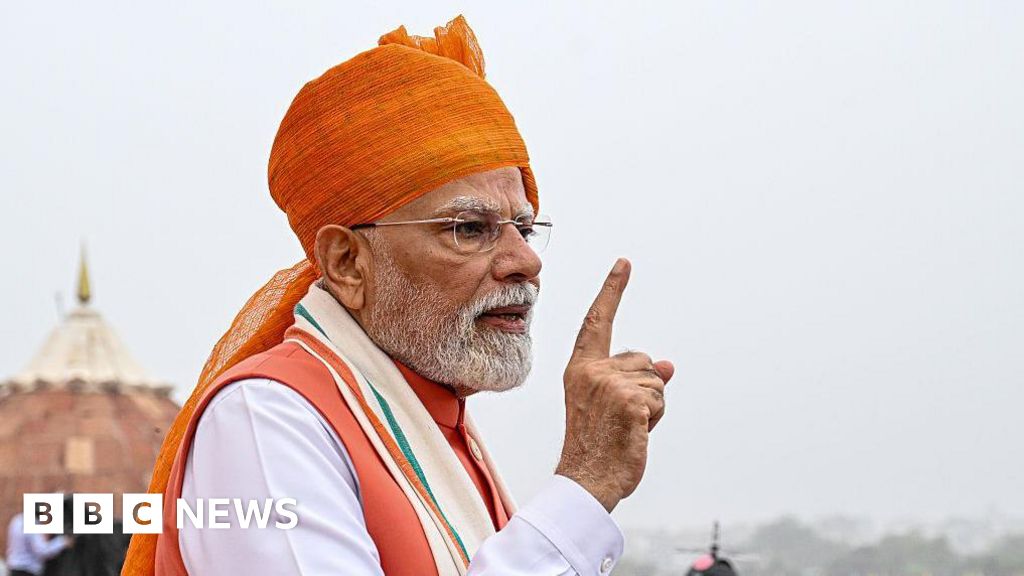
Earlier this month, Indian Prime Minister Narendra Modi made a promise. He said that a Diwali gift in the form of a "massive tax bonanza" was on its way for the common man and the millions of small businesses that power Asia's third largest economy.Wearing a bright saffron turban and addressing crowds of spectators from the ramparts of Delhi's Red Fort during Independence Day celebrations, Modi also made a rallying cry for self-reliance, urging small shop owners and businesses to put up boards of "Swadeshi" or "Made in India" outside their stores."
We should become self-reliant - not out of desperation, but out of pride," he said. "Economic selfishness is on the rise globally and we mustn't sit and cry about our difficulties, we must rise above and not allow others to hold us in their clutches."He has since repeated these comments in at least two other public addresses this week.
For many watching, this is clearly aimed at countering US President Donald Trump's brutal 50% tariff rate on India. This will disrupt millions of livelihoods across the country's export-driven industries that supply everything from clothes to diamonds and shrimp to American consumers.Amid the blow, Modi's message to his countrymen has been loud and clear - make in India and spend in India.
The former has proved increasingly difficult, with the share of manufacturing as part of India's gross domestic product (GDP) stagnating at 15% levels, despite his government rolling out subsidies and production incentives over the years. But spurring long-pending tax reforms that immediately put more money into the hands of people could help the government soften some of the blow, experts say.
And so, after a $12bn income tax giveaway announced in the budget earlier this year, Modi is now aiming for an overhaul of India's indirect tax architecture – a reduction and simplification of the goods & service tax (GST).AFP via Getty ImagesDonald Trump's 50% tariff rate on India comes into effect on 27 August GST, which was introduced eight years ago, replaced a maze of indirect taxes to reduce compliance and the cost of doing business.
But experts say it has too many thresholds and exemptions, making the system extremely complicated. They've repeatedly called for it to be revamped. Now, Modi has precisely promised that, with India's finance ministry putting out a proposal for a simplified two-tier GST system."Combined with the income tax cut in place from April 2025...
the GST rate reforms [likely worth US$20bn; £14.7bn] should together provide a meaningful push to consumption," analysts from Jeffries, a US brokerage house, said after the announcement.Private consumption is a mainstay of India's economy, contributing to nearly 60% of the country's GDP. While rural spending – supported by a bumper harvest – has remained strong, demand for goods and services in cities has continued to slow down due to lower wages and job cuts in major sectors like IT, post the pandemic.
Modi's "fiscal stimulus" or tax cuts should help ensure a consumption recovery, according to investment banking firm Morgan Stanley. It will push GDP up and drag inflation down."This is particularly crucial amid headwinds from ongoing global geopolitical tensions and adverse global tariff-related developments that might impair external demand," Morgan Stanley said.
Among the sectors most likely to benefit from the tax breaks are consumer-facing ones such as, scooters, small cars, garments and even things like cement that goes into making homes, where demand typically picks up pace around Diwali.While the specifics are unknown, most analysts estimate that the revenue loss on account of a lower GST would be offset by surplus levy collections and higher than budgeted dividends from India's central bank.
According to Swiss investment bank UBS, the GST cuts will also have a larger "multiplier effect" than the previous corporate and income tax cuts undertaken by Modi, as they "directly affect consumption at the point of purchase, potentially leading to higher consumer spending".AFP via Getty ImagesTariffs disrupt millions of livelihoods across the country's export-driven industries such as textilesModi's tax handouts could also increase the probability of a further interest rate reduction by India's central bank, which has already slashed rates by 1% in the past few months - something that is likely to spur more lending, according to analysts.
This, along with a boost in the salaries of some half a million government employees that kicks in early next year, will help India's economy retain its growth momentum, they say. India's stock markets have cheered these announcements. And despite the panic caused by trade uncertainties, earlier this month, India also got a rare sovereign rating upgrade from S&P Global, after a gap of 18 years.
A sovereign rating measures how risky it is to lend to a government or invest in a country. This is significant because it could lower the government's borrowing costs and improve foreign investment flows into the country.But even as Modi rushes through with long-delayed reforms, India's growth prospects have slowed significantly from the 8% levels seen a few years ago, and its external crisis shows no sign of ebbing.
The war of words between Delhi and Washington, especially over the latter's energy purchases from Russia, have only intensified and trade negotiations which were set to begin earlier this week, have been called off.Meanwhile, at 50%, the tariffs on India are akin to a sanction on trade between the world's biggest and fastest growing economies, say experts - a scenario that would have been unthinkable even just a few months ago.
Follow BBC News India on Instagram, YouTube, X and Facebook.
Source coverage
This news report from BBC News India, authored by Nikhil Inamdar, details the significant economic impact of Donald Trump's 50% tariffs on India, which came into effect on August 27th. The tariffs, an escalation from a previous 25% penalty related to India's purchases of Russian oil and weapons, have placed India...
Key Findings and Conclusions:
Deeper analysis
Full source content
Bloomberg via Getty ImagesModi has urged small shop owners and businesses to put up "Made in India" boards outside their storesDonald Trump's steep 50% tariffs on India have kicked in, weeks after the US president issued an executive order hitting the Asian country with an additional 25% penalty over its purchases of Russian oil and weapons.
This makes India - one of the US's strongest partners in the Indo-Pacific - among the countries paying the highest tariffs in the world. This could deal a blow to exports and growth in the world's fifth largest economy, given that the US was, until recently, India's largest trading partner. The tariff setback has sent the Indian government into firefighting mode.
Earlier this month, Indian Prime Minister Narendra Modi made a promise. He said that a Diwali gift in the form of a "massive tax bonanza" was on its way for the common man and the millions of small businesses that power Asia's third largest economy.Wearing a bright saffron turban and addressing crowds of spectators from the ramparts of Delhi's Red Fort during Independence Day celebrations, Modi also made a rallying cry for self-reliance, urging small shop owners and businesses to put up boards of "Swadeshi" or "Made in India" outside their stores."
We should become self-reliant - not out of desperation, but out of pride," he said. "Economic selfishness is on the rise globally and we mustn't sit and cry about our difficulties, we must rise above and not allow others to hold us in their clutches."He has since repeated these comments in at least two other public addresses this week.
For many watching, this is clearly aimed at countering US President Donald Trump's brutal 50% tariff rate on India. This will disrupt millions of livelihoods across the country's export-driven industries that supply everything from clothes to diamonds and shrimp to American consumers.Amid the blow, Modi's message to his countrymen has been loud and clear - make in India and spend in India.
The former has proved increasingly difficult, with the share of manufacturing as part of India's gross domestic product (GDP) stagnating at 15% levels, despite his government rolling out subsidies and production incentives over the years. But spurring long-pending tax reforms that immediately put more money into the hands of people could help the government soften some of the blow, experts say.
And so, after a $12bn income tax giveaway announced in the budget earlier this year, Modi is now aiming for an overhaul of India's indirect tax architecture – a reduction and simplification of the goods & service tax (GST).AFP via Getty ImagesDonald Trump's 50% tariff rate on India comes into effect on 27 August GST, which was introduced eight years ago, replaced a maze of indirect taxes to reduce compliance and the cost of doing business.
But experts say it has too many thresholds and exemptions, making the system extremely complicated. They've repeatedly called for it to be revamped. Now, Modi has precisely promised that, with India's finance ministry putting out a proposal for a simplified two-tier GST system."Combined with the income tax cut in place from April 2025...
the GST rate reforms [likely worth US$20bn; £14.7bn] should together provide a meaningful push to consumption," analysts from Jeffries, a US brokerage house, said after the announcement.Private consumption is a mainstay of India's economy, contributing to nearly 60% of the country's GDP. While rural spending – supported by a bumper harvest – has remained strong, demand for goods and services in cities has continued to slow down due to lower wages and job cuts in major sectors like IT, post the pandemic.
Modi's "fiscal stimulus" or tax cuts should help ensure a consumption recovery, according to investment banking firm Morgan Stanley. It will push GDP up and drag inflation down."This is particularly crucial amid headwinds from ongoing global geopolitical tensions and adverse global tariff-related developments that might impair external demand," Morgan Stanley said.
Among the sectors most likely to benefit from the tax breaks are consumer-facing ones such as, scooters, small cars, garments and even things like cement that goes into making homes, where demand typically picks up pace around Diwali.While the specifics are unknown, most analysts estimate that the revenue loss on account of a lower GST would be offset by surplus levy collections and higher than budgeted dividends from India's central bank.
According to Swiss investment bank UBS, the GST cuts will also have a larger "multiplier effect" than the previous corporate and income tax cuts undertaken by Modi, as they "directly affect consumption at the point of purchase, potentially leading to higher consumer spending".AFP via Getty ImagesTariffs disrupt millions of livelihoods across the country's export-driven industries such as textilesModi's tax handouts could also increase the probability of a further interest rate reduction by India's central bank, which has already slashed rates by 1% in the past few months - something that is likely to spur more lending, according to analysts.
This, along with a boost in the salaries of some half a million government employees that kicks in early next year, will help India's economy retain its growth momentum, they say. India's stock markets have cheered these announcements. And despite the panic caused by trade uncertainties, earlier this month, India also got a rare sovereign rating upgrade from S&P Global, after a gap of 18 years.
A sovereign rating measures how risky it is to lend to a government or invest in a country. This is significant because it could lower the government's borrowing costs and improve foreign investment flows into the country.But even as Modi rushes through with long-delayed reforms, India's growth prospects have slowed significantly from the 8% levels seen a few years ago, and its external crisis shows no sign of ebbing.
The war of words between Delhi and Washington, especially over the latter's energy purchases from Russia, have only intensified and trade negotiations which were set to begin earlier this week, have been called off.Meanwhile, at 50%, the tariffs on India are akin to a sanction on trade between the world's biggest and fastest growing economies, say experts - a scenario that would have been unthinkable even just a few months ago.
Follow BBC News India on Instagram, YouTube, X and Facebook.
How this page is built
Goose Pod turns cited reporting into a public episode summary first, then pairs that summary with audio playback so listeners can check the source material before they decide how deeply to engage.
The goal is to make this page useful as a news landing page first, while still giving listeners transcript access, related episodes, and direct links back to the original publishers.