

What happened
Report Provider: ITC.ua
Author: Олексанр Федоткін
Published Date: August 14, 2025
Kidney stones can be a serious problem, especially if they cannot be removed with oral medications. These formations are solid deposits salts and other minerals contained in urine. Over time, their accumulation in the kidneys can lead to serious problems that have to be to solve in an operational way.
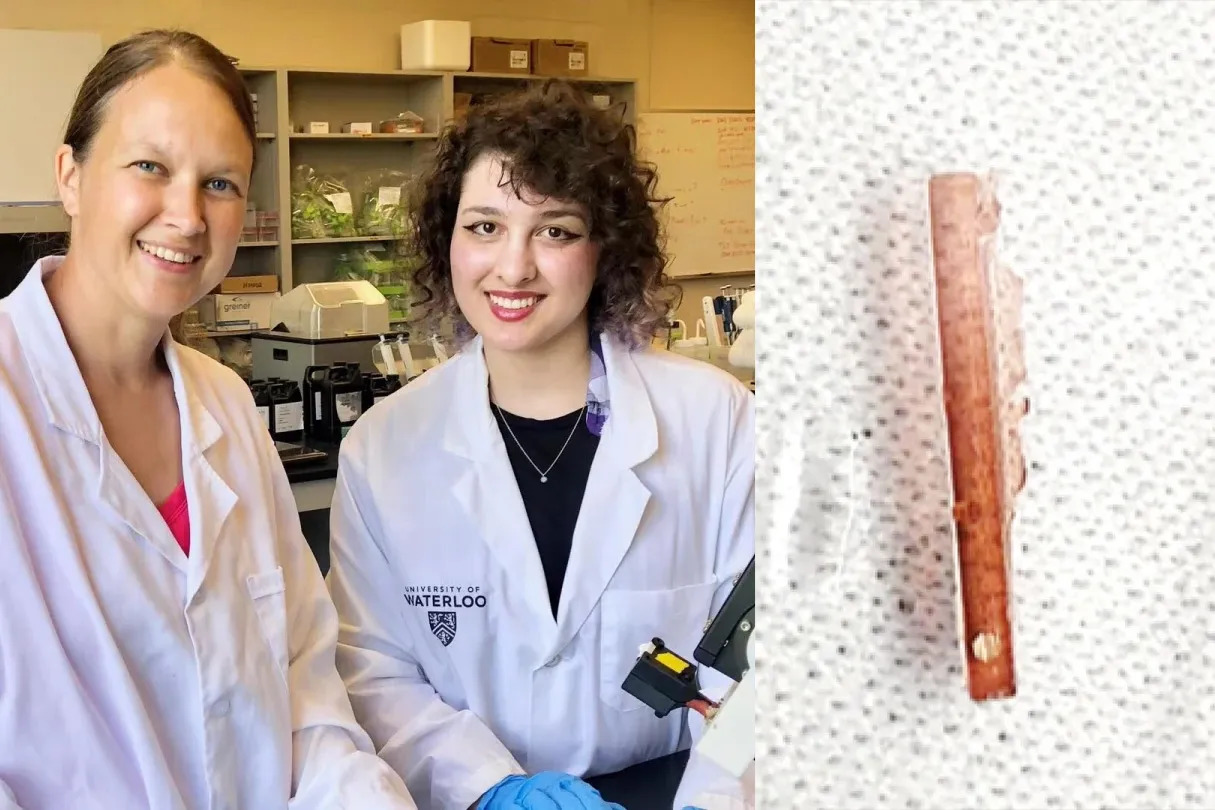
In people with regular kidney stones, the effectiveness of oral medications is even lower, as they can help dissolve these deposits or be ineffective. And even horses produce the desired effect, this is happening too slowly. In this regard, Dr Veronika Magdanz and her colleagues from the The University of Waterloo in Canada has presented a device that is a 1x1x12 mm thread.
It is made of a mixture of hydrogel and elastomer and impregnated with by the enzyme urease. A micromagnet is also attached to one of its ends. The device is supposed to be inserted into the bladder through a catheter. When this thread will end up in the body, it can be visualized using ultrasound and controlled by an external robotic arm with by a magnet that rotates at the end.
As the magnet rotates, the thread also oscillates back and forth, moving along the bacteria pass through the urinary tract and push off the walls. The thread stops when it reaches the kidney stone. It can then be held in place for several days with an external a magnetic patch glued to the skin. The thread releases urease into the surrounding urine, increasing its pH.
The decrease in acidity leads to the dissolution of the stone, after which it can be removed from the body relatively painlessly. In tests, conducted on a 3D-printed model of the human urinary tract, filled with synthetic urine, it was found, that one of the filaments increased the pH of the fluid from 6, which is typical for an environment with kidney stones, to 7.
This led to a 30% reduction in the weight of stones in the urine on average. The increased pH level lasted up to three months. Next, the researchers plan to conduct studies on large animals.“Our goal is to offer an effective alternative to existing treatments. We hope that the accelerated dissolution will relieve pain and help patients to eliminate stones from the body faster”, — explains Veronika Magdanz.
The results of the study were published in the journal Advanced Healthcare MaterialsSource: NewAtlas
Source coverage
Report Provider: ITC.ua
Author: Олексанр Федоткін
Deeper analysis
Full source content
Kidney stones can be a serious problem, especially if they cannot be removed with oral medications. These formations are solid deposits salts and other minerals contained in urine. Over time, their accumulation in the kidneys can lead to serious problems that have to be to solve in an operational way.
In people with regular kidney stones, the effectiveness of oral medications is even lower, as they can help dissolve these deposits or be ineffective. And even horses produce the desired effect, this is happening too slowly. In this regard, Dr Veronika Magdanz and her colleagues from the The University of Waterloo in Canada has presented a device that is a 1x1x12 mm thread.
It is made of a mixture of hydrogel and elastomer and impregnated with by the enzyme urease. A micromagnet is also attached to one of its ends. The device is supposed to be inserted into the bladder through a catheter. When this thread will end up in the body, it can be visualized using ultrasound and controlled by an external robotic arm with by a magnet that rotates at the end.
As the magnet rotates, the thread also oscillates back and forth, moving along the bacteria pass through the urinary tract and push off the walls. The thread stops when it reaches the kidney stone. It can then be held in place for several days with an external a magnetic patch glued to the skin. The thread releases urease into the surrounding urine, increasing its pH.
The decrease in acidity leads to the dissolution of the stone, after which it can be removed from the body relatively painlessly. In tests, conducted on a 3D-printed model of the human urinary tract, filled with synthetic urine, it was found, that one of the filaments increased the pH of the fluid from 6, which is typical for an environment with kidney stones, to 7.
This led to a 30% reduction in the weight of stones in the urine on average. The increased pH level lasted up to three months. Next, the researchers plan to conduct studies on large animals.“Our goal is to offer an effective alternative to existing treatments. We hope that the accelerated dissolution will relieve pain and help patients to eliminate stones from the body faster”, — explains Veronika Magdanz.
The results of the study were published in the journal Advanced Healthcare MaterialsSource: NewAtlas
How this page is built
Goose Pod turns cited reporting into a public episode summary first, then pairs that summary with audio playback so listeners can check the source material before they decide how deeply to engage.
The goal is to make this page useful as a news landing page first, while still giving listeners transcript access, related episodes, and direct links back to the original publishers.