
What happened
This news report from CNN, authored by Taylor Nicioli, details a significant celestial event occurring this weekend: a total lunar eclipse coinciding with the September full moon, also known as the corn moon. The report was published on September 6, 2025.
Key Celestial Events and Visibility:
Understanding the "Blood Moon" Phenomenon:
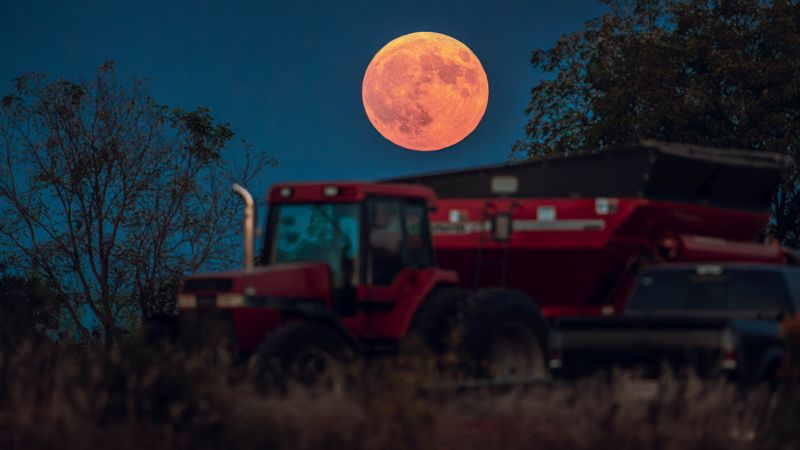
Many sky-gazers around the world will get the chance to see a dazzling celestial display this weekend — a total lunar eclipse that could cause the moon to take on a deep reddish hue. The lunar eclipse will be visible Sunday for those in Europe, Africa, Asia and Australia, according to NASA. As the sun, moon and Earth line up in their orbits, the moon will be cast into a crescent-shaped shadow before being fully blocked from the sun by Earth.
At that point, some light from the sun will make it around the edges of Earth. Blue light will be scattered by air molecules while the remaining wavelengths will reflect off the moon making it appear to glow red — what is known as a blood moon. The event will start at 11:28 a.m. ET and end at 4:55 p.
m. ET (though the eclipse will not be visible to those in the Eastern time zone). Totality — when the moon is completely covered by Earth’s shadow — will start at 1:30 p.m. ET and last for about an hour and 23 minutes, according to EarthSky. “The beauty of a lunar eclipse is that it’s gradual. For folks that have seen solar eclipses, they happen fairly rapidly.
The lunar eclipse is a far more relaxed environment,” said Noah Petro, chief of NASA’s Planetary Geology, Geophysics and Geochemistry Lab at Goddard Space Flight Center in Greenbelt, Maryland. “You don’t have to be in a specific spot (to see it), but you have to be in the right hemisphere.” For those in North and South America who will not be able to view the eclipse, there will still be opportunities to observe a bright full moon this weekend, otherwise known as the corn moon.
Here’s what experts recommend for best viewing of the full moon and the total lunar eclipse. September’s full moon — nicknamed the corn moon as it aligns with the season for harvesting corn, according to the The Old Farmer’s Almanac — will peak around the same time as the lunar eclipse. But full moons appear round to the naked eye one day before and after their peak, so sky-gazers can observe the full moon all weekend and into Monday, Petro said.
For best viewing of the full moon and the total lunar eclipse, Petro recommends going outside and finding a spot away from bright lights, as they could hinder visibility of the natural satellite as it goes through all stages of the eclipse. “A lunar eclipse is a truly incredible sight, and something you can see without any special equipment — you do not need a telescope or even the special eclipse glasses that you need for a solar eclipse,” Sara Russell, research scientist and head of the Planetary Materials Group at London’s Natural History Museum, said in an email.
But having binoculars or a telescope available could add to the viewing experience, Russell noted. The moon turns red once it is completely blocked by Earth’s shadow, illuminated by red-orange light from the sunsets and sunrises on the Earth, Petro said. Occasionally, directly before and following totality, the moon can appear to have a blue and purple band of light upon it.
This phenomenon is caused by sunlight passing through the Earth’s ozone layer in the upper atmosphere, Russell said. While full moons occur every 29 days, lunar eclipses typically only happen about twice a year when the sun, moon and Earth align. For those who may be feeling left out, the next total lunar eclipse is set to take place on March 3 and will be visible in parts of North and South America, Petro said.
“I’m always happy to see the full Moon, whether there is an eclipse or not,” Russell said. “The Moon formed in the very earliest times of the Earth’s history, and the Earth and Moon have been through a lot together. You can see the evidence of that with the naked eye, looking up to see all the craters on the Moon that have been formed over 4.
5 billion years of history.” The next three full moons will be supermoons — full moons that occur when the moon is closest to Earth in its orbit, making it appear larger and brighter than regular full moons. Here’s the list of full moons remaining in 2025, according to the Farmers’ Almanac: October 6: Harvest moon November 5: Beaver moon December 4: Cold moon Two weeks after the total lunar eclipse, on September 21, a partial solar eclipse will be visible in parts of Australia, the Atlantic, the Pacific and Antarctica.
This occurs when the moon moves between the sun and Earth, blocking part of the sun’s light from view. There are also opportunities to observe other solar system activity, including several meteor showers that will grace the night sky in the following months. Here are the peak dates of meteor showers anticipated in 2025, according to the American Meteor Society and EarthSky.
Draconids: October 8-9 Orionids: October 22-23 Southern Taurids: November 3-4 Northern Taurids: November 8-9 Leonids: November 16-17 Geminids: December 13-14 Ursids: December 21-22 Taylor Nicioli is a freelance journalist based in New York.
Source coverage
This news report from CNN, authored by Taylor Nicioli, details a significant celestial event occurring this weekend: a total lunar eclipse coinciding with the September full moon, also known as the corn moon. The report was published on September 6, 2025.
Key Celestial Events and Visibility:
Deeper analysis
Full source content
Many sky-gazers around the world will get the chance to see a dazzling celestial display this weekend — a total lunar eclipse that could cause the moon to take on a deep reddish hue. The lunar eclipse will be visible Sunday for those in Europe, Africa, Asia and Australia, according to NASA. As the sun, moon and Earth line up in their orbits, the moon will be cast into a crescent-shaped shadow before being fully blocked from the sun by Earth.
At that point, some light from the sun will make it around the edges of Earth. Blue light will be scattered by air molecules while the remaining wavelengths will reflect off the moon making it appear to glow red — what is known as a blood moon. The event will start at 11:28 a.m. ET and end at 4:55 p.
m. ET (though the eclipse will not be visible to those in the Eastern time zone). Totality — when the moon is completely covered by Earth’s shadow — will start at 1:30 p.m. ET and last for about an hour and 23 minutes, according to EarthSky. “The beauty of a lunar eclipse is that it’s gradual. For folks that have seen solar eclipses, they happen fairly rapidly.
The lunar eclipse is a far more relaxed environment,” said Noah Petro, chief of NASA’s Planetary Geology, Geophysics and Geochemistry Lab at Goddard Space Flight Center in Greenbelt, Maryland. “You don’t have to be in a specific spot (to see it), but you have to be in the right hemisphere.” For those in North and South America who will not be able to view the eclipse, there will still be opportunities to observe a bright full moon this weekend, otherwise known as the corn moon.
Here’s what experts recommend for best viewing of the full moon and the total lunar eclipse. September’s full moon — nicknamed the corn moon as it aligns with the season for harvesting corn, according to the The Old Farmer’s Almanac — will peak around the same time as the lunar eclipse. But full moons appear round to the naked eye one day before and after their peak, so sky-gazers can observe the full moon all weekend and into Monday, Petro said.
For best viewing of the full moon and the total lunar eclipse, Petro recommends going outside and finding a spot away from bright lights, as they could hinder visibility of the natural satellite as it goes through all stages of the eclipse. “A lunar eclipse is a truly incredible sight, and something you can see without any special equipment — you do not need a telescope or even the special eclipse glasses that you need for a solar eclipse,” Sara Russell, research scientist and head of the Planetary Materials Group at London’s Natural History Museum, said in an email.
But having binoculars or a telescope available could add to the viewing experience, Russell noted. The moon turns red once it is completely blocked by Earth’s shadow, illuminated by red-orange light from the sunsets and sunrises on the Earth, Petro said. Occasionally, directly before and following totality, the moon can appear to have a blue and purple band of light upon it.
This phenomenon is caused by sunlight passing through the Earth’s ozone layer in the upper atmosphere, Russell said. While full moons occur every 29 days, lunar eclipses typically only happen about twice a year when the sun, moon and Earth align. For those who may be feeling left out, the next total lunar eclipse is set to take place on March 3 and will be visible in parts of North and South America, Petro said.
“I’m always happy to see the full Moon, whether there is an eclipse or not,” Russell said. “The Moon formed in the very earliest times of the Earth’s history, and the Earth and Moon have been through a lot together. You can see the evidence of that with the naked eye, looking up to see all the craters on the Moon that have been formed over 4.
5 billion years of history.” The next three full moons will be supermoons — full moons that occur when the moon is closest to Earth in its orbit, making it appear larger and brighter than regular full moons. Here’s the list of full moons remaining in 2025, according to the Farmers’ Almanac: October 6: Harvest moon November 5: Beaver moon December 4: Cold moon Two weeks after the total lunar eclipse, on September 21, a partial solar eclipse will be visible in parts of Australia, the Atlantic, the Pacific and Antarctica.
This occurs when the moon moves between the sun and Earth, blocking part of the sun’s light from view. There are also opportunities to observe other solar system activity, including several meteor showers that will grace the night sky in the following months. Here are the peak dates of meteor showers anticipated in 2025, according to the American Meteor Society and EarthSky.
Draconids: October 8-9 Orionids: October 22-23 Southern Taurids: November 3-4 Northern Taurids: November 8-9 Leonids: November 16-17 Geminids: December 13-14 Ursids: December 21-22 Taylor Nicioli is a freelance journalist based in New York.
How this page is built
Goose Pod turns cited reporting into a public episode summary first, then pairs that summary with audio playback so listeners can check the source material before they decide how deeply to engage.
The goal is to make this page useful as a news landing page first, while still giving listeners transcript access, related episodes, and direct links back to the original publishers.