Fed stays cautious, but tariff impact could spike inflation: Peter Cardillo

Fed stays cautious, but tariff impact could spike inflation: Peter Cardillo

2025-08-04Business
--:--
--:--
Aura Windfall
Good morning norristong_x, I'm Aura Windfall, and this is Goose Pod for you. Today is Monday, August 04th. The spirit of today's conversation is centered on a crucial economic question: the Fed's caution in the face of potential inflation.
Mask
I'm Mask. We're here to discuss the real story: "Fed stays cautious, but tariff impact could spike inflation," according to Peter Cardillo. The market is showing weakness, and we need to break down why the old rules might not apply anymore. It's time for some disruptive thinking.
Aura Windfall
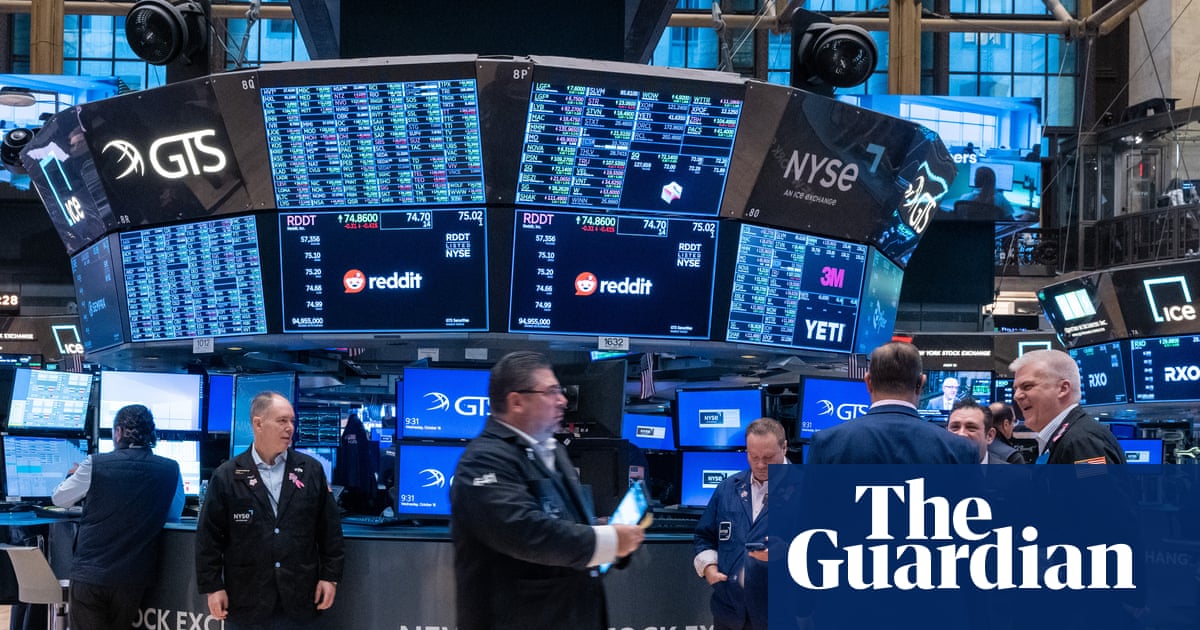
Let's get started. Peter Cardillo points to a late sell-off, suggesting the market is refocusing on trade tensions. There's a feeling of anxiety, a collective holding of breath. What I know for sure is that this uncertainty touches everyone, not just the traders on Wall Street.
Mask
Anxiety is a waste of energy. The market had a good run, coasting on a strong earnings season. The Magnificent Seven performed, and the outlook was optimistic. But that's rearview mirror stuff. The brick wall Cardillo mentions isn't a possibility; it's an inevitability if you're not paying attention.
Aura Windfall
A brick wall feels so final, though. Is it truly inevitable, or is it a challenge inviting us to find a new path? The core truth is that this rally was built on the foundation of solid earnings. But now, it seems that foundation is being shaken by these tariff jitters.
Mask
It's being tested. Foundations are meant to be tested. The headline is the tariff deadline. Trump has been clear: no extension. He already signed an executive order for a 10% hike on some countries. This isn't just talk; it's a calculated move to apply maximum pressure. Action, not indecision.
Aura Windfall
And that pressure creates such volatility. We've seen the S&P and Nasdaq at record highs, a testament to incredible innovation and performance. But now, declines. Is the market just now waking up to the reality that these tariffs will have an inflationary impact down the road?
Mask
The market is a slow-moving beast, often late to the party. Of course, the inflationary impact hasn't been fully priced in. Cardillo is right. Look at the PCE data; it's already creeping up. Tariffs on Canadian goods, for example, are a direct tax that will show up in the numbers. It's simple cause and effect.
Aura Windfall
It brings us back to the heart of the matter—the Fed's cautious stance. They didn't lower interest rates, which the market was desperately hoping for. It feels like we're entering a new month, a historically slow period for stocks, with a storm brewing on the horizon.
Mask
"Hoping for" is not a strategy. The Fed is being pragmatic, for once. Entering a slow month with this much tariff pressure means you don't cut rates. You hold your ground. Unless there's a major reversal on tariff policy, which is unlikely, we are in for a rough ride. Businesses need to adapt or die.
Aura Windfall
"Adapt or die" is a powerful, if intense, way to put it. It speaks to a larger truth about resilience. But to truly understand the path forward, we have to look at the journey that brought us here. These trade tensions didn't just appear out of thin air.
Mask
Exactly. This isn't some random storm. It's a controlled demolition of a broken system. To understand the current tariff situation, you have to understand the decades of bad deals that preceded it, starting with NAFTA. It was a relic of a different era, built on flawed assumptions.
Aura Windfall
That's a fascinating bridge to our next point. Let's explore that background, because the story of NAFTA and its transformation into the USMCA is really the story of how we got to this very moment of tension and uncertainty. It’s a story of promises, both kept and broken.
Aura Windfall
What I know for sure is that every agreement begins with a purpose, a spirit. NAFTA, back in 1994, was born from a bipartisan hope to integrate the economies of Canada, the U.S., and Mexico. The goal was to eliminate tariffs and foster a new era of shared prosperity.
Mask
Hope doesn't balance a trade deficit. The goal was to turn Mexico into a market for U.S. exports and a source of cheap labor. It worked, to an extent. Trade tripled to over $1.1 trillion by 2016. But it was a one-sided victory that hollowed out American manufacturing. That’s not prosperity; it’s outsourcing.
Aura Windfall
But there were undeniable benefits, weren't there? Increased cross-border investment, new market opportunities. It wasn't all negative. The spirit of the agreement was about growth, and in some sectors, it did create jobs and catalyze Mexico's transition to a more open, modern economy. The story has many layers.
Mask
Layers of failure. While some U.S. sectors benefited, the auto industry lost about 350,000 jobs. Trump called it the "worst trade deal ever made" for a reason. He wasn't just being provocative; he was pointing out a fundamental flaw. It was a deal that needed to be torn down and rebuilt from scratch.
Aura Windfall
And that rebuilding process led to the USMCA. It's interesting because it wasn't just a Republican effort; it received broad bipartisan support. This suggests a shared understanding that the old way wasn't working. It even included more comprehensive labor and environmental provisions, which is a step forward, right?
Mask
It was a step, but a forced one. The USMCA tightened the rules. It demanded that 75% of a vehicle's content originate in member countries, up from 62.5%. And it introduced a critical labor stipulation: 40% of vehicle content had to come from factories paying at least $16 an hour. That's not a suggestion; it's a demand for fair wages.
Aura Windfall
That wage provision seems like a powerful shift toward protecting workers. It’s a move to ensure that the benefits of trade are shared more equitably. It speaks to the truth that an economy is only as strong as the people who power it. So the USMCA was an attempt to right some of NAFTA's wrongs.
Mask
An attempt, yes. The USMCA entered into force in July 2020, billed as a "mutually beneficial win." It created a more level playing field, but the debate isn't over. The anxiety over trade deals persists because of stagnant wages and income inequality. The system is still fragile.
Aura Windfall
It's true that economists still debate NAFTA's precise effects, trying to untangle them from other massive forces like technological change and trade with China. But the public perception, especially in the U.S., was that it cost jobs. That feeling is a powerful political force.
Mask
Perception is reality in politics and markets. While economists debate, China's competition arguably had a bigger impact. But NAFTA became the symbol of a flawed approach to globalization. The USMCA was the first shot in a new war—a war to rebalance global trade, not just manage its decline. This brings us to the core conflict.
Aura Windfall
Yes, this history of renegotiation and the lingering anxieties set the stage perfectly for the current conflicts. It's not just about one tariff deadline; it's about a fundamental disagreement on how global trade should work. A clash of philosophies, really. Let's delve into that.
Aura Windfall
The central conflict, as I see it, is this relentless pressure versus a desire for stability. President Trump's declaration of "no extension" on the August 1st tariff deadline is a perfect example. It creates a sense of crisis, while many in the market are simply seeking clarity and a moment to breathe.
Mask
"A moment to breathe" is a luxury you can't afford in a trade war. This isn't about stability; it's about victory. The strategy is to create maximum leverage. Look at the deals with the EU and Japan—a 15% tariff. Look at the proposed rates for Brazil at 50% and Canada at 35%. This isn't random; it's a targeted assault.
Aura Windfall
But this assault, as you call it, has consequences that ripple outward. Michael Feroli at J.P. Morgan noted that these tariff rates bolster the case for the Fed to be extremely cautious. The Fed is caught between trying to manage inflation and not wanting to stifle growth. It’s an impossible position.
Mask
It’s not impossible; it’s just difficult. The Fed’s job is to react to reality, not to wishful thinking. The reality is that tariffs create inflationary pressure. Fed Chairman Powell himself said his obligation is to keep long-term inflation anchored. He can't let a temporary, tariff-driven price spike become a permanent problem. So he holds. It's logical.
Aura Windfall
But logic doesn't always soothe market jitters. There's a profound disagreement here. On one side, you have the administration using tariffs as a tool for negotiation and, as you say, disruption. On the other, you have businesses and economists warning that this uncertainty is weighing heavily on sentiment and investment.
Mask
Let it weigh on them. Discomfort is a catalyst for change. For decades, other countries used tariffs and non-tariff barriers against the U.S. Now the shoe is on the other foot. The proposed 25% tariff on autos and auto parts, for example, is designed to force a change in supply chains. It will be painful, but it's necessary.
Aura Windfall
Is it, though? What I hear from economists like Bruce Kasman is that the risk of a global recession has risen to 40%, largely due to this exact policy. He says the administration's shift in applying tariffs could have a much larger impact on sentiment than the direct economic effects. It's the fear itself that causes the damage.
Mask
Fear is a choice. So is courage. Kasman sees risk; I see opportunity. This is a high-stakes game. China retaliated with tariffs over 100%. Of course, that's going to cause turbulence. J.P. Morgan lowered China's growth forecast. That's the point. It shows the pressure is working. This is what rebalancing looks like.
Aura Windfall
At the end of the day, though, who bears the cost of this rebalancing? Murat Tasci from J.P. Morgan made it clear: tariffs are a tax on imports, and that tax "nearly always falls on domestic sellers and consumers, and not foreign producers." It’s a conflict that ultimately lands on the wallets of ordinary people.
Aura Windfall
And that brings us to the impact, which is no longer theoretical. The recent wave of tariffs has created what one report called "radical uncertainty for businesses." Since the announcement of reciprocal tariffs, global financial markets have seen extreme volatility. It’s a feeling of instability that touches everyone.
Mask
Good. Stability is stagnation. The U.S. weighted-average tariff rate has skyrocketed from around 2% to over 20% in a matter of months, the highest in a century. China responded with 125% tariffs. This isn't uncertainty; it's a clear signal. The old way of doing business is over. Reshore your manufacturing or pay the price.
Aura Windfall
But that price is being paid right now. A study on the 2018-19 tariffs found a statistically significant increase in consumer goods prices. The pass-through was full and quick, happening within just two months. This isn’t a distant threat; it’s a present reality reflected in checkout prices.
Mask
It’s a necessary, short-term cost for a long-term strategic goal: boosting U.S. manufacturing and reinforcing national security. The administration identified critical sectors—autos, batteries, microelectronics, pharmaceuticals. The goal is to bring those jobs back. One manufacturing job creates seven to twelve other jobs. That's the real impact.
Aura Windfall
I understand the goal, but the immediate impact on inflation is undeniable. The most recent tariffs from this year have already caused a 0.3% increase in core goods PCE prices. It's a small number that represents a huge financial burden when spread across millions of families. It's a tangible weight.
Mask
It's a calculated investment. That 0.3% increase is a down payment on future economic independence. As Donald Trump's actions show, this is about reconfiguring global supply chains. It's protectionism, yes, but it's protectionism with a purpose—to stop the bleeding of jobs and investment at the expense of the global economy. It's a necessary correction.
Aura Windfall
A correction that feels like a shock to the system. The damage to the global economy is becoming increasingly evident. Even if financial markets find a way to adapt, the underlying structure of trade and investment is being reshaped under duress. This leads us to wonder, what does the future hold in this new, volatile landscape?
Aura Windfall
Looking toward the future, the picture seems painted with volatility. The core truth is that these trade tensions are now a primary driver of market uncertainty. Business sentiment is fragile, and that feeling of unease can amplify the economic impact far beyond what the numbers alone would suggest. It’s about confidence.
Mask
Confidence is built on strength, not on avoiding conflict. The projections are clear: tariffs will dampen GDP growth. A universal 10% tariff could reduce global GDP by 1%. The risk of a global recession is real. But this is the price of reshaping the world order. No guts, no glory. The future belongs to those who act boldly.
Aura Windfall
But boldness must be balanced with wisdom. The Fed is expected to remain on hold, trying to navigate these inflationary pressures without derailing the economy entirely. There's a real risk of stagflation. What does this mean for the average person's financial future and their sense of security?
Mask
It means they need to be adaptable. The era of predictable, slow growth is over. The future market will be defined by strategic shocks and rapid realignments. As J.P. Morgan's strategists suggest, we're looking at range-bound equity markets, caught between the baseline and the bull case. The key will be navigating the turbulence, not waiting for it to pass.
Aura Windfall
That's the end of today's discussion. What I know for sure is that the economy is at a pivotal moment. The Fed remains cautious, while the full impact of these tariffs on inflation may still be unfolding. Thank you for listening to Goose Pod, norristong_x. We hope this brought you clarity.
Mask
The key takeaway is that market volatility is the new normal, driven by aggressive trade policy. Don't underestimate the potential for an inflation spike. Thanks for tuning into Goose Pod. See you tomorrow.

## Summary of Market Analysis: Tariffs, Inflation, and Fed Caution **News Title:** Fed stays cautious, but tariff impact could spike inflation: Peter Cardillo **Report Provider:** The Economic Times (via ET Now) **Date of Publication:** August 1, 2025 This report summarizes the market outlook presented by Peter Cardillo of Spartan Capital Securities, focusing on the renewed impact of trade tensions and tariffs on global markets, particularly in light of the Federal Reserve's cautious stance. ### Key Findings and Conclusions: * **Market Vulnerability Despite Strong Earnings:** Despite a recent rally driven by strong corporate earnings, especially from the "Magnificent Seven," U.S. markets (specifically the S&P and Nasdaq) are showing signs of weakness. This is attributed to a market refocus on trade tensions and their future implications, suggesting that the market can still hit a "brick wall." * **Tariff Deadline and Potential for Volatility:** The approaching tariff deadline (today) and President Trump's stated determination not to extend it are major concerns. While Trump has indicated no extension, he has also signed an executive order imposing an additional 10% hike on some countries, effective August 7th. The original 25% to 30% hike on most tariffs is expected to go into effect today. This uncertainty creates a high potential for volatility in global markets in the coming weeks, especially if tariff policies are not altered. * **Inflationary Impact of Tariffs:** The market is beginning to price in trade-related negatives, and the inflationary impact of tariffs is expected to become more apparent. Yesterday's **PCE (Personal Consumption Expenditures) data came in slightly higher than market and internal expectations**, which Cardillo interprets as an early indication of tariff-driven inflation "creeping into the system." * **Example:** Tariffs on certain Canadian products have been raised from **25% to 35%**. These specific items were excluded from the U.S.-Mexico-Canada trade agreement from Trump's first term, and these increases are expected to be reflected in inflation numbers. * **Federal Reserve's Cautious Stance:** The Federal Reserve's recent decision not to lower interest rates remains a "sticking point" for the markets. This cautious approach, combined with the escalating trade tensions, contributes to market concerns. * **Outlook for the Coming Month:** Entering a new month, which is typically a slow period for stocks, the analyst anticipates a "rough ride" unless there is a change in tariff policy. ### Notable Risks and Concerns: * **Trade Tensions:** The primary risk highlighted is the ongoing and potentially escalating trade tensions, particularly the imposition of new and increased tariffs. * **Inflationary Pressures:** The direct impact of tariffs on inflation is a significant concern, with early signs already being observed in economic data. * **Market Correction:** The recent sell-off and the potential for further declines suggest that the market's previous rally might be unsustainable given the current geopolitical and trade landscape. * **Federal Reserve Policy:** The Fed's inability or unwillingness to lower interest rates adds another layer of uncertainty and potential constraint on market growth. ### Key Statistics and Metrics Mentioned: * **Tariff Hikes:** * Additional **10%** hike on some countries (effective August 7th). * Original **25% to 30%** hike on most tariffs (supposedly going into effect today). * Tariffs on certain Canadian products raised from **25% to 35%**. * **PCE Data:** Came in "slightly higher than both market and our own expectations" yesterday, indicating early signs of inflation. ### Expert's Statement: Peter Cardillo of Spartan Capital Securities states, "But can we hit a brick wall now, especially since earnings don’t appear to be a problem? The answer is yes, we can. In fact, we saw a late sell-off last night, largely due to the market refocusing on trade tensions and their future implications." He also notes, "the PCE came in slightly higher than both market and our own expectations. That’s an early indication of tariff-driven inflation creeping into the system."

Fed stays cautious, but tariff impact could spike inflation: Peter Cardillo

Read original at The Economic Times

"But can we hit a brick wall now, especially since earnings don’t appear to be a problem? The answer is yes, we can. In fact, we saw a late sell-off last night, largely due to the market refocusing on trade tensions and their future implications," says Peter Cardillo, Spartan Capital Securities.Now, of course, the big headline is the tariff deadline ending today.

What’s your sense—do you think there could be another extension? While President Trump has stated there will be no extension, do you believe there’s still a chance? And if not, how volatile do you think the coming weeks could be for global markets?Peter Cardillo: Well, President Trump has said there won’t be an extension, but he did sign an executive order yesterday, imposing an additional 10% hike on some countries, which goes into effect on August 7th.

The original 25% to 30% hike on most tariffs is supposedly going into effect today. So, the question is whether or not he’ll change his mind in the next few days. But it appears he is determined not to.Now, whether this is just tough talk and rhetoric, or if it’s going to materialize into real action—we’ll just have to wait and see.

But the markets are beginning to show signs of tariff jitters once again. We've had a good run in stocks recently, largely due to a strong earnings season. Many large companies have reported solid earnings and, in many cases, provided a fairly optimistic outlook. That has been the backbone of the current rally.

But can we hit a brick wall now, especially since earnings don’t appear to be a problem? The answer is yes, we can. In fact, we saw a late sell-off last night, largely due to the market refocusing on trade tensions and their future implications.Picking up from what you just said—the U.S. markets have been sitting at record highs, especially the S&P and Nasdaq, rallying on the back of stellar earnings, particularly from the Magnificent Seven.

But as you mentioned, we’ve now seen declines in U.S. markets, likely because the market has started to price in trade-related negatives. Wasn’t this kind of correction expected, given the steep tariffs Trump has been imposing? Surely, there will be an inflationary impact down the road. Would you say that hasn’t been fully priced in yet, and that it will start showing up in inflation numbers soon?

Peter Cardillo: Yes, absolutely. In fact, if you look at yesterday’s data, the PCE came in slightly higher than both market and our own expectations. That’s an early indication of tariff-driven inflation creeping into the system. For example, tariffs on certain Canadian products have been raised from 25% to 35%.

These are items excluded from the U.S.-Mexico-Canada trade agreement from Trump’s first term, and those increases will reflect in the inflation numbers.This brings us back to the Fed's cautious stance. As you know, they didn’t lower interest rates recently, and that remains a sticking point for the markets.

Entering a new month—typically a slow period for stocks—there’s a strong chance that unless there’s a change in tariff policy, we could be in for a rough ride.

Analysis

Phenomenon+
Conflict+
Background+
Impact+
Future+

Related Podcasts

Fed stays cautious, but tariff impact could spike inflation: Peter Cardillo | Goose Pod | Goose Pod