

What happened
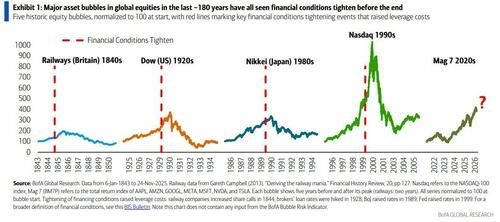
全球股市因AI泡沫担忧而下跌,欧洲市场领跌,亚洲芯片股暴跌。尽管部分AI公司业绩亮眼,但市场对“循环融资”和高估值表示担忧。分析师警告,AI热潮可能重蹈互联网泡沫覆辙,但也有观点认为AI的真实创新和盈利能力是其价值支撑。
Deutsche Bank: Growing chorus of 'whether we might be on verge of equity correction'Jim Reid, analyst at Deutsche Bank, said there is talk of whether we are “on the verge of an equity correction”. The last 24 hours have brought a clear risk-off move, as concerns over lofty tech valuations have hit investor sentiment.
Markets compounded these losses in the early hours of Asian trading but have been rallying back in the couple of hours prior to going to print with US futures clawing back towards flat with the Kospi rallying back a couple of percentage points from early -5% plus losses. On Wall Street yesterday, the S&P 500 closed down 1.
17%, losing ground because of sharp losses among tech stocks, and there was a big slump for Palantir (-7.94%) after its earnings the previous day.Reid added: Whilst the moves were only one day’s selloff, the market narrative saw a discernible shift, with a growing chorus discussing whether we might be on the verge of an equity correction.
That speculation has gathered pace over the last month in particular, mainly because the Magnificent 7 has diverged from the rest of the S&P 500, which has revived questions about how concentrated this equity market now is. Indeed, whilst the Mag 7 have been advancing in recent weeks, the equal-weighted S&P 500 actually fell in October for the first time in 6 months.
Yesterday’s decline for Palantir (-7.94%) was seen as emblematic of this shift, particularly given they’d actually raised their revenue outlook the previous day. But given their share price had quadrupled in the last year, that’s set the bar incredibly high for any earnings releases. In fact, the Magnificent 7 (-2.
28%) led the declines yesterday, with Nvidia itself down by a larger -3.96% as some of those top-performing stocks came under scrutiny. Key events4m agoLessons for Reeves ahead of budget from ex chancellor Osborne29m agoUS employers add 42,000 jobs in hiring rebound – ADP2h agoStock futures point to lower Wall Street open; analyst: 'High valuations like blue sky'3h agoGlobal stock markets fall sharply over AI bubble fears3h agoWetherspoons 'more cautious' ahead of budget3h agoDrax signs new subsidies deal with UK goverment3h agoBosses at six water firms had £4m in bonuses blocked under new rules, Ofwat says3h agoOzempic maker Novo Nordisk cuts sales and profit forecasts again4h agoM&S boss urges chancellor not to 'slap more taxes on everyday economy'4h agoUK watchdog extends consultation on £11bn car loans compensation scheme4h agoBitcoin dips below $100,0005h agoEuropean stock markets fall more modestly after Asia sell-off5h agoChina bans foreign AI chips from state-funded data centres – report6h agoDeutsche Bank: Growing chorus of 'whether we might be on verge of equity correction'6h agoThinktanks urge Rachel Reeves to overhaul ‘broken’ tax system6h agoUS supreme court to hear oral arguments on legality of Trump imposing tariffs7h agoIntroduction: China ends tariffs on US imports including farm goods but soy bean levies remain; M&S profits hammered by cyber-attackShow key events onlyPlease turn on JavaScript to use this featureLessons for Reeves ahead of budget from ex chancellor OsborneGeorge Osborne told MPs today that he regrets making steep cuts to investment spending in the coalition government, though he said there were strong political and economic reasons at the time for rejecting calls to change course.
The former chancellor said he increased investment spending compared to the deep cuts scheduled by his predecessor, Labour’s Alistair Darling. But he said looking back there was a good argument that it should have been higher.Asked by Treasury committee member and Labour MP Yuan Yang why he rejected using low interest rates when he was in charge of the Treasury from 2010 to 2016 to increase investment spending, he said: With the passage of time you look back on it and think maybe that was the wrong thing and we should have rethought the capital budget.
We definitely cancelled things that we later had to reinstate, which was not ideal. But if we had massively increased the capital budget it would have put more pressure on current spending at a time when we had a high budget deficit. It would also have put more pressure on us to raise taxes. Sir Vince Cable, a former business secretary who was also quizzed by the committee ahead of the budget on 26 November, said senior civil servants warned him that the bond markets were extremely concerned about the level of the UK’s annual deficit and the rising level of debt.
They said the bond markets don’t distinguish between capital and current spending, it all borrowing. And that’s the argument that was thrown back at us. I think with hindsight, this is one area where we caould have taken a different track,” said cable, who was business secretary in the coalition government.
Osborne added that Rachel Reeves, the current chancellor, should protect investment spending in the budget and would need to announce “unavoidable” tax hikes to balance the books.However, he said the chancellor should demand deep reforms from Whitehall departments in return for extra cash.Osborne and Cable said there should also be tax reform such as merging income and national insurance levies and scrapping fuel duty relief.
Former business secretary Vince Cable and former chancellor George Osborne appearing before the Treasury Committee, for a hearing on Budget 2025, at the House of Commons in London. Photograph: House of Commons/UK Parliament/PAOsborne said it would be “messy” to make small adjustments and it would be “easier to go for one of the big three taxes: income tax, national insurance or VAT” while overhauling the system.
He revealed that tax reform he had considered with Liberal Democrat Treasury ministers when the two parties were in a coalition was overruled by then-prime minister David Cameron in favour of smaller changes, leading to the so-called “pasty tax” in his 2012 budget he was later forced to row back due to a backbench rebellion.
Osborne told the Treasury committee they had agreed to introduce two additional bands of council tax for high value properties in order to cut the top rate of income tax from 50% to 40%. And then for perfectly good, sound political reasons, David Cameron felt the Conservatives had promised not to have a mansion tax.
And so we settled on 45% and a series of small taxes, including taxes on hot food to pay for it. “That is a good example of tax reform being quite hard when you’re trying to raise taxes. Osborne argued the chancellor should merge income tax and national insurance as “it’s sort of odd we have two taxes on income”.
The two former cabinet ministers appeared before the cross-party panel of MPs as part of its series looking ahead to the Budget.Reeves is widely expected to rip up Labour’s manifesto pledge not to raise certain taxes in three weeks’ time by increasing the basic rate of income tax.The FTSE 100 index in London has reversed earlier modest falls and is now trading 0.
3% higher at 9,746. Other European indices are flat to slightly lower.US stock futures are now pointing to a flat open on Wall Street, after the ADP jobs data.The 42,000 jobs gain in October tracked by ADP Research partly offsets a combined 30,000 decline in August and September, but the broader trend in hiring remains weak, analysts say.
Thomas Ryan, North America economist at Capital Economics said: The 42,000 rebound in ADP private employment in October lends support to the view that firms are resuming hiring now they have more clarity on trade and immigration policy. That said, the usual caveat applies that the ADP series has historically been a poor guide to official non-farm payroll estimates.
The employment gains were concentrated in trade transportation and utilities (+47,000), education and health services (+25,000) and finance (+11,000). Professional and business services and other services both shed a large number of jobs, while employment fell in manufacturing too. By business size, essentially all of the gains stemmed from large firms with 500+ employees.
Ryan said: Even if the government shutdown ends this week, the Fed may still lack official payroll data before its December 10th announcement due to disruptions in data collection. In that case, this release – while imperfect – suggests the labour market has at least stabilised in recent months but still lacks real momentum, leaving our call for a December interest rate cut intact.
US employers add 42,000 jobs in hiring rebound – ADPIn the United States, private employers added 42,000 jobs in October, a rebound from a couple of months of weak hiring, according to a closely-watched report.ADP Research said the bounce wasn’t broad-based, though, with education and healthcare, and trade, transportation, and utilities leading the growth.
For the third month in a row, employers shed jobs in professional business services, information, and leisure and hospitality.Nela Richardson, ADP’s chief economist, said: Private employers added jobs in October for the first time since July, but hiring was modest relative to what we reported earlier this year.
Meanwhile, pay growth has been largely flat for more than a year, indicating that shifts in supply and demand are balanced. “It’s ‘no hiring, no firing’ for now,” says Heather Long, chief economist at Navy Federal Credit Union.ADP jobs report shows +42,000 jobs added in October. That's weak hiring, but better than the prior two months.
But...look at the industry breakdown. A lot of sectors are still shedding jobs, especially white-collar jobs:Manufacturing -3,000Information -17,000… pic.twitter.com/rPgsT7PAek— Heather Long (@byHeatherLong) November 5, 2025 Kalyeena MakortoffMeanwhile, on the car loan scandal, the Lloyds boss Charlie Nunn has hit out at the City watchdog’s proposed £11bn compensation scheme, saying it will hand “windfall” payouts to borrowers that weren’t actually harmed, and wipe out 20 years of profitability across the car loans sector.
He also repeated comments he’s made previously, that this was a “deeply important investability issue for the UK.” The Lords Financial Services Regulation Committee momentarily turned its attention to the compensation scheme, which is currently out for consultation, but on Wednesday morning had its deadline for responses pushed out nearly a month to 12 December (a date which notably puts it on the other side of the looming autumn budget).
Nunn said the scope of the Financial Conduct Authority’s scheme, which is expected to provide redress for borrowers of 14m unfair loans between 2007-2024, was going to hit bank finances while handing out unwarranted payouts to former borrowers. Nunn said: When we look at the impact of the scheme as it’s currently proposed, it would result in what we think would be a significant number of customers getting a windfall outcome that isn’t linked to harm and wouldn’t be fully proportionate.
He added: Having a scheme like this that would take away more than 20 years of the profitability of this sector, is a really difficult issue for both global companies looking to invest in the UK and for that matter, my investors looking to invest in financial services. So there’s a deeply important investability issue for the UK.
Chancellor Rachel Reeves talks with Lloyds Banking Group CEO Charlie Nunn during a roundtable discussion with top finance executives at the Lloyds Banking Group's offices, in Leeds, West Yorkshire, as she announces a package of financial services reforms, in July. Photograph: Oli Scarff/PAThe Lloyds CEO also took a swipe at the money behind the claims industry, which he said had been pushing customer claims through the courts.
They’re funded, by the way, by largely international private equity, limited litigation funds, often that are based in Bermuda and other locations like that. It’s a very important part of this ecosystem that’s been created in the UK in a way that hasn’t been supported in most other jurisdictions in the world.
So, look, we are concerned about how that’s developing. Kalyeena MakortoffLloyds chief executive Charlie Nunn has warned he would be “concerned for the future of the UK” if regulators heaped further burdens on banks to deal with the growing risks emanating from their rivals in the shadow banking industry.
Nunn told the Lords Financial Services Regulation Committee on Wednesday that he welcomes reviews of the potential risks and interconnections between traditional banks and private credit industry by both the Bank of England and international bodies like the Financial Stability Board. However, Nunn said banks - which increasingly provide loans to private credit funds and their portfolio companies - should not be left to shoulder extra rules and reporting requirements, particularly for a private credit industry dominated by US firms.
We need to manage our risks. But we need to be very careful to not make the banks accountable for the risks of the non-bank sector, or providing that transparency - otherwise, it will make us less competitive. And we do believe that transparency is needed. It would be absolutely right for the regulators to determine how to manage that risk directly through the sector, not through the banking sector.
And I would be concerned for the future of the UK if it were to go down that path, especially in the international competitiveness environment we’re currently in. It comes as the private credit industry, which is largely unregulated, comes under greater scrutiny after two US company bankruptcies - First Brands and Tricolor - and warnings from the International Monetary Fund and the Bank of England.
The Bank of England’s governor, Andrew Bailey, said last month that the recent failures had worrying echoes of the sub-prime mortgage crisis that kicked off the global financial crash of 2008. Meanwhile, the IMF warned that a downturn could have ripple effects across the financial system, given that banks were increasingly exposed to a largely unregulated private credit industry.
Nunn said Lloyds itself did not lend to the private credit sector. The Bank of England is currently preparing a stress test to determine whether the booming private credit risks amplifying shocks across the UK’s financial system. More detail is expected by the end of the year.Stock futures point to lower Wall Street open; analyst: 'High valuations like blue sky'US stock futures are pointing to a lower open on Wall Street later, as investors are retreating from AI-linked stocks for a second day – amid fears over ballooning technology valuations and ahead of data that could shed light on the health of the US labour market.
Yesterday, the tech-heavy Nasdaq lost 2% in its biggest one-day loss in nearly a month. In Asia, the Japanese and South Korean stock markets slumped by 2.5% and 2.85% as chipmakers were hit, while European markets have also drifted lower.Herald Van der Linde, head of equity strategy for Asia Pacific at HSBC, told Reuters: The problem with high valuations is that it’s like blue sky.
The moment there’s one small black cloud, it is not a blue sky anymore. So if you have very high valuations, small news, shifts in sentiment can actually cause markets to come down a lot. On the AI theme….Google is hatching plans to put artificial intelligence datacentres into space, with its first trial equipment sent into orbit in early 2027.
Its scientists and engineers believe tightly packed constellations of about 80 solar-powered satellites could be arranged in orbit about 400 miles above the Earth’s surface equipped with the powerful processors required to meet rising demand for AI.Prices of space launches are falling so quickly that by the middle of the 2030s the running costs of a space-based datacentre could be comparable to one on Earth, according to Google research released on Tuesday.
Using satellites could also minimise the impact on the land and water resources needed to cool existing datacentres.Global stock markets fall sharply over AI bubble fearsOur main story today:Global stock markets have fallen sharply amid concerns that a boom in valuations of artificial intelligence (AI) companies could be rapidly cooling.
Markets in the US, Asia and Europe have fallen after bank bosses warned a serious stock market correction could be ahead, after a run of record stock market highs led some companies to appear overvalued.In the US the tech-focused Nasdaq and the S&P 500 suffered their largest one-day percentage drop in almost a month on Tuesday.
Technology shares pulled the Nasdaq lower, which resulted in it closing 2% down. Meanwhile, there were one-day falls for all of the “magnificent seven” AI-related stocks: including the chipmaker Nvidia, Amazon, Apple, Microsoft, Tesla, Google owner Alphabet and Meta, the owner of Facebook, Instagram and WhatsApp.
The government takes its manifesto promises “seriously,” but needs to tackle “big challenges in the economy,” UK cabinet minister Bridget Phillipson said amid speculation that the chancellor Rachel Reeves will rip up Labour’s tax promises.Phillipson, the education secretary, told the BBC: Where it comes to our manifesto, of course, we take the commitments we made seriously.
And as the Chancellor was saying yesterday, we know that there are some big challenges in the economy. We’ve made lots of changes already that are putting things on a more stable footing. That’s why we’ve seen interest rate cuts, we’ve seen growth being the fastest in the G7 in the first half of the year.
But there are some big global factors that remain a challenge, and that’s why we will do what’s what’s right, what’s necessary, both for the public but also for the long-term future of our economy. She added that the Office for Budget Responsibility’s latest calculations will show the damage of the chaotic Brexit we saw, the damage of years and years of austerity was even more serious than we anticipated”.
Unfortunately, that is causing major problems in terms of our economy and that’s where we are at the moment, I’m afraid to say. Wetherspoons 'more cautious' ahead of budgetThe UK pub chain JD Wetherspoon has reported higher sales but expressed caution ahead of the 26 November budget, after recent government policy changes pushed its costs higher.
The group, which runs nearly 800 pubs across the UK, said like-for-like sales rose by 3.7% year on year in the 14 weeks to 2 November. Bar sales climbed by 5.7%, food edged 0.9% higher, and sales from slot and fruit machines jumped by 8.9%, while hotel room sales fell by 6.3%.Sir Tim Martin, the chairman, said: The company is pleased with the continued sales momentum but is mindful of the chancellor’s budget statement later this month and, as a result, is slightly more cautious in its outlook for the remainder of the year.
In a speech yesterday, the UK chancellor Rachel Reeves dropped a strong hint of an income tax increase in the budget, warning everyone will “have to contribute” to helping rebuild the economy and repair the country’s finances.Martin said Wetherspoon had seen a surge in staff costs following recent policy changes, which is “dramatically widening the pricing differential between pubs and supermarkets, to the anger and consternation of customers”.
A 10% wage rise will increase the cost of a pint by about 15p in a pub compared with about 1.5p per pint in a supermarket, he said. Wetherspoon employs nearly 42,100 people across its pubs and head office.Martin previously said that increases to employers’ national insurance contributions and wages are adding about £60m to the chain’s yearly costs, while it also faces an impact from energy charges and new packaging taxes.
A Wetherspoon's logo is seen at a pub in central London. Photograph: Toby Melville/ReutersDrax signs new subsidies deal with UK govermentHelena HortonDrax power station, which creates so-called “clean” energy by burning wood pellets, some of which are shipped from the United States, has signed a new subsidies deal with the government.
The biomass plant in North Yorkshire has agreed a price from 2027-31 of £109.9/MWh in 2012 prices (£157.46/MWh in today’s money), with an agreement that it will reduce the amount of power it produces annually.The strike price means that Drax is paid that amount no matter the wholesale price of electricity, meaning consumers pay the difference on their bills if the wholesale price is lower than the strike price.
The previous strike price up to 2027 was £100/MWh, but the government will pay less in the years ahead because the facility has agreed to burn less wood.There have long been criticisms of this power station as it has been linked to the burning of ancient woodland, and burning wood creates pollution and emissions.
However, removing it from the grid would be problematic for government because it produces a lot of electricity.Recent research has found that Drax is the UK’s largest emitter. Emissions from Drax power station were larger than the six largest gas power plants combined in 2024.Josie Murdoch, analyst at Ember said: Although this new deal means Drax generation and subsidies will fall, the deal will still see substantial subsidies handed out to Drax every day, all while Drax remains the largest emitting power station in the UK.
Drax power station in North Yorkshire. Photograph: Gary Calton/The ObserverBosses at six water firms had £4m in bonuses blocked under new rules, Ofwat saysWater company bosses were blocked from receiving £4m in bonuses for the last financial year – and the industry regulator is considering forcing companies to report pay received by parent companies following a Guardian investigation.
Ofwat, the regulator for English and Welsh water firms, said six companies had complied with the new rules governing the sector and did not pay out bonuses to bosses. However, it is consulting on further rules to force the disclosure of payments by other companies after the revelation that Yorkshire Water’s chief executive, Nicola Shaw, had received £1.
3m in secret payments via an offshore parent company.The government in June banned bonuses for water companies that failed to protect the environment from the worst pollution incidents, after widespread public outrage over the extent of sewage in Britain’s rivers and seas.The six companies whose bonuses were banned this year were Anglian Water, Southern Water, Thames Water, United Utilities, Wessex Water and Yorkshire Water, all of which did not give their directors an annual bonus and other relevant performance-related pay, according to Ofwat’s definitions.
Despite the ban and the significant scrutiny on the sector, Guardian analysis found that the pay of water company chief executives in England and Wales rose by 5% in the last financial year to an average of £1.1m – although the pay awarded to the bosses of the six companies did fall.There were outliers even among the six: the £1.
3m given to Shaw was only disclosed after the Guardian raised questions about the lack of transparency.Ozempic maker Novo Nordisk cuts sales and profit forecasts againThe maker of the blockbuster Ozempic and Wegovy jabs has cut its sales and profit forecasts again, as it continues to fall behind in the competitive market for obesity and diabetes treatments, losing ground to US rival Eli Lilly, the maker of Mounjaro and Zepbound.
Novo Nordisk’s chief executive, Mike Doustdar, who took the reins in August, said the reduced guidance was because of “the lower growth expectations for our GLP-1 treatments”.“The market is more competitive than ever more,” Doustdar said in a video message accompanying the company’s third-quarter results.
The Danish pharmaceutical firm’s rate of profit growth has slowed and its share price has slid after losing ground to Eli Lilly. Clinical studies have shown that Mounjaro is more effective in causing weight loss than Wegovy.M&S boss urges chancellor not to 'slap more taxes on everyday economy'Sarah ButlerMarks & Spencer boss Stuart Machin said Rachel Reeves’ speech yesterday has only made his customers more worried about rising taxes, as he called on the chancellor not to slap “more taxes on everyday economy, that wouldn’t be a growth strategy”.
Speaking to journalists after the retailer reported a halving in half-year profits, Machin expressed frustration about the delayed budget, saying “we are all waiting for the 26th” with “planning for the worst with the budget and hoping for the best”.The chancellor will present her budget on 26 November, a month later than usual.
In a speech yesterday, she refused to rule out tax rises, insisting she must “deal with the world as I find it, not the world as I might wish it to be”.Reeves foreshadowed an income tax increase, a breach of Labour’s manifesto commitment, as a result of the public finances being in a worse state than expected after “years of economic mismanagement”.
Machin said clothing is having a tough time – partly because of ongoing issues related to the cyber-attack in April, which hit M&S sales hard, but also the warm autumn.Marks and Spencer's profits have more than halved after it took a hit from a major cyber-attack earlier this year that saw online home and fashion sales plunge more than 40% when it was forced to halt website orders for more than six weeks.
Photograph: Mike Egerton/PA
Source coverage
Here is a comprehensive summary of the provided news article from The Guardian, dated November 5, 2025.
Global Markets Tumble Amid AI Bubble Fears; UK Budget Concerns Dominate Economic News
Deeper analysis
Full source content
Deutsche Bank: Growing chorus of 'whether we might be on verge of equity correction'Jim Reid, analyst at Deutsche Bank, said there is talk of whether we are “on the verge of an equity correction”. The last 24 hours have brought a clear risk-off move, as concerns over lofty tech valuations have hit investor sentiment.
Markets compounded these losses in the early hours of Asian trading but have been rallying back in the couple of hours prior to going to print with US futures clawing back towards flat with the Kospi rallying back a couple of percentage points from early -5% plus losses. On Wall Street yesterday, the S&P 500 closed down 1.
17%, losing ground because of sharp losses among tech stocks, and there was a big slump for Palantir (-7.94%) after its earnings the previous day.Reid added: Whilst the moves were only one day’s selloff, the market narrative saw a discernible shift, with a growing chorus discussing whether we might be on the verge of an equity correction.
That speculation has gathered pace over the last month in particular, mainly because the Magnificent 7 has diverged from the rest of the S&P 500, which has revived questions about how concentrated this equity market now is. Indeed, whilst the Mag 7 have been advancing in recent weeks, the equal-weighted S&P 500 actually fell in October for the first time in 6 months.
Yesterday’s decline for Palantir (-7.94%) was seen as emblematic of this shift, particularly given they’d actually raised their revenue outlook the previous day. But given their share price had quadrupled in the last year, that’s set the bar incredibly high for any earnings releases. In fact, the Magnificent 7 (-2.
28%) led the declines yesterday, with Nvidia itself down by a larger -3.96% as some of those top-performing stocks came under scrutiny. Key events4m agoLessons for Reeves ahead of budget from ex chancellor Osborne29m agoUS employers add 42,000 jobs in hiring rebound – ADP2h agoStock futures point to lower Wall Street open; analyst: 'High valuations like blue sky'3h agoGlobal stock markets fall sharply over AI bubble fears3h agoWetherspoons 'more cautious' ahead of budget3h agoDrax signs new subsidies deal with UK goverment3h agoBosses at six water firms had £4m in bonuses blocked under new rules, Ofwat says3h agoOzempic maker Novo Nordisk cuts sales and profit forecasts again4h agoM&S boss urges chancellor not to 'slap more taxes on everyday economy'4h agoUK watchdog extends consultation on £11bn car loans compensation scheme4h agoBitcoin dips below $100,0005h agoEuropean stock markets fall more modestly after Asia sell-off5h agoChina bans foreign AI chips from state-funded data centres – report6h agoDeutsche Bank: Growing chorus of 'whether we might be on verge of equity correction'6h agoThinktanks urge Rachel Reeves to overhaul ‘broken’ tax system6h agoUS supreme court to hear oral arguments on legality of Trump imposing tariffs7h agoIntroduction: China ends tariffs on US imports including farm goods but soy bean levies remain; M&S profits hammered by cyber-attackShow key events onlyPlease turn on JavaScript to use this featureLessons for Reeves ahead of budget from ex chancellor OsborneGeorge Osborne told MPs today that he regrets making steep cuts to investment spending in the coalition government, though he said there were strong political and economic reasons at the time for rejecting calls to change course.
The former chancellor said he increased investment spending compared to the deep cuts scheduled by his predecessor, Labour’s Alistair Darling. But he said looking back there was a good argument that it should have been higher.Asked by Treasury committee member and Labour MP Yuan Yang why he rejected using low interest rates when he was in charge of the Treasury from 2010 to 2016 to increase investment spending, he said: With the passage of time you look back on it and think maybe that was the wrong thing and we should have rethought the capital budget.
We definitely cancelled things that we later had to reinstate, which was not ideal. But if we had massively increased the capital budget it would have put more pressure on current spending at a time when we had a high budget deficit. It would also have put more pressure on us to raise taxes. Sir Vince Cable, a former business secretary who was also quizzed by the committee ahead of the budget on 26 November, said senior civil servants warned him that the bond markets were extremely concerned about the level of the UK’s annual deficit and the rising level of debt.
They said the bond markets don’t distinguish between capital and current spending, it all borrowing. And that’s the argument that was thrown back at us. I think with hindsight, this is one area where we caould have taken a different track,” said cable, who was business secretary in the coalition government.
Osborne added that Rachel Reeves, the current chancellor, should protect investment spending in the budget and would need to announce “unavoidable” tax hikes to balance the books.However, he said the chancellor should demand deep reforms from Whitehall departments in return for extra cash.Osborne and Cable said there should also be tax reform such as merging income and national insurance levies and scrapping fuel duty relief.
Former business secretary Vince Cable and former chancellor George Osborne appearing before the Treasury Committee, for a hearing on Budget 2025, at the House of Commons in London. Photograph: House of Commons/UK Parliament/PAOsborne said it would be “messy” to make small adjustments and it would be “easier to go for one of the big three taxes: income tax, national insurance or VAT” while overhauling the system.
He revealed that tax reform he had considered with Liberal Democrat Treasury ministers when the two parties were in a coalition was overruled by then-prime minister David Cameron in favour of smaller changes, leading to the so-called “pasty tax” in his 2012 budget he was later forced to row back due to a backbench rebellion.
Osborne told the Treasury committee they had agreed to introduce two additional bands of council tax for high value properties in order to cut the top rate of income tax from 50% to 40%. And then for perfectly good, sound political reasons, David Cameron felt the Conservatives had promised not to have a mansion tax.
And so we settled on 45% and a series of small taxes, including taxes on hot food to pay for it. “That is a good example of tax reform being quite hard when you’re trying to raise taxes. Osborne argued the chancellor should merge income tax and national insurance as “it’s sort of odd we have two taxes on income”.
The two former cabinet ministers appeared before the cross-party panel of MPs as part of its series looking ahead to the Budget.Reeves is widely expected to rip up Labour’s manifesto pledge not to raise certain taxes in three weeks’ time by increasing the basic rate of income tax.The FTSE 100 index in London has reversed earlier modest falls and is now trading 0.
3% higher at 9,746. Other European indices are flat to slightly lower.US stock futures are now pointing to a flat open on Wall Street, after the ADP jobs data.The 42,000 jobs gain in October tracked by ADP Research partly offsets a combined 30,000 decline in August and September, but the broader trend in hiring remains weak, analysts say.
Thomas Ryan, North America economist at Capital Economics said: The 42,000 rebound in ADP private employment in October lends support to the view that firms are resuming hiring now they have more clarity on trade and immigration policy. That said, the usual caveat applies that the ADP series has historically been a poor guide to official non-farm payroll estimates.
The employment gains were concentrated in trade transportation and utilities (+47,000), education and health services (+25,000) and finance (+11,000). Professional and business services and other services both shed a large number of jobs, while employment fell in manufacturing too. By business size, essentially all of the gains stemmed from large firms with 500+ employees.
Ryan said: Even if the government shutdown ends this week, the Fed may still lack official payroll data before its December 10th announcement due to disruptions in data collection. In that case, this release – while imperfect – suggests the labour market has at least stabilised in recent months but still lacks real momentum, leaving our call for a December interest rate cut intact.
US employers add 42,000 jobs in hiring rebound – ADPIn the United States, private employers added 42,000 jobs in October, a rebound from a couple of months of weak hiring, according to a closely-watched report.ADP Research said the bounce wasn’t broad-based, though, with education and healthcare, and trade, transportation, and utilities leading the growth.
For the third month in a row, employers shed jobs in professional business services, information, and leisure and hospitality.Nela Richardson, ADP’s chief economist, said: Private employers added jobs in October for the first time since July, but hiring was modest relative to what we reported earlier this year.
Meanwhile, pay growth has been largely flat for more than a year, indicating that shifts in supply and demand are balanced. “It’s ‘no hiring, no firing’ for now,” says Heather Long, chief economist at Navy Federal Credit Union.ADP jobs report shows +42,000 jobs added in October. That's weak hiring, but better than the prior two months.
But...look at the industry breakdown. A lot of sectors are still shedding jobs, especially white-collar jobs:Manufacturing -3,000Information -17,000… pic.twitter.com/rPgsT7PAek— Heather Long (@byHeatherLong) November 5, 2025 Kalyeena MakortoffMeanwhile, on the car loan scandal, the Lloyds boss Charlie Nunn has hit out at the City watchdog’s proposed £11bn compensation scheme, saying it will hand “windfall” payouts to borrowers that weren’t actually harmed, and wipe out 20 years of profitability across the car loans sector.
He also repeated comments he’s made previously, that this was a “deeply important investability issue for the UK.” The Lords Financial Services Regulation Committee momentarily turned its attention to the compensation scheme, which is currently out for consultation, but on Wednesday morning had its deadline for responses pushed out nearly a month to 12 December (a date which notably puts it on the other side of the looming autumn budget).
Nunn said the scope of the Financial Conduct Authority’s scheme, which is expected to provide redress for borrowers of 14m unfair loans between 2007-2024, was going to hit bank finances while handing out unwarranted payouts to former borrowers. Nunn said: When we look at the impact of the scheme as it’s currently proposed, it would result in what we think would be a significant number of customers getting a windfall outcome that isn’t linked to harm and wouldn’t be fully proportionate.
He added: Having a scheme like this that would take away more than 20 years of the profitability of this sector, is a really difficult issue for both global companies looking to invest in the UK and for that matter, my investors looking to invest in financial services. So there’s a deeply important investability issue for the UK.
Chancellor Rachel Reeves talks with Lloyds Banking Group CEO Charlie Nunn during a roundtable discussion with top finance executives at the Lloyds Banking Group's offices, in Leeds, West Yorkshire, as she announces a package of financial services reforms, in July. Photograph: Oli Scarff/PAThe Lloyds CEO also took a swipe at the money behind the claims industry, which he said had been pushing customer claims through the courts.
They’re funded, by the way, by largely international private equity, limited litigation funds, often that are based in Bermuda and other locations like that. It’s a very important part of this ecosystem that’s been created in the UK in a way that hasn’t been supported in most other jurisdictions in the world.
So, look, we are concerned about how that’s developing. Kalyeena MakortoffLloyds chief executive Charlie Nunn has warned he would be “concerned for the future of the UK” if regulators heaped further burdens on banks to deal with the growing risks emanating from their rivals in the shadow banking industry.
Nunn told the Lords Financial Services Regulation Committee on Wednesday that he welcomes reviews of the potential risks and interconnections between traditional banks and private credit industry by both the Bank of England and international bodies like the Financial Stability Board. However, Nunn said banks - which increasingly provide loans to private credit funds and their portfolio companies - should not be left to shoulder extra rules and reporting requirements, particularly for a private credit industry dominated by US firms.
We need to manage our risks. But we need to be very careful to not make the banks accountable for the risks of the non-bank sector, or providing that transparency - otherwise, it will make us less competitive. And we do believe that transparency is needed. It would be absolutely right for the regulators to determine how to manage that risk directly through the sector, not through the banking sector.
And I would be concerned for the future of the UK if it were to go down that path, especially in the international competitiveness environment we’re currently in. It comes as the private credit industry, which is largely unregulated, comes under greater scrutiny after two US company bankruptcies - First Brands and Tricolor - and warnings from the International Monetary Fund and the Bank of England.
The Bank of England’s governor, Andrew Bailey, said last month that the recent failures had worrying echoes of the sub-prime mortgage crisis that kicked off the global financial crash of 2008. Meanwhile, the IMF warned that a downturn could have ripple effects across the financial system, given that banks were increasingly exposed to a largely unregulated private credit industry.
Nunn said Lloyds itself did not lend to the private credit sector. The Bank of England is currently preparing a stress test to determine whether the booming private credit risks amplifying shocks across the UK’s financial system. More detail is expected by the end of the year.Stock futures point to lower Wall Street open; analyst: 'High valuations like blue sky'US stock futures are pointing to a lower open on Wall Street later, as investors are retreating from AI-linked stocks for a second day – amid fears over ballooning technology valuations and ahead of data that could shed light on the health of the US labour market.
Yesterday, the tech-heavy Nasdaq lost 2% in its biggest one-day loss in nearly a month. In Asia, the Japanese and South Korean stock markets slumped by 2.5% and 2.85% as chipmakers were hit, while European markets have also drifted lower.Herald Van der Linde, head of equity strategy for Asia Pacific at HSBC, told Reuters: The problem with high valuations is that it’s like blue sky.
The moment there’s one small black cloud, it is not a blue sky anymore. So if you have very high valuations, small news, shifts in sentiment can actually cause markets to come down a lot. On the AI theme….Google is hatching plans to put artificial intelligence datacentres into space, with its first trial equipment sent into orbit in early 2027.
Its scientists and engineers believe tightly packed constellations of about 80 solar-powered satellites could be arranged in orbit about 400 miles above the Earth’s surface equipped with the powerful processors required to meet rising demand for AI.Prices of space launches are falling so quickly that by the middle of the 2030s the running costs of a space-based datacentre could be comparable to one on Earth, according to Google research released on Tuesday.
Using satellites could also minimise the impact on the land and water resources needed to cool existing datacentres.Global stock markets fall sharply over AI bubble fearsOur main story today:Global stock markets have fallen sharply amid concerns that a boom in valuations of artificial intelligence (AI) companies could be rapidly cooling.
Markets in the US, Asia and Europe have fallen after bank bosses warned a serious stock market correction could be ahead, after a run of record stock market highs led some companies to appear overvalued.In the US the tech-focused Nasdaq and the S&P 500 suffered their largest one-day percentage drop in almost a month on Tuesday.
Technology shares pulled the Nasdaq lower, which resulted in it closing 2% down. Meanwhile, there were one-day falls for all of the “magnificent seven” AI-related stocks: including the chipmaker Nvidia, Amazon, Apple, Microsoft, Tesla, Google owner Alphabet and Meta, the owner of Facebook, Instagram and WhatsApp.
The government takes its manifesto promises “seriously,” but needs to tackle “big challenges in the economy,” UK cabinet minister Bridget Phillipson said amid speculation that the chancellor Rachel Reeves will rip up Labour’s tax promises.Phillipson, the education secretary, told the BBC: Where it comes to our manifesto, of course, we take the commitments we made seriously.
And as the Chancellor was saying yesterday, we know that there are some big challenges in the economy. We’ve made lots of changes already that are putting things on a more stable footing. That’s why we’ve seen interest rate cuts, we’ve seen growth being the fastest in the G7 in the first half of the year.
But there are some big global factors that remain a challenge, and that’s why we will do what’s what’s right, what’s necessary, both for the public but also for the long-term future of our economy. She added that the Office for Budget Responsibility’s latest calculations will show the damage of the chaotic Brexit we saw, the damage of years and years of austerity was even more serious than we anticipated”.
Unfortunately, that is causing major problems in terms of our economy and that’s where we are at the moment, I’m afraid to say. Wetherspoons 'more cautious' ahead of budgetThe UK pub chain JD Wetherspoon has reported higher sales but expressed caution ahead of the 26 November budget, after recent government policy changes pushed its costs higher.
The group, which runs nearly 800 pubs across the UK, said like-for-like sales rose by 3.7% year on year in the 14 weeks to 2 November. Bar sales climbed by 5.7%, food edged 0.9% higher, and sales from slot and fruit machines jumped by 8.9%, while hotel room sales fell by 6.3%.Sir Tim Martin, the chairman, said: The company is pleased with the continued sales momentum but is mindful of the chancellor’s budget statement later this month and, as a result, is slightly more cautious in its outlook for the remainder of the year.
In a speech yesterday, the UK chancellor Rachel Reeves dropped a strong hint of an income tax increase in the budget, warning everyone will “have to contribute” to helping rebuild the economy and repair the country’s finances.Martin said Wetherspoon had seen a surge in staff costs following recent policy changes, which is “dramatically widening the pricing differential between pubs and supermarkets, to the anger and consternation of customers”.
A 10% wage rise will increase the cost of a pint by about 15p in a pub compared with about 1.5p per pint in a supermarket, he said. Wetherspoon employs nearly 42,100 people across its pubs and head office.Martin previously said that increases to employers’ national insurance contributions and wages are adding about £60m to the chain’s yearly costs, while it also faces an impact from energy charges and new packaging taxes.
A Wetherspoon's logo is seen at a pub in central London. Photograph: Toby Melville/ReutersDrax signs new subsidies deal with UK govermentHelena HortonDrax power station, which creates so-called “clean” energy by burning wood pellets, some of which are shipped from the United States, has signed a new subsidies deal with the government.
The biomass plant in North Yorkshire has agreed a price from 2027-31 of £109.9/MWh in 2012 prices (£157.46/MWh in today’s money), with an agreement that it will reduce the amount of power it produces annually.The strike price means that Drax is paid that amount no matter the wholesale price of electricity, meaning consumers pay the difference on their bills if the wholesale price is lower than the strike price.
The previous strike price up to 2027 was £100/MWh, but the government will pay less in the years ahead because the facility has agreed to burn less wood.There have long been criticisms of this power station as it has been linked to the burning of ancient woodland, and burning wood creates pollution and emissions.
However, removing it from the grid would be problematic for government because it produces a lot of electricity.Recent research has found that Drax is the UK’s largest emitter. Emissions from Drax power station were larger than the six largest gas power plants combined in 2024.Josie Murdoch, analyst at Ember said: Although this new deal means Drax generation and subsidies will fall, the deal will still see substantial subsidies handed out to Drax every day, all while Drax remains the largest emitting power station in the UK.
Drax power station in North Yorkshire. Photograph: Gary Calton/The ObserverBosses at six water firms had £4m in bonuses blocked under new rules, Ofwat saysWater company bosses were blocked from receiving £4m in bonuses for the last financial year – and the industry regulator is considering forcing companies to report pay received by parent companies following a Guardian investigation.
Ofwat, the regulator for English and Welsh water firms, said six companies had complied with the new rules governing the sector and did not pay out bonuses to bosses. However, it is consulting on further rules to force the disclosure of payments by other companies after the revelation that Yorkshire Water’s chief executive, Nicola Shaw, had received £1.
3m in secret payments via an offshore parent company.The government in June banned bonuses for water companies that failed to protect the environment from the worst pollution incidents, after widespread public outrage over the extent of sewage in Britain’s rivers and seas.The six companies whose bonuses were banned this year were Anglian Water, Southern Water, Thames Water, United Utilities, Wessex Water and Yorkshire Water, all of which did not give their directors an annual bonus and other relevant performance-related pay, according to Ofwat’s definitions.
Despite the ban and the significant scrutiny on the sector, Guardian analysis found that the pay of water company chief executives in England and Wales rose by 5% in the last financial year to an average of £1.1m – although the pay awarded to the bosses of the six companies did fall.There were outliers even among the six: the £1.
3m given to Shaw was only disclosed after the Guardian raised questions about the lack of transparency.Ozempic maker Novo Nordisk cuts sales and profit forecasts againThe maker of the blockbuster Ozempic and Wegovy jabs has cut its sales and profit forecasts again, as it continues to fall behind in the competitive market for obesity and diabetes treatments, losing ground to US rival Eli Lilly, the maker of Mounjaro and Zepbound.
Novo Nordisk’s chief executive, Mike Doustdar, who took the reins in August, said the reduced guidance was because of “the lower growth expectations for our GLP-1 treatments”.“The market is more competitive than ever more,” Doustdar said in a video message accompanying the company’s third-quarter results.
The Danish pharmaceutical firm’s rate of profit growth has slowed and its share price has slid after losing ground to Eli Lilly. Clinical studies have shown that Mounjaro is more effective in causing weight loss than Wegovy.M&S boss urges chancellor not to 'slap more taxes on everyday economy'Sarah ButlerMarks & Spencer boss Stuart Machin said Rachel Reeves’ speech yesterday has only made his customers more worried about rising taxes, as he called on the chancellor not to slap “more taxes on everyday economy, that wouldn’t be a growth strategy”.
Speaking to journalists after the retailer reported a halving in half-year profits, Machin expressed frustration about the delayed budget, saying “we are all waiting for the 26th” with “planning for the worst with the budget and hoping for the best”.The chancellor will present her budget on 26 November, a month later than usual.
In a speech yesterday, she refused to rule out tax rises, insisting she must “deal with the world as I find it, not the world as I might wish it to be”.Reeves foreshadowed an income tax increase, a breach of Labour’s manifesto commitment, as a result of the public finances being in a worse state than expected after “years of economic mismanagement”.
Machin said clothing is having a tough time – partly because of ongoing issues related to the cyber-attack in April, which hit M&S sales hard, but also the warm autumn.Marks and Spencer's profits have more than halved after it took a hit from a major cyber-attack earlier this year that saw online home and fashion sales plunge more than 40% when it was forced to halt website orders for more than six weeks.
Photograph: Mike Egerton/PA
How this page is built
Goose Pod turns cited reporting into a public episode summary first, then pairs that summary with audio playback so listeners can check the source material before they decide how deeply to engage.
The goal is to make this page useful as a news landing page first, while still giving listeners transcript access, related episodes, and direct links back to the original publishers.