

What happened
Rolls-Royce's Nuclear-Powered AI Ambition: A Path to UK's Most Valuable Company?
This report from the BBC, authored by Simon Jack (Business editor), details Rolls-Royce's ambitious strategy to leverage its nuclear reactor technology to power the burgeoning field of Artificial Intelligence (AI). The company's CEO, Tufan Erginbilgic, believes these ventures could propel Rolls-Royce to become the...
Key Findings and Conclusions:
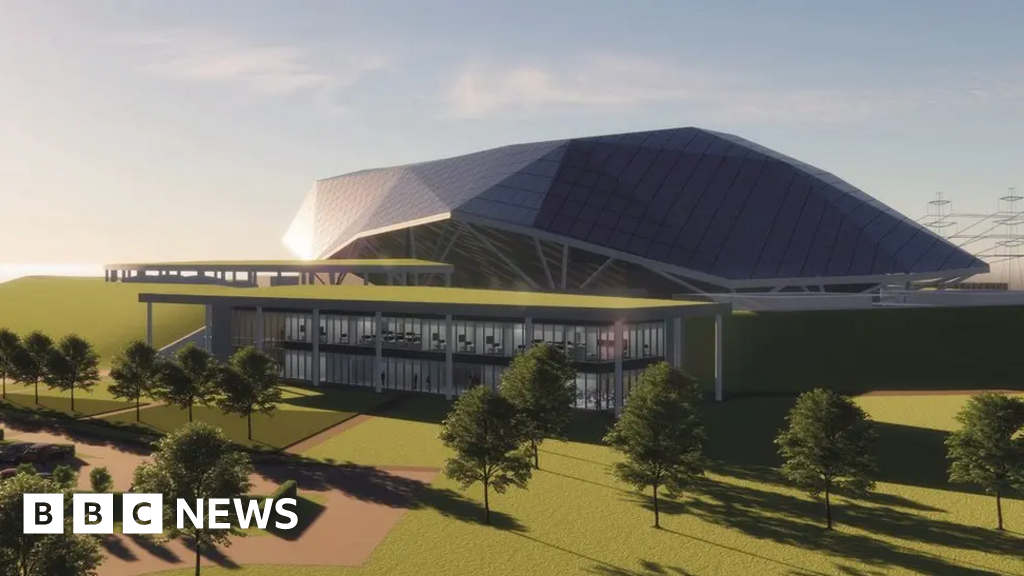
Simon JackBusiness editorRolls-RoyceArtist's impression of a small nuclear power stationRolls-Royce's plan to power artificial intelligence (AI) with its nuclear reactors could make it the UK's most valuable company, its boss has said.The engineering firm has signed deals to provide small modular reactors (SMRs) to the UK and Czech governments to power AI-driven data centres.
AI has boomed in popularity since 2022, but the technology uses lots of energy, something which has raised practical and environmental concerns.Rolls-Royce chief executive Tufan Erginbilgic told the BBC it has the "potential" to become the UK's highest-valued company by overtaking the largest firms on the London Stock Exchange thanks to its SMR deals."
There is no private company in the world with the nuclear capability we have. If we are not market leader globally, we did something wrong," he said.Mr Erginbilgic has overseen a ten-fold increase in Rolls-Royce's share price since taking over in January 2023.However, he has ruled out the idea of Rolls-Royce seeking to list its shares in New York as British chip designer Arm has done and the likes of Shell and AstraZeneca have considered in the search for higher valuations.
This is despite the fact that 50% of its shareholders and customers are US-based."It's not in our plan," said Mr Erginbilgic, a Turkish energy industry veteran. "I don't agree with the idea you can only perform in the US. That's not true and hopefully we have demonstrated that."AI investmentRolls-Royce already supplies the reactors that power dozens of nuclear submarines.
Mr Erginbilgic said the company has a massive advantage in the future market of bringing that technology on land in the form of SMRs.SMRs are not only smaller but quicker to build than traditional nuclear plants, with costs likely to come down as units are rolled out.He estimates that the world will need 400 SMRs by 2050.
At a cost of up to $3bn (£2.2bn) each, that's another trillion dollar-plus market he wants and expects Rolls-Royce to dominate.The company has signed a deal to develop six SMRs for the Czech Republic and is developing three for the UK.But it remains an unproven technology. Mr Erginbilgic conceded he could not currently point to a working SMR example but said he was confident in its future potential.
There are also concerns about the demands on water supplies from the data centre and SMR cooling systems. In response, companies including Google, Microsoft and Meta have signed deals to take energy from SMRs in the US when they are available.Next generation aircraftRolls-Royce sees SMRs as key to its future, but its biggest business is aircraft engines.
Already dominant in supplying engines to wide-bodied aircraft like Boeing 787 and Airbus A350, it plans to break into the next generation of narrow-bodied aircraft like the Boeing 737 and Airbus A320. This market is worth $1.6tn - nine times that of the wide-bodied .Rolls-Royce is a bit player in a market that has powerful and successful leaders, and that rival Pratt and Witney lost $8bn trying and failing to break into.
The market is dominated by CFM International – a joint venture between US-based GE Aerospace and French company Safran Aerospace Engines.Industry veterans told the BBC that market leaders can and will drop prices to airline customers long enough to see off a new assault on their market dominance.But Mr Erginbilgic said this is not just the biggest business opportunity for Rolls-Royce.
Rather, it is "for industrial strategy... the single biggest opportunity for the UK for economic growth". "No other UK opportunity, I challenge, will match that," he said.Share price up ten-foldAlthough Rolls-Royce sold its car making business to BMW nearly 30 years ago, the name of the company is still synonymous with British engineering excellence.
But in the early part of this decade that shine had worn off. The company was heavily indebted, its profit margins were non-existent, and thousands of staff were being laid off.When Mr Erginbilgic took over in January 2023, he likened the company to "a burning platform"."Our cost of capital was 12%, our return was 4% so every time we invested we destroyed value," he said.
Two and a half years later, the company expects to make a profit of over £3bn, its debt levels have fallen and shares have risen over 1,000% - a ten-fold rise. So how did that happen? And is Mr Erginbilgic right to think that Rolls-Royce's roll is only just starting?'Grudging respect'The timing of his appointment was fortunate according to some industry veterans.
Rolls-Royce's biggest business – supplying engines to commercial airlines – has rebounded strongly from the Covid pandemic. The company's most successful product – the Trent series of aircraft engines – are at the sweet spot of profitability as the returns on investment in their development over a decade ago begin to pour into company coffers.
Russia's full-scale invasion of Ukraine in 2022 arguably made it almost inevitable that its defence business would see higher spending from European governments – which has been confirmed by recent announcements.Unions have not always been fans of Mr Erginbilgic's hard-charging approach. In October 2023, one of his first major move was cutting jobs, which drew criticism from Sharon Graham, the boss of the Unite union.
"This announcement appears to be about appeasing the markets and its shareholders while ignoring its workers," she said at the time.However, overall global headcount has grown from 43,000 to 45,000 since 2023 and union sources say there is "grudging respect" for Mr Erginbilgic.Those sources give him one third of the credit for the turnaround around in the company's fortunes, with a third credited to market conditions and a third to his predecessor Warren East for "steadying the ship".
So does Mr Erginbilgic really believe that Rolls-Royce can be the UK's most valuable company – overtaking the likes of AstraZeneca, HSBC, and Shell?"We are now number five in the FTSE. I believe the growth potential we created in the company right now, in our existing business and our new businesses, actually yes – we have that potential."
Rolls-Royce is undoubtedly a company with the wind at its back – and Tufan Ergenbilgic certainly believes he has set the sails just right.
Source coverage
Rolls-Royce's Nuclear-Powered AI Ambition: A Path to UK's Most Valuable Company?
This report from the BBC, authored by Simon Jack (Business editor), details Rolls-Royce's ambitious strategy to leverage its nuclear reactor technology to power the burgeoning field of Artificial Intelligence (AI). The company's CEO, Tufan Erginbilgic, believes these ventures could propel Rolls-Royce to become the...
Deeper analysis
Full source content
Simon JackBusiness editorRolls-RoyceArtist's impression of a small nuclear power stationRolls-Royce's plan to power artificial intelligence (AI) with its nuclear reactors could make it the UK's most valuable company, its boss has said.The engineering firm has signed deals to provide small modular reactors (SMRs) to the UK and Czech governments to power AI-driven data centres.
AI has boomed in popularity since 2022, but the technology uses lots of energy, something which has raised practical and environmental concerns.Rolls-Royce chief executive Tufan Erginbilgic told the BBC it has the "potential" to become the UK's highest-valued company by overtaking the largest firms on the London Stock Exchange thanks to its SMR deals."
There is no private company in the world with the nuclear capability we have. If we are not market leader globally, we did something wrong," he said.Mr Erginbilgic has overseen a ten-fold increase in Rolls-Royce's share price since taking over in January 2023.However, he has ruled out the idea of Rolls-Royce seeking to list its shares in New York as British chip designer Arm has done and the likes of Shell and AstraZeneca have considered in the search for higher valuations.
This is despite the fact that 50% of its shareholders and customers are US-based."It's not in our plan," said Mr Erginbilgic, a Turkish energy industry veteran. "I don't agree with the idea you can only perform in the US. That's not true and hopefully we have demonstrated that."AI investmentRolls-Royce already supplies the reactors that power dozens of nuclear submarines.
Mr Erginbilgic said the company has a massive advantage in the future market of bringing that technology on land in the form of SMRs.SMRs are not only smaller but quicker to build than traditional nuclear plants, with costs likely to come down as units are rolled out.He estimates that the world will need 400 SMRs by 2050.
At a cost of up to $3bn (£2.2bn) each, that's another trillion dollar-plus market he wants and expects Rolls-Royce to dominate.The company has signed a deal to develop six SMRs for the Czech Republic and is developing three for the UK.But it remains an unproven technology. Mr Erginbilgic conceded he could not currently point to a working SMR example but said he was confident in its future potential.
There are also concerns about the demands on water supplies from the data centre and SMR cooling systems. In response, companies including Google, Microsoft and Meta have signed deals to take energy from SMRs in the US when they are available.Next generation aircraftRolls-Royce sees SMRs as key to its future, but its biggest business is aircraft engines.
Already dominant in supplying engines to wide-bodied aircraft like Boeing 787 and Airbus A350, it plans to break into the next generation of narrow-bodied aircraft like the Boeing 737 and Airbus A320. This market is worth $1.6tn - nine times that of the wide-bodied .Rolls-Royce is a bit player in a market that has powerful and successful leaders, and that rival Pratt and Witney lost $8bn trying and failing to break into.
The market is dominated by CFM International – a joint venture between US-based GE Aerospace and French company Safran Aerospace Engines.Industry veterans told the BBC that market leaders can and will drop prices to airline customers long enough to see off a new assault on their market dominance.But Mr Erginbilgic said this is not just the biggest business opportunity for Rolls-Royce.
Rather, it is "for industrial strategy... the single biggest opportunity for the UK for economic growth". "No other UK opportunity, I challenge, will match that," he said.Share price up ten-foldAlthough Rolls-Royce sold its car making business to BMW nearly 30 years ago, the name of the company is still synonymous with British engineering excellence.
But in the early part of this decade that shine had worn off. The company was heavily indebted, its profit margins were non-existent, and thousands of staff were being laid off.When Mr Erginbilgic took over in January 2023, he likened the company to "a burning platform"."Our cost of capital was 12%, our return was 4% so every time we invested we destroyed value," he said.
Two and a half years later, the company expects to make a profit of over £3bn, its debt levels have fallen and shares have risen over 1,000% - a ten-fold rise. So how did that happen? And is Mr Erginbilgic right to think that Rolls-Royce's roll is only just starting?'Grudging respect'The timing of his appointment was fortunate according to some industry veterans.
Rolls-Royce's biggest business – supplying engines to commercial airlines – has rebounded strongly from the Covid pandemic. The company's most successful product – the Trent series of aircraft engines – are at the sweet spot of profitability as the returns on investment in their development over a decade ago begin to pour into company coffers.
Russia's full-scale invasion of Ukraine in 2022 arguably made it almost inevitable that its defence business would see higher spending from European governments – which has been confirmed by recent announcements.Unions have not always been fans of Mr Erginbilgic's hard-charging approach. In October 2023, one of his first major move was cutting jobs, which drew criticism from Sharon Graham, the boss of the Unite union.
"This announcement appears to be about appeasing the markets and its shareholders while ignoring its workers," she said at the time.However, overall global headcount has grown from 43,000 to 45,000 since 2023 and union sources say there is "grudging respect" for Mr Erginbilgic.Those sources give him one third of the credit for the turnaround around in the company's fortunes, with a third credited to market conditions and a third to his predecessor Warren East for "steadying the ship".
So does Mr Erginbilgic really believe that Rolls-Royce can be the UK's most valuable company – overtaking the likes of AstraZeneca, HSBC, and Shell?"We are now number five in the FTSE. I believe the growth potential we created in the company right now, in our existing business and our new businesses, actually yes – we have that potential."
Rolls-Royce is undoubtedly a company with the wind at its back – and Tufan Ergenbilgic certainly believes he has set the sails just right.
How this page is built
Goose Pod turns cited reporting into a public episode summary first, then pairs that summary with audio playback so listeners can check the source material before they decide how deeply to engage.
The goal is to make this page useful as a news landing page first, while still giving listeners transcript access, related episodes, and direct links back to the original publishers.