
What happened
Analysis: Is the Stock Market in an AI Bubble?
Report Provider: CBC News
Author: Peter Armstrong
Business·AnalysisIs the stock market in an AI bubble?The stock market is running hot, driven by AI exuberance. Meta, Amazon, Google, Nvidia are driving the record gains on the promise AI will bring big changes to businesses. But right now, many of the players are investing more in AI than they are making.
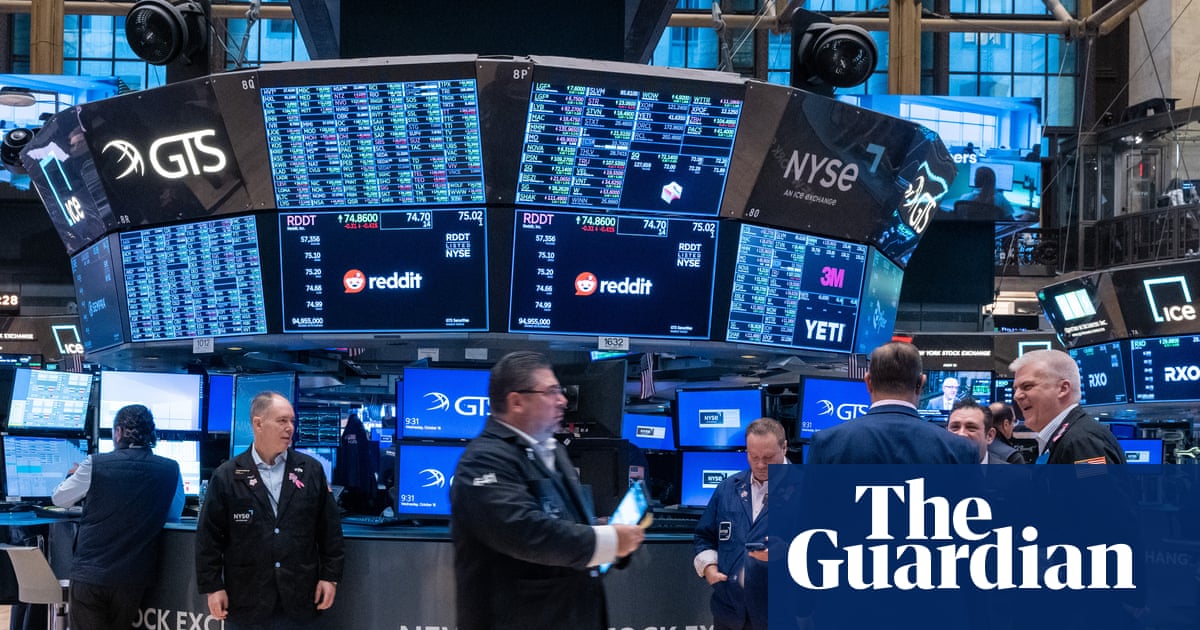
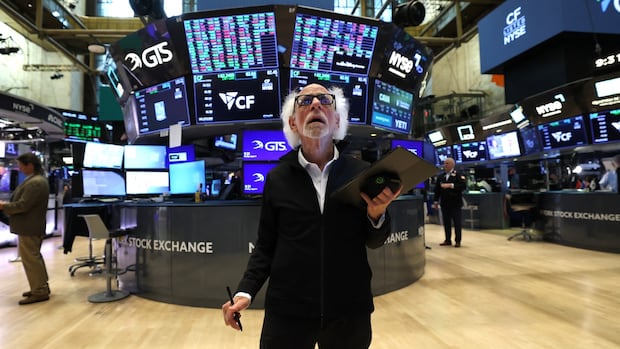
So will we see a repeat of the dot-com bubble burst or will the hype pay off?Some experts say the stock market today is eerily similar to the market before the dot-com bubble burstStock trader Peter Tuchman, known as the 'Einstein of Wall Street,' works on the floor of the New York Stock Exchange (NYSE) at the opening bell in New York City Monday.
Recent surges, led by tech companies, have some questioning whether AI is creating another bubble. (AFP via Getty Images)Stock markets surged again this week, reaching new all-time highs. Yet again, gains in financial markets were driven by a handful of companies focused on artificial intelligence.
Tech giants like Meta and Nvidia have seen their values soar while investors wait breathlessly for OpenAI, Anthropic and Perplexity to go public.But for all the enthusiasm, some investors are worried. They say we've been down this road before. And they're pointing to the dot-com bubble in the 1990s, when tech companies skyrocketed in value, only to see the bubble burst in early 2000."
The difference between the IT bubble in the 1990s and the AI bubble today is that the Top 10 companies in the S&P 500 today are more overvalued than they were in the 1990s," wrote Torsten Sløk, chief economist at the economics research firm Apollo in a note on his website, citing the price-to-earnings ratios of the companies, a common measure of whether a company's stock may be overvalued.
In other words, he says, this time the bursting bubble could be even worse that it was. And that's saying something.The dot-com bubble in the 1990s had many similarities to the market today. A new technology was offering a potential game-changing way of doing business, and everyone wanted a piece of it.
Facebook CEO Mark Zuckerberg speaks about Meta's augmented reality glasses at Meta Connect in September 2024. The Meta AI artificial intelligence assistant can now make conversation with users, on some apps or connected glasses from the American group, which dreams of taking the lead in the AI companion race.
(AFP via Getty Images)When the bubble burstMany of today's biggest companies were founded in those nascent days of the internet. Companies like Apple, Amazon and Microsoft were key pillars to the then-new wave of technology companies.But other giants of the day failed and were wiped out when the bubble burst.
Companies like Pets.com, Boo.com and WorldCom raised hundreds of millions of dollars and collapsed.From 1995 to March of 2000, the NASDAQ index had climbed 80 per cent. Then the bubble burst. By October of 2002, the NASDAQ had dropped by a staggering 78 per cent from its peak, wiping out all the gains it made during the bubble.
Today, it's not hard to find similarities in the markets. Investors are flocking into a space they don't fully understand, before the use-case application of the underlying technology is established.The real economy is struggling to find its footing amid all the turmoil and uncertainty associated with Trump's trade war and on-again, off-again tariffs.
Job growth has slowed and the U.S. economy shrank in the first three months of the year. Some of America's biggest companies have been clobbered by tariff costs. GM says tariffs led to a $1.1-billion drop in profits. Ford posted its first quarterly loss in years. And still, stocks are at all-time highs and there is a clear sense of FOMO (fear of missing out).
Canadian companies racing to build sovereign, energy efficient data centresSign up for Peter Armstrong's weekly newsletter here"Every bubble in modern market history has been based on a narrative, whether it be the internet or real estate," wrote Wall Street trader Tom Essaye in his newsletter Sevens Report."
Today, that potentially bubble-inflating theme is unquestionably AI technology."What looks different this timeBut for all the similarities, there are some very obvious differences as well.Barry Schwartz joined the investment firm Baskin Wealth Management as the dot-com bubble was bursting. Today, he's the company's president and chief investment officer"Unlike the dot-com pre-revenue companies, these companies are profitable.
They have global distribution, captive customers," he said in an interview with CBC News.Schwartz says Google, Apple, Meta and Amazon all have billions of customers. He says those businesses will continue whether AI becomes a game-changer or not. But if it does, those tech giants will be poised to take advantage."
So this is not like chicken and the egg. The egg and the chicken are already on the table. The market understands it," said Schwartz.Front BurnerInside OpenAI’s zealous pursuit of AI dominanceU.S. President Donald Trump's AI czar, billionaire David Sacks, says most people don't fully understand where AI development really is at the moment."
The Doomer narratives were wrong," he posted to the social media platform X.Sacks says that narrative was built on the notion that there would be a rapid take-off to artificial general intelligence that would propel one AI model to self-improve rapidly enough to leave the others in the dust.But he says the opposite is happening."
The leading models are clustering around similar performance benchmarks," he wrote in his lengthy post last week. "Model companies continue to leapfrog each other with their latest versions."More to the point, those models (like OpenAI's ChatGPT, X's Grok or Google's Gemini) are building what he calls "developing areas of competitive advantage."
WATCH | AI 'assistants' could change how you use the internet AI agents could change how you use the internet OpenAI and other big tech companies are starting to roll out the next wave of artificial intelligence, designed to operate with more autonomy. CBC’s Nora Young breaks down how agentic AI works and why some think it will change how you use the internet.
So, from a market perspective, a handful of AI models are in healthy competition with one another. Meanwhile, the tech giants (Apple, Amazon, Meta just to name a few) are aggressively adapting AI into their business models.And chip makers like Nvidia can barely keep up with the insatiable demand all those companies have developed.
Chipmaker Nvidia is worth nearly as much as the entire Canadian economy. Here's whyWhat is DeepSeek? The Chinese OpenAI rival sparking chaos in tech marketsCase in point, Nvidia hasn't just seen its stock take off. Its revenues are so big they're hard to wrap your head around. Since 2022, Nvidia's revenues have quintupled.
Its profits are up more than tenfold.Tariff uncertainty — even for techThe fears of a repeat of the dot-com bubble may be legitimate.But for now, the more pressing threat is that financial markets start pricing in the impact of the global trade war. Multiple company earnings reports have shown just how deep tariffs are already biting.
Automakers like GM and Ford led the charge, but the tech companies aren't immune. Apple says tariff-related costs will climb to $2 billion through the first half of this year.Schwartz says he knows just how dangerous it is to think that "this time is different." But he says the issue boils down to a pretty simple calculation."
It just comes down to one simple question. Do you think we're gonna be using more AI and data in the future or less?" he said.And clearly, a quick look at markets will show you most investors are betting the answer is more.ABOUT THE AUTHORPeter Armstrong is a senior business reporter for CBC News. A former host of On the Money and World Report on CBC Radio, he was previously a foreign correspondent and parliamentary reporter for CBC.
Subscribe to Peter's newsletter here: cbc.ca/mindyourbusiness Twitter: @armstrongcbc
Source coverage
Analysis: Is the Stock Market in an AI Bubble?
Report Provider: CBC News
Deeper analysis
Full source content
Business·AnalysisIs the stock market in an AI bubble?The stock market is running hot, driven by AI exuberance. Meta, Amazon, Google, Nvidia are driving the record gains on the promise AI will bring big changes to businesses. But right now, many of the players are investing more in AI than they are making.
So will we see a repeat of the dot-com bubble burst or will the hype pay off?Some experts say the stock market today is eerily similar to the market before the dot-com bubble burstStock trader Peter Tuchman, known as the 'Einstein of Wall Street,' works on the floor of the New York Stock Exchange (NYSE) at the opening bell in New York City Monday.
Recent surges, led by tech companies, have some questioning whether AI is creating another bubble. (AFP via Getty Images)Stock markets surged again this week, reaching new all-time highs. Yet again, gains in financial markets were driven by a handful of companies focused on artificial intelligence.
Tech giants like Meta and Nvidia have seen their values soar while investors wait breathlessly for OpenAI, Anthropic and Perplexity to go public.But for all the enthusiasm, some investors are worried. They say we've been down this road before. And they're pointing to the dot-com bubble in the 1990s, when tech companies skyrocketed in value, only to see the bubble burst in early 2000."
The difference between the IT bubble in the 1990s and the AI bubble today is that the Top 10 companies in the S&P 500 today are more overvalued than they were in the 1990s," wrote Torsten Sløk, chief economist at the economics research firm Apollo in a note on his website, citing the price-to-earnings ratios of the companies, a common measure of whether a company's stock may be overvalued.
In other words, he says, this time the bursting bubble could be even worse that it was. And that's saying something.The dot-com bubble in the 1990s had many similarities to the market today. A new technology was offering a potential game-changing way of doing business, and everyone wanted a piece of it.
Facebook CEO Mark Zuckerberg speaks about Meta's augmented reality glasses at Meta Connect in September 2024. The Meta AI artificial intelligence assistant can now make conversation with users, on some apps or connected glasses from the American group, which dreams of taking the lead in the AI companion race.
(AFP via Getty Images)When the bubble burstMany of today's biggest companies were founded in those nascent days of the internet. Companies like Apple, Amazon and Microsoft were key pillars to the then-new wave of technology companies.But other giants of the day failed and were wiped out when the bubble burst.
Companies like Pets.com, Boo.com and WorldCom raised hundreds of millions of dollars and collapsed.From 1995 to March of 2000, the NASDAQ index had climbed 80 per cent. Then the bubble burst. By October of 2002, the NASDAQ had dropped by a staggering 78 per cent from its peak, wiping out all the gains it made during the bubble.
Today, it's not hard to find similarities in the markets. Investors are flocking into a space they don't fully understand, before the use-case application of the underlying technology is established.The real economy is struggling to find its footing amid all the turmoil and uncertainty associated with Trump's trade war and on-again, off-again tariffs.
Job growth has slowed and the U.S. economy shrank in the first three months of the year. Some of America's biggest companies have been clobbered by tariff costs. GM says tariffs led to a $1.1-billion drop in profits. Ford posted its first quarterly loss in years. And still, stocks are at all-time highs and there is a clear sense of FOMO (fear of missing out).
Canadian companies racing to build sovereign, energy efficient data centresSign up for Peter Armstrong's weekly newsletter here"Every bubble in modern market history has been based on a narrative, whether it be the internet or real estate," wrote Wall Street trader Tom Essaye in his newsletter Sevens Report."
Today, that potentially bubble-inflating theme is unquestionably AI technology."What looks different this timeBut for all the similarities, there are some very obvious differences as well.Barry Schwartz joined the investment firm Baskin Wealth Management as the dot-com bubble was bursting. Today, he's the company's president and chief investment officer"Unlike the dot-com pre-revenue companies, these companies are profitable.
They have global distribution, captive customers," he said in an interview with CBC News.Schwartz says Google, Apple, Meta and Amazon all have billions of customers. He says those businesses will continue whether AI becomes a game-changer or not. But if it does, those tech giants will be poised to take advantage."
So this is not like chicken and the egg. The egg and the chicken are already on the table. The market understands it," said Schwartz.Front BurnerInside OpenAI’s zealous pursuit of AI dominanceU.S. President Donald Trump's AI czar, billionaire David Sacks, says most people don't fully understand where AI development really is at the moment."
The Doomer narratives were wrong," he posted to the social media platform X.Sacks says that narrative was built on the notion that there would be a rapid take-off to artificial general intelligence that would propel one AI model to self-improve rapidly enough to leave the others in the dust.But he says the opposite is happening."
The leading models are clustering around similar performance benchmarks," he wrote in his lengthy post last week. "Model companies continue to leapfrog each other with their latest versions."More to the point, those models (like OpenAI's ChatGPT, X's Grok or Google's Gemini) are building what he calls "developing areas of competitive advantage."
WATCH | AI 'assistants' could change how you use the internet AI agents could change how you use the internet OpenAI and other big tech companies are starting to roll out the next wave of artificial intelligence, designed to operate with more autonomy. CBC’s Nora Young breaks down how agentic AI works and why some think it will change how you use the internet.
So, from a market perspective, a handful of AI models are in healthy competition with one another. Meanwhile, the tech giants (Apple, Amazon, Meta just to name a few) are aggressively adapting AI into their business models.And chip makers like Nvidia can barely keep up with the insatiable demand all those companies have developed.
Chipmaker Nvidia is worth nearly as much as the entire Canadian economy. Here's whyWhat is DeepSeek? The Chinese OpenAI rival sparking chaos in tech marketsCase in point, Nvidia hasn't just seen its stock take off. Its revenues are so big they're hard to wrap your head around. Since 2022, Nvidia's revenues have quintupled.
Its profits are up more than tenfold.Tariff uncertainty — even for techThe fears of a repeat of the dot-com bubble may be legitimate.But for now, the more pressing threat is that financial markets start pricing in the impact of the global trade war. Multiple company earnings reports have shown just how deep tariffs are already biting.
Automakers like GM and Ford led the charge, but the tech companies aren't immune. Apple says tariff-related costs will climb to $2 billion through the first half of this year.Schwartz says he knows just how dangerous it is to think that "this time is different." But he says the issue boils down to a pretty simple calculation."
It just comes down to one simple question. Do you think we're gonna be using more AI and data in the future or less?" he said.And clearly, a quick look at markets will show you most investors are betting the answer is more.ABOUT THE AUTHORPeter Armstrong is a senior business reporter for CBC News. A former host of On the Money and World Report on CBC Radio, he was previously a foreign correspondent and parliamentary reporter for CBC.
Subscribe to Peter's newsletter here: cbc.ca/mindyourbusiness Twitter: @armstrongcbc
How this page is built
Goose Pod turns cited reporting into a public episode summary first, then pairs that summary with audio playback so listeners can check the source material before they decide how deeply to engage.
The goal is to make this page useful as a news landing page first, while still giving listeners transcript access, related episodes, and direct links back to the original publishers.