
What happened
Report Provider: Motorsport.com
Author: Christian Nimmervoll
Date: Published August 30, 2025, 03:33:48 (Article created August 31, 2025, 00:15:02)
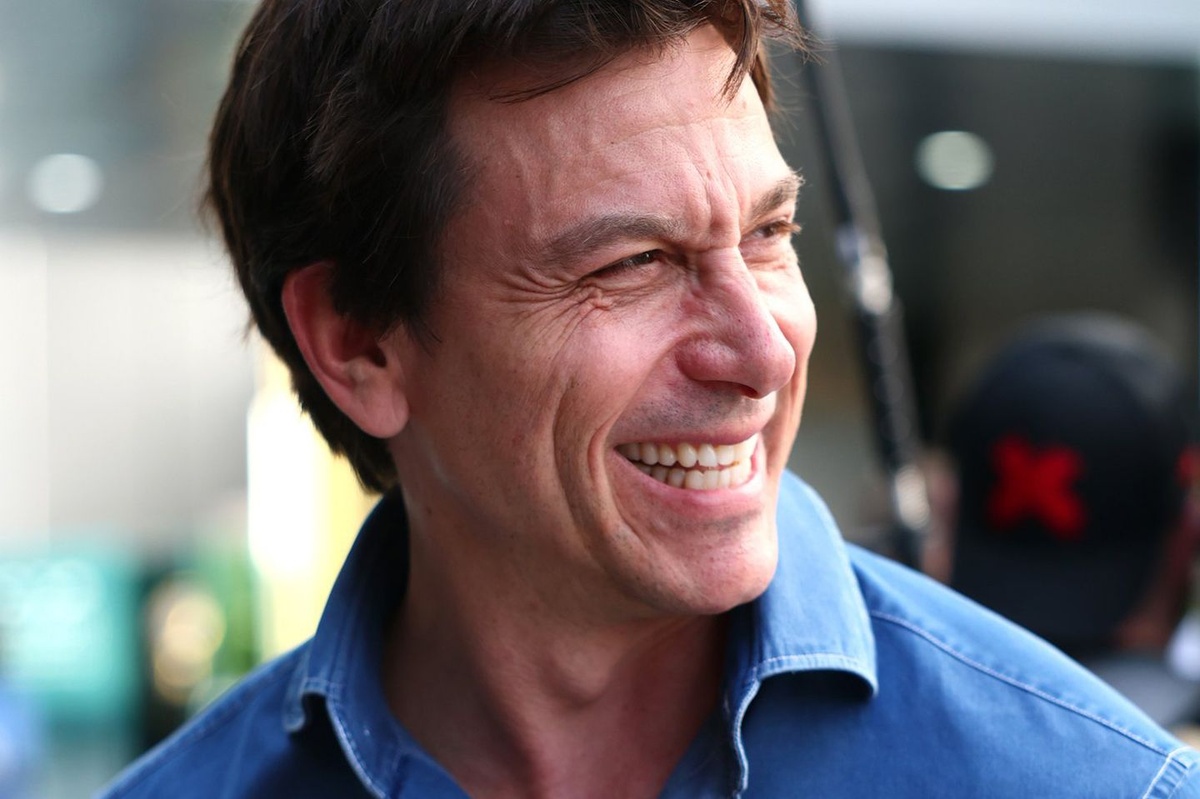
Toto Wolff is no longer just one of the most successful team principals in Formula 1 history. In an era where Grand Prix racing is booming, and with the Brad Pitt-led “F1 – The Movie” to cinemas worldwide this year, the 53-year-old Austrian has also become a global social media icon. As early as 2019, a photo surfaced on the internet during nationwide protests in Lebanon against government corruption and Prime Minister Saad Hariri.
In it, a man was holding up a placard reading: “I want Toto Wolff to be our Prime Minister. He has the best strategies!” Six years later, Instagram, TikTok & several other platforms have evolved, with viral content arguably trending trashier. Look long enough and you may see genuine beach photos of Wolff, shirtless, among other posts featuring manipulated AI creations that bear little resemblance to reality — with the fakes liked and shared by tens of thousands of users.
”I think what I've learned is not to spend too much time in trying to take it too personal” says Toto Wolff An “overload” of information A phenomenon, Wolff says, he pays little attention to. “My target audience isn’t social media users,” he said over dinner with Dutch media representatives in Zandvoort.
My target audience is more adults. But from time to time, I take a look at what’s being made up out there. Sometimes even AI-doctored photos. But I tend to find it amusing.” Wolff chuckles when he adds: “With deepfakes you can fake anything. I think there are even a couple of porn videos with my face on some body.
” Pressed, he added this doesn’t bother him, joking, “as long as it’s a good-looking body and I perform well in the scenes.” Public figures like Wolff — and global organizations like Mercedes — have had to learn to deal with “fake news” in an era when social media and media reporting proliferate across countless channels, far beyond anyone’s control.
And not only with obvious AI fakes, but also in so-called traditional media. The days when just a handful of journalists reported on Formula 1 in the paddock are long gone. Today, someone like Wolff runs the risk of being misinterpreted in every interview. Even if his words are reproduced faithfully by Platform X, the story retold by Platform Y — citing Platform X — may already deviate from the original.
“There’s such an overload of information today. And with each retelling, a story drifts further from the source. You read something one day, and by the next it’s already being interpreted differently. All for a sensational headline. And when you read the article, it’s usually far less spectacular or controversial than the headline suggests,” Wolff explains.
“I’ve learned not to take it too personally. At one point I asked Bradley, our Head of Communications, to just show me the worst examples at the end of each day. And if he wanted to flatter me, maybe the best ones too. Eventually he stopped showing me the best ones. Either there aren’t any good ones left — or he thinks I shouldn’t get too full of myself,” he laughs.
Toto Wolff, Mercedes, Andrea Stella, McLaren Photo by: Sam Bloxham / Motorsport Images “I’d rather […] deepfake porn about me than nobody caring at all” And as much as Formula 1 stars may be annoyed by distortions online, the sheer explosion of stories and posts has its clear answer: “It’s good for Formula 1.
” “It’s proof of how strong our sport is and how far it has reached into new audiences. Social media buzz has taken Formula 1 by storm,” he adds. As for himself, Wolff admits he browses such content, “from time to time, just to have a laugh. But it’s not part of my daily routine.” The positive, he says, is that “our audience is becoming younger and increasingly female.
I’d rather have someone posting deepfake porn about me than nobody caring at all. Because there was a time when nobody cared about us — and I remember that very well.” Photos from Dutch GP - Friday Dutch GP - Friday, in photos Dutch GP - Friday, in photos Dutch GP - Friday, in photos Dutch GP - Friday, in photos Dutch GP - Friday, in photos Dutch GP - Friday, in photos Dutch GP - Friday, in photos Dutch GP - Friday, in photos Dutch GP - Friday, in photos Dutch GP - Friday, in photos Dutch GP - Friday, in photos Dutch GP - Friday, in photos Dutch GP - Friday, in photos Dutch GP - Friday, in photos Dutch GP - Friday, in photos Dutch GP - Friday, in photos Dutch GP - Friday, in photos Dutch GP - Friday, in photos Dutch GP - Friday, in photos Dutch GP - Friday, in photos Dutch GP - Friday, in photos Dutch GP - Friday, in photos Dutch GP - Friday, in photos Dutch GP - Friday, in photos Dutch GP - Friday, in photos Dutch GP - Friday, in photos Dutch GP - Friday, in photos Dutch GP - Friday, in photos Dutch GP - Friday, in photos Dutch GP - Friday, in photos Dutch GP - Friday, in photos Dutch GP - Friday, in photos Dutch GP - Friday, in photos Dutch GP - Friday, in photos Dutch GP - Friday, in photos Dutch GP - Friday, in photos Dutch GP - Friday, in photos Dutch GP - Friday, in photos Dutch GP - Friday, in photos Dutch GP - Friday, in photos Dutch GP - Friday, in photos Dutch GP - Friday, in photos Dutch GP - Friday, in photos Dutch GP - Friday, in photos Dutch GP - Friday, in photos Dutch GP - Friday, in photos Dutch GP - Friday, in photos Dutch GP - Friday, in photos Dutch GP - Friday, in photos Dutch GP - Friday, in photos Dutch GP - Friday, in photos Dutch GP - Friday, in photos Dutch GP - Friday, in photos Dutch GP - Friday, in photos Dutch GP - Friday, in photos Read Also: Formula 1Toto Wolff plays down concerns over Kimi Antonelli’s performance at Mercedes Formula 1Toto Wolff sets the record straight on Mercedes "crisis meeting" talk Formula 1Who slept worst last night: Toto Wolff Formula 1Toto Wolff clarifies 'semi-sarcastic' 400km/h comment on 2026 regulation F1 cars In this article Be the first to know and subscribe for real-time news email updates on these topics
Source coverage
Report Provider: Motorsport.com
Author: Christian Nimmervoll
Deeper analysis
Full source content
Toto Wolff is no longer just one of the most successful team principals in Formula 1 history. In an era where Grand Prix racing is booming, and with the Brad Pitt-led “F1 – The Movie” to cinemas worldwide this year, the 53-year-old Austrian has also become a global social media icon. As early as 2019, a photo surfaced on the internet during nationwide protests in Lebanon against government corruption and Prime Minister Saad Hariri.
In it, a man was holding up a placard reading: “I want Toto Wolff to be our Prime Minister. He has the best strategies!” Six years later, Instagram, TikTok & several other platforms have evolved, with viral content arguably trending trashier. Look long enough and you may see genuine beach photos of Wolff, shirtless, among other posts featuring manipulated AI creations that bear little resemblance to reality — with the fakes liked and shared by tens of thousands of users.
”I think what I've learned is not to spend too much time in trying to take it too personal” says Toto Wolff An “overload” of information A phenomenon, Wolff says, he pays little attention to. “My target audience isn’t social media users,” he said over dinner with Dutch media representatives in Zandvoort.
My target audience is more adults. But from time to time, I take a look at what’s being made up out there. Sometimes even AI-doctored photos. But I tend to find it amusing.” Wolff chuckles when he adds: “With deepfakes you can fake anything. I think there are even a couple of porn videos with my face on some body.
” Pressed, he added this doesn’t bother him, joking, “as long as it’s a good-looking body and I perform well in the scenes.” Public figures like Wolff — and global organizations like Mercedes — have had to learn to deal with “fake news” in an era when social media and media reporting proliferate across countless channels, far beyond anyone’s control.
And not only with obvious AI fakes, but also in so-called traditional media. The days when just a handful of journalists reported on Formula 1 in the paddock are long gone. Today, someone like Wolff runs the risk of being misinterpreted in every interview. Even if his words are reproduced faithfully by Platform X, the story retold by Platform Y — citing Platform X — may already deviate from the original.
“There’s such an overload of information today. And with each retelling, a story drifts further from the source. You read something one day, and by the next it’s already being interpreted differently. All for a sensational headline. And when you read the article, it’s usually far less spectacular or controversial than the headline suggests,” Wolff explains.
“I’ve learned not to take it too personally. At one point I asked Bradley, our Head of Communications, to just show me the worst examples at the end of each day. And if he wanted to flatter me, maybe the best ones too. Eventually he stopped showing me the best ones. Either there aren’t any good ones left — or he thinks I shouldn’t get too full of myself,” he laughs.
Toto Wolff, Mercedes, Andrea Stella, McLaren Photo by: Sam Bloxham / Motorsport Images “I’d rather […] deepfake porn about me than nobody caring at all” And as much as Formula 1 stars may be annoyed by distortions online, the sheer explosion of stories and posts has its clear answer: “It’s good for Formula 1.
” “It’s proof of how strong our sport is and how far it has reached into new audiences. Social media buzz has taken Formula 1 by storm,” he adds. As for himself, Wolff admits he browses such content, “from time to time, just to have a laugh. But it’s not part of my daily routine.” The positive, he says, is that “our audience is becoming younger and increasingly female.
I’d rather have someone posting deepfake porn about me than nobody caring at all. Because there was a time when nobody cared about us — and I remember that very well.” Photos from Dutch GP - Friday Dutch GP - Friday, in photos Dutch GP - Friday, in photos Dutch GP - Friday, in photos Dutch GP - Friday, in photos Dutch GP - Friday, in photos Dutch GP - Friday, in photos Dutch GP - Friday, in photos Dutch GP - Friday, in photos Dutch GP - Friday, in photos Dutch GP - Friday, in photos Dutch GP - Friday, in photos Dutch GP - Friday, in photos Dutch GP - Friday, in photos Dutch GP - Friday, in photos Dutch GP - Friday, in photos Dutch GP - Friday, in photos Dutch GP - Friday, in photos Dutch GP - Friday, in photos Dutch GP - Friday, in photos Dutch GP - Friday, in photos Dutch GP - Friday, in photos Dutch GP - Friday, in photos Dutch GP - Friday, in photos Dutch GP - Friday, in photos Dutch GP - Friday, in photos Dutch GP - Friday, in photos Dutch GP - Friday, in photos Dutch GP - Friday, in photos Dutch GP - Friday, in photos Dutch GP - Friday, in photos Dutch GP - Friday, in photos Dutch GP - Friday, in photos Dutch GP - Friday, in photos Dutch GP - Friday, in photos Dutch GP - Friday, in photos Dutch GP - Friday, in photos Dutch GP - Friday, in photos Dutch GP - Friday, in photos Dutch GP - Friday, in photos Dutch GP - Friday, in photos Dutch GP - Friday, in photos Dutch GP - Friday, in photos Dutch GP - Friday, in photos Dutch GP - Friday, in photos Dutch GP - Friday, in photos Dutch GP - Friday, in photos Dutch GP - Friday, in photos Dutch GP - Friday, in photos Dutch GP - Friday, in photos Dutch GP - Friday, in photos Dutch GP - Friday, in photos Dutch GP - Friday, in photos Dutch GP - Friday, in photos Dutch GP - Friday, in photos Dutch GP - Friday, in photos Read Also: Formula 1Toto Wolff plays down concerns over Kimi Antonelli’s performance at Mercedes Formula 1Toto Wolff sets the record straight on Mercedes "crisis meeting" talk Formula 1Who slept worst last night: Toto Wolff Formula 1Toto Wolff clarifies 'semi-sarcastic' 400km/h comment on 2026 regulation F1 cars In this article Be the first to know and subscribe for real-time news email updates on these topics
How this page is built
Goose Pod turns cited reporting into a public episode summary first, then pairs that summary with audio playback so listeners can check the source material before they decide how deeply to engage.
The goal is to make this page useful as a news landing page first, while still giving listeners transcript access, related episodes, and direct links back to the original publishers.