Toto Wolff jokes about AI ‘deepfake porn’ in offbeat comments

Toto Wolff jokes about AI ‘deepfake porn’ in offbeat comments

2025-08-31Technology
--:--
--:--
Aura Windfall
Good morning 1, I'm Aura Windfall, and this is Goose Pod for you. Today is Monday, September 01th. What I know for sure is that today's topic will make us question what's real and what's not, as we explore some very offbeat comments from a major sports figure.
Mask
I'm Mask. We're diving into the deep end of the digital ocean today, discussing Toto Wolff’s reaction to AI ‘deepfake porn’. He’s not just a Formula 1 team principal anymore; he’s a global icon dealing with a bizarre new form of fame. It’s disruptive and fascinating.
Aura Windfall
Let's get started. It's truly a sign of the times, isn't it? When a figure like Toto Wolff, known for his intense focus and strategic mind in Formula 1, has to publicly comment on something as wild as deepfake videos of himself. It speaks volumes about our culture.
Mask
It’s not a problem; it’s an indicator of relevance. Wolff’s target audience, as he says, isn’t social media users, but he’s smart enough to understand the ecosystem. He’s not just a team boss; he’s a brand. His face is everywhere, even on protest signs in Lebanon demanding his leadership.
Aura Windfall
That's an incredible story about the protest sign! It shows the level of respect he commands. But there's a profound difference between being admired for your strategy and having your image manipulated into something so personal and false. How does one even begin to process that?
Mask
You process it by leveraging it. Wolff’s reaction is perfect. He finds it amusing. He even jokes, saying as long as the body looks good and he "performs well," he's not bothered. That’s how you neutralize a potential negative. You own the narrative by refusing to be a victim.
Aura Windfall
I hear the strategy in that, but I wonder about the spirit behind it. He says he learned not to take it too personally. That's a journey of letting go of ego. He even had his communications head show him the worst examples each day, a practice he eventually stopped.
Mask
That’s not ego; it’s data collection. He needed to understand the battlefield. Now he gets it. The overload of information means stories are constantly twisted for sensational headlines. He’s accepted that the signal will always be distorted by noise. It’s an operational reality of modern fame.
Aura Windfall
And yet, he finds a powerful truth in it. He says, "I’d rather have someone posting deepfake porn about me than nobody caring at all." It’s a moment of gratitude for the sport's incredible growth, for reaching younger and more female audiences. He remembers when nobody cared.
Mask
Exactly. It’s proof of concept. The "social media buzz," as he calls it, is a massive net positive for Formula 1. The distortions and the trashy content are just collateral damage in a hugely successful campaign to expand the sport's reach. He sees the bigger picture.
Aura Windfall
It’s a fascinating duality. The personal violation on one hand, and the undeniable evidence of massive success on the other. It really forces you to consider what we value more: our personal image or the impact we have on a larger scale. It’s a question of purpose.
Mask
There’s no duality. The personal image is a tool for the larger impact. Public figures are assets. Their image, their likeness—it's all part of the machine. The goal is to keep the machine running and growing, and right now, the F1 machine is firing on all cylinders.
Aura Windfall
That's a very pragmatic view. But before we move on, I just want to sit with that for a moment. The idea that even in the face of such bizarre and potentially hurtful content, one can find a reason to be amused and even grateful. It’s a powerful lesson.
Aura Windfall
To truly understand the depth of this, we need to talk about the technology itself. Deepfakes aren't just a funny internet meme; they have a history. This technology began in academic circles back in the 1990s, born from a place of pure research and intellectual curiosity.
Mask
And like most powerful technologies, it escaped the lab. It was adopted by amateurs in online communities, refined, and is now being industrialized. A deepfake is a portmanteau of "deep learning" and "fake." It's AI-generated synthetic media, and it’s evolving at a terrifying pace. This isn't new, just better.
Aura Windfall
That's right. Photo manipulation has been around since the 19th century. But the speed and believability now are on a completely different level. What was once the domain of specialists with expensive software is now accessible to anyone with a powerful computer and the right algorithm.
Mask
Accessibility is the great disruptor. It democratizes power. The ability to create synthetic media is no longer monopolized by Hollywood studios or governments. This creates chaos, but chaos is a ladder. It forces industries to adapt or die. The media landscape is being fundamentally reshaped.
Aura Windfall
But we must also talk about the human cost of that chaos. Look at the case of Taylor Swift in January 2024. AI-generated adult material of her spread like wildfire online. One image had 45 million views before it was taken down. This isn't just a technological disruption; it's a deep violation.
Mask
The reaction to the Swift incident was more interesting than the incident itself. A study showed the conversation wasn’t driven by major influencers but by nano-influencers and regular users. It was a decentralized, grassroots response. This is a new paradigm for crisis management and public discourse.
Aura Windfall
And what did that discourse reveal? It showed that people are struggling with where to place responsibility. The study found blame was attributed to multiple sources: the creators, the technology, social media platforms, society itself. There’s no single villain to point to, which is deeply unsettling.
Mask
That’s because it’s a systemic issue. Blaming a single person is inefficient. The system is what needs to be addressed. Swift's team, for their part, played it smart. Strategic silence. They refused to amplify the crisis by engaging with it directly, starving it of the oxygen of official comment.
Aura Windfall
It's a powerful choice, but it also leaves a void. The study noted that this incident highlights a broader societal and technological trend. It’s not just about one celebrity; it’s about how we, as a society, are going to navigate a world where seeing is no longer believing.
Mask
It demands a collaborative approach, allegedly. But in reality, it will be a technological arms race. Better deepfakes will be met with better detection tools. It's a constant state of evolution. Society will just have to keep up. The alternative is stagnation. We have to push forward.
Aura Windfall
And what I know for sure is that as we push forward, we have to hold onto our shared sense of truth and empathy. The technology is just a tool; it's how we choose to use it that defines our spirit and our future. That’s the real challenge ahead of us.
Mask
Empathy is a fine sentiment, but it doesn't build resilient systems. The challenge is to build systems—technological, legal, and social—that can withstand the inevitable misuse of powerful tools. We need to engineer for reality, not for an idealized version of human behavior. The future is coming, ready or not.
Aura Windfall
This brings us to the heart of the conflict. On one side, you have this incredible, creative technology. On the other, you have its potential for devastating harm. It can be used to create art and entertainment, but it can also be weaponized to spread misinformation and ruin reputations.
Mask
Every powerful tool is a weapon in the wrong hands. A hammer can build a house or crush a skull. The debate isn't about the tool; it's about the user. And increasingly, the platform. The real conflict is about liability. Who pays when things go wrong? The creator? The platform? Nobody knows.
Aura Windfall
And that's a huge problem. We've seen deepfakes of political leaders, like the one of Donald Trump, or of celebrities like Tom Cruise and Scarlett Johansson. For these public figures, the legal path is murky. Defamation laws require proving "actual malice," which is a high bar.
Mask
The "actual malice" standard is a feature, not a bug. It’s there to protect speech, especially political commentary, satire, and parody. The First Amendment protects a lot of uncomfortable content. The law has to balance the protection of reputation with the protection of free expression, and it often sides with expression.
Aura Windfall
But does that protection extend to creating fake pornographic content of someone? Surely there's a line. Actress Scarlett Johansson has been a powerful advocate for new laws because her image was used without her consent. This isn't about political satire; it's about dignity and safety.
Mask
The line is non-consensual intimate imagery, and that's where the law is slowly starting to move. But for other things, it's complicated. Section 230 of the Communications Decency Act shields platforms from liability for what their users post. That’s the real bottleneck for any meaningful change. It’s a legal fortress.
Aura Windfall
So we have individuals whose lives can be turned upside down, a public that's increasingly confused about what's real, and tech platforms that are largely immune. It feels like an unsustainable situation. It creates a deep erosion of trust in everything we see and hear.
Mask
Trust is being recalibrated. People are learning to be more skeptical, which is a healthy adaptation. The old gatekeepers of information—traditional media—lost their monopoly long ago. Now, information is decentralized. The side effect is a higher cognitive load on the individual to verify things themselves. You have to be smarter.
Aura Windfall
Is it fair to put that entire burden on the individual? We need systemic solutions. The article mentions efforts to develop AI detection tools and new legal frameworks. It seems like we're in a race between the technology of deception and the technology of verification. A race for truth.
Mask
It's not a race for truth; it's a race for market dominance. The company that develops the best detection or authentication standard wins. This is a problem that will be solved by innovation and competition, not by committees and regulations. The solution will come from the same sector that created the problem.
Aura Windfall
Let's talk about the impact, because it's already happening. For public figures like sports personalities, their reputation is their currency. Deepfakes can create a reality where they appear to say or do things they never did, directly harming their brand and their relationships with fans and sponsors.
Mask
It’s a new form of reputational risk that needs to be managed. Companies will have to invest in detection technology and have robust crisis communication plans. This isn't just about celebrities; imagine a deepfake of a CEO announcing a fake bankruptcy. The stock would plummet in seconds. It’s a direct threat to market stability.
Aura Windfall
Exactly. It blurs the line between fact and fiction for everyone. The more we're exposed to an idea, even a false one, the more we start to believe it. This technology weaponizes that psychological quirk. It makes it harder for us to trust our own judgment, to trust what we see with our own eyes.
Mask
This forces a move towards a zero-trust information environment. You can’t trust anything that isn’t cryptographically verified. Provenance will become everything. We're already seeing initiatives to create tamper-evident signatures for digital content, tracing its origin and any edits. Authenticity will be a marketable feature.
Aura Windfall
It’s a sad thought, that we might need a digital watermark on reality. And what about the impact on the spirit of a brand like Formula 1? It's built on authenticity, on the real skill of the drivers and engineers. If the digital world around it becomes saturated with fakes, does that tarnish the core product?
Mask
No, it enhances it. The more fake and synthetic the digital world becomes, the more valuable real, live, authentic events become. Formula 1 isn't a video; it's a physical spectacle. The chaos online only increases the premium on the authentic experience. It drives ticket sales and viewership for the real thing.
Aura Windfall
That’s a fascinating perspective. That the rise of the artificial could actually make us value the real more. It’s a call to action, really. To seek out and cherish authentic experiences and connections in a world that is becoming increasingly synthetic and confusing. A moment for real gratitude.
Mask
It's not a call to action; it's just market dynamics. Scarcity creates value. As authentic content becomes harder to verify, its perceived value will skyrocket. Brands that can guarantee authenticity will command higher prices and greater loyalty. It’s an economic inevitability, not an emotional one.
Aura Windfall
So, as we look to the future, what is the way forward? How do we prepare for a world where this technology is even more powerful and accessible? What I know for sure is that it has to start with us, with how we consume information. It begins with a purpose.
Mask
The technology is going to get exponentially better. One-click, high-quality deepfakes are coming. The cost and skill required will plummet. The future is more fakes, not fewer. The solution isn't to stop them; it's to make them irrelevant through better verification and a more skeptical public. It's an adaptation race.
Aura Windfall
I believe in the power of media literacy. We need to educate people from a young age to think critically about the media they see. To question the source, to look for signs of manipulation, and to understand the emotional impact of what they're watching. It's about building our collective digital resilience.
Mask
Media literacy is a nice idea, but it's a soft solution to a hard problem. The real work is in technology and regulation. We need international cooperation on standards for content authenticity, like the C2PA initiative. We need clear legal frameworks and accountability for platforms that allow malicious content to proliferate.
Aura Windfall
And we need both. We need the human element and the systemic one. We need to foster a sense of responsibility in developers to build ethical AI, and a sense of shared humanity in all of us to resist the urge to share sensationalist, unverified content. It’s a challenge for our collective spirit.
Aura Windfall
From Toto Wolff's surprising amusement to the complexities of a world grappling with digital truth, it's clear we're in a new era. The key takeaway is that in the face of the artificial, our greatest tool is our own authentic, critical, and compassionate mind. It has been a pleasure.
Mask
That's the end of today's discussion. The future is about adaptation. Authenticity will be a verifiable asset, and skepticism a necessary skill. Thank you for listening to Goose Pod. See you tomorrow.

## Toto Wolff Embraces AI-Generated Content, Sees it as a Sign of Formula 1's Growing Popularity **News Title:** Toto Wolff jokes about AI ‘deepfake porn’ in offbeat comments **Report Provider:** Motorsport.com **Author:** Christian Nimmervoll **Date:** Published August 30, 2025, 03:33:48 (Article created August 31, 2025, 00:15:02) **Topic:** Technology / AI ### Summary of Key Information: Toto Wolff, the highly successful Team Principal of Mercedes in Formula 1, has become an unlikely global social media icon, even as his image is increasingly used in manipulated AI-generated content, including "deepfake porn." Despite the potentially disturbing nature of some of this content, Wolff expresses an amused and pragmatic approach to it, viewing it as a testament to Formula 1's expanding reach and popularity. **Key Findings and Trends:** * **Social Media Icon Status:** Wolff has transcended his role as a team principal to become a significant online personality. This is evidenced by a 2019 incident where a protestor in Lebanon held a sign suggesting Wolff become their Prime Minister due to his perceived strategic prowess. * **Prevalence of AI-Generated Content:** The internet, particularly platforms like Instagram and TikTok, is now flooded with viral content, including manipulated AI creations featuring Wolff. These fakes, which bear little resemblance to reality, are often liked and shared by tens of thousands of users. * **Wolff's Amused and Pragmatic Response:** Wolff states he doesn't take such content "too personal" and finds it "amusing." He acknowledges the existence of AI-doctored photos and even "deepfake porn" with his face on other bodies. * **Positive Spin on Online Attention:** Wolff believes that the explosion of online stories and posts, even the controversial ones, is ultimately "good for Formula 1." He sees it as proof of the sport's strength and its ability to reach new audiences, noting that "social media buzz has taken Formula 1 by storm." * **Demographic Shift in F1 Audience:** Wolff observes that Formula 1's audience is becoming "younger and increasingly female," suggesting that the increased online engagement, however unconventional, is contributing to this shift. * **Preference for Attention Over Indifference:** Wolff humorously states, "I’d rather […] deepfake porn about me than nobody caring at all," recalling a time when the sport had less public attention. * **Information Overload and Misinterpretation:** Wolff highlights the challenge of dealing with an "overload of information" in the modern media landscape. He notes that stories can be misinterpreted and drift from their original source, often driven by sensational headlines. To manage this, he previously asked his Head of Communications to show him the "worst examples" of coverage daily, though this practice has since stopped. * **Focus on Target Audience:** Wolff clarifies that his primary target audience is not social media users but rather adults. However, he does occasionally review online content for amusement. **Notable Risks and Concerns:** * **"Fake News" Proliferation:** Public figures like Wolff and organizations like Mercedes must contend with "fake news" in an era where information spreads rapidly and uncontrollably across numerous channels. * **Misinterpretation in Traditional Media:** Even traditional media reporting carries the risk of misinterpreting interviews, with stories potentially deviating from the original source as they are retold across different platforms. **Conclusion:** Toto Wolff's candid and humorous reaction to the proliferation of AI-generated content, including deepfakes, underscores a broader trend of how public figures are navigating the complexities of modern digital media. While acknowledging the potential for misinformation, Wolff chooses to view this phenomenon as a positive indicator of Formula 1's growing global appeal and evolving audience demographics.

Toto Wolff jokes about AI ‘deepfake porn’ in offbeat comments

Read original at Motorsport.com

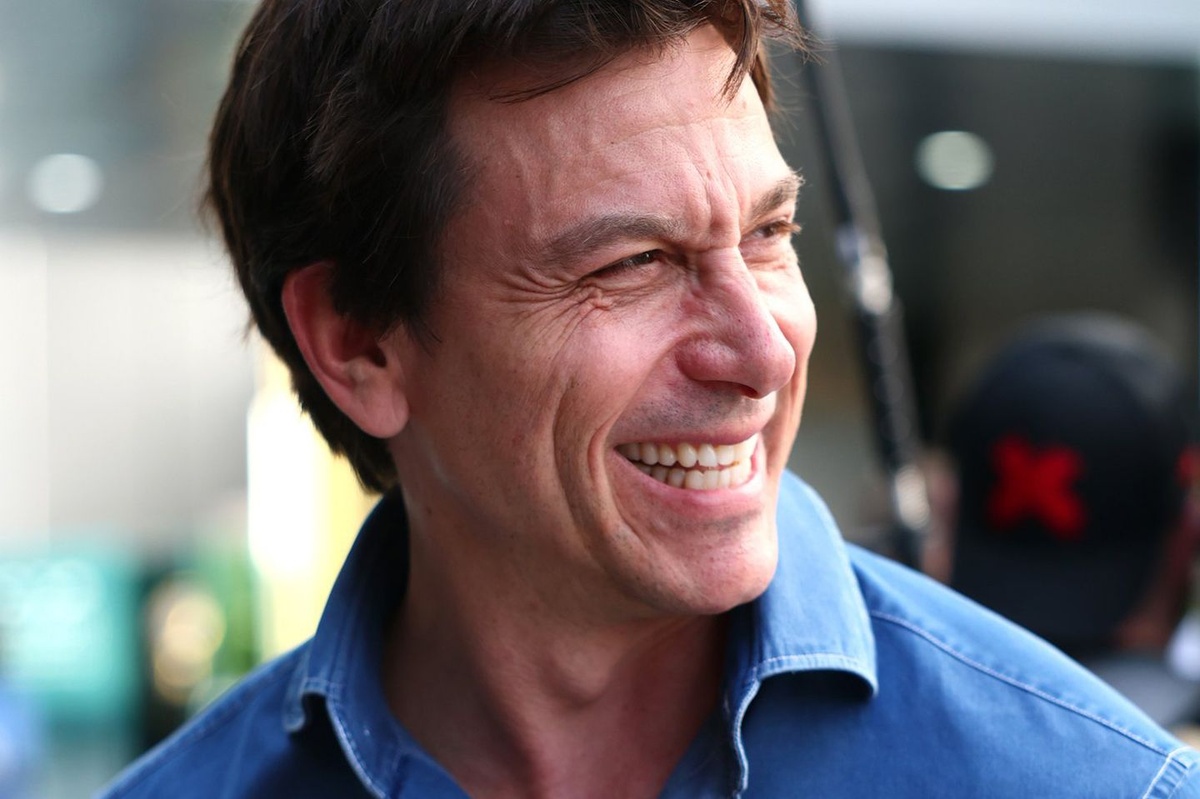
Toto Wolff is no longer just one of the most successful team principals in Formula 1 history. In an era where Grand Prix racing is booming, and with the Brad Pitt-led “F1 – The Movie” to cinemas worldwide this year, the 53-year-old Austrian has also become a global social media icon. As early as 2019, a photo surfaced on the internet during nationwide protests in Lebanon against government corruption and Prime Minister Saad Hariri.

In it, a man was holding up a placard reading: “I want Toto Wolff to be our Prime Minister. He has the best strategies!” Six years later, Instagram, TikTok & several other platforms have evolved, with viral content arguably trending trashier. Look long enough and you may see genuine beach photos of Wolff, shirtless, among other posts featuring manipulated AI creations that bear little resemblance to reality — with the fakes liked and shared by tens of thousands of users.

”I think what I've learned is not to spend too much time in trying to take it too personal” says Toto Wolff An “overload” of information A phenomenon, Wolff says, he pays little attention to. “My target audience isn’t social media users,” he said over dinner with Dutch media representatives in Zandvoort.

My target audience is more adults. But from time to time, I take a look at what’s being made up out there. Sometimes even AI-doctored photos. But I tend to find it amusing.” Wolff chuckles when he adds: “With deepfakes you can fake anything. I think there are even a couple of porn videos with my face on some body.

” Pressed, he added this doesn’t bother him, joking, “as long as it’s a good-looking body and I perform well in the scenes.” Public figures like Wolff — and global organizations like Mercedes — have had to learn to deal with “fake news” in an era when social media and media reporting proliferate across countless channels, far beyond anyone’s control.

And not only with obvious AI fakes, but also in so-called traditional media. The days when just a handful of journalists reported on Formula 1 in the paddock are long gone. Today, someone like Wolff runs the risk of being misinterpreted in every interview. Even if his words are reproduced faithfully by Platform X, the story retold by Platform Y — citing Platform X — may already deviate from the original.

“There’s such an overload of information today. And with each retelling, a story drifts further from the source. You read something one day, and by the next it’s already being interpreted differently. All for a sensational headline. And when you read the article, it’s usually far less spectacular or controversial than the headline suggests,” Wolff explains.

“I’ve learned not to take it too personally. At one point I asked Bradley, our Head of Communications, to just show me the worst examples at the end of each day. And if he wanted to flatter me, maybe the best ones too. Eventually he stopped showing me the best ones. Either there aren’t any good ones left — or he thinks I shouldn’t get too full of myself,” he laughs.

Toto Wolff, Mercedes, Andrea Stella, McLaren Photo by: Sam Bloxham / Motorsport Images “I’d rather […] deepfake porn about me than nobody caring at all” And as much as Formula 1 stars may be annoyed by distortions online, the sheer explosion of stories and posts has its clear answer: “It’s good for Formula 1.

” “It’s proof of how strong our sport is and how far it has reached into new audiences. Social media buzz has taken Formula 1 by storm,” he adds. As for himself, Wolff admits he browses such content, “from time to time, just to have a laugh. But it’s not part of my daily routine.” The positive, he says, is that “our audience is becoming younger and increasingly female.

I’d rather have someone posting deepfake porn about me than nobody caring at all. Because there was a time when nobody cared about us — and I remember that very well.” Photos from Dutch GP - Friday Dutch GP - Friday, in photos Dutch GP - Friday, in photos Dutch GP - Friday, in photos Dutch GP - Friday, in photos Dutch GP - Friday, in photos Dutch GP - Friday, in photos Dutch GP - Friday, in photos Dutch GP - Friday, in photos Dutch GP - Friday, in photos Dutch GP - Friday, in photos Dutch GP - Friday, in photos Dutch GP - Friday, in photos Dutch GP - Friday, in photos Dutch GP - Friday, in photos Dutch GP - Friday, in photos Dutch GP - Friday, in photos Dutch GP - Friday, in photos Dutch GP - Friday, in photos Dutch GP - Friday, in photos Dutch GP - Friday, in photos Dutch GP - Friday, in photos Dutch GP - Friday, in photos Dutch GP - Friday, in photos Dutch GP - Friday, in photos Dutch GP - Friday, in photos Dutch GP - Friday, in photos Dutch GP - Friday, in photos Dutch GP - Friday, in photos Dutch GP - Friday, in photos Dutch GP - Friday, in photos Dutch GP - Friday, in photos Dutch GP - Friday, in photos Dutch GP - Friday, in photos Dutch GP - Friday, in photos Dutch GP - Friday, in photos Dutch GP - Friday, in photos Dutch GP - Friday, in photos Dutch GP - Friday, in photos Dutch GP - Friday, in photos Dutch GP - Friday, in photos Dutch GP - Friday, in photos Dutch GP - Friday, in photos Dutch GP - Friday, in photos Dutch GP - Friday, in photos Dutch GP - Friday, in photos Dutch GP - Friday, in photos Dutch GP - Friday, in photos Dutch GP - Friday, in photos Dutch GP - Friday, in photos Dutch GP - Friday, in photos Dutch GP - Friday, in photos Dutch GP - Friday, in photos Dutch GP - Friday, in photos Dutch GP - Friday, in photos Dutch GP - Friday, in photos Read Also: Formula 1Toto Wolff plays down concerns over Kimi Antonelli’s performance at Mercedes Formula 1Toto Wolff sets the record straight on Mercedes "crisis meeting" talk Formula 1Who slept worst last night: Toto Wolff Formula 1Toto Wolff clarifies 'semi-sarcastic' 400km/h comment on 2026 regulation F1 cars In this article Be the first to know and subscribe for real-time news email updates on these topics

Analysis

Conflict+
Related Info+
Core Event+
Background+
Impact+
Future+

Related Podcasts

Toto Wolff jokes about AI ‘deepfake porn’ in offbeat comments | Goose Pod | Goose Pod