Pornographic Taylor Swift deepfakes generated by Musk’s Grok AI

Pornographic Taylor Swift deepfakes generated by Musk’s Grok AI

2025-08-11Technology
--:--
--:--
Aura Windfall
Good morning 1, I'm Aura Windfall, and this is Goose Pod for you. Today is Tuesday, August 12th. What I know for sure is that today's conversation is one we all need to be having.
Mask
I'm Mask. We're here to discuss the fallout from pornographic Taylor Swift deepfakes, reportedly generated by my own Grok AI. A turbulent, but necessary, discussion about the frontiers of technology.
Aura Windfall
Let's get started. The central issue is that Grok Imagine's 'spicy' mode was accused of creating fully uncensored, topless videos of Taylor Swift. The truly shocking part? It allegedly did so without any explicit prompting for nudity.
Mask
The Verge's report triggered this. Their writer, Jess Weatherbed, was stress-testing the system's guardrails. It’s what you do with new tech—you push it to its limits to see where it fails. Failure is how you learn and iterate, you have to break things to make them better.
Aura Windfall
And what a painful failure this was. What I find so telling is why they chose Taylor Swift. It was because of the viral deepfake incident earlier this year. They assumed she would be the first person developers would build safeguards around. It was a test of foresight and responsibility.
Mask
Precisely. The prompt was innocent enough: "Taylor Swift celebrating Coachella with the boys." The AI generated still images. But when the "spicy" animation mode was selected, the system went off the rails. That's the data point we needed. Now we fix the vulnerability.
Aura Windfall
But let's pause on the human impact of that 'data point.' The reporter said, and I quote, "She ripped [the dress] off immediately... completely uncensored, completely exposed." There’s a violence in that language that reveals a deeper truth about the nature of this content. It’s not just a bug.
Mask
Of course, XAI has an acceptable use policy that explicitly prohibits depicting people in a pornographic manner. The system failed to adhere to its own rules. This is a performance issue, and we will increase performance. The gap between policy and execution has to be closed. Relentlessly.
Aura Windfall
Professor Clare McGlynn, an expert on this, offered a powerful "aha moment." She said, "This is not misogyny by accident, it is by design." She argues that platforms could have prevented this, but they made a "deliberate choice" not to. What does that say about our purpose?
Mask
I disagree with the premise. It's not a "deliberate choice" to enable this, but a failure to prevent it, which are two different things. The challenge is immense. You can't anticipate every vector of attack. It's an ongoing battle, not a one-time fix. The goal is a steeper rate of improvement.
Aura Windfall
But the pattern is undeniable, and it leads us to a crucial history. To truly understand the gravity of this moment, we have to look at the events that set the stage for it. This isn't happening in a vacuum; it's part of a larger, troubling story.
Aura Windfall
Absolutely. This isn't the first time Taylor's image has been abused this way. Back in January 2024, sexually explicit deepfakes of her went viral. One post was reportedly seen over 47 million times before it was taken down. Think of the spiritual toll of that scale.
Mask
A massive number. The platforms were slow to react, but the scale forced their hand. We temporarily blocked all searches for her name on X. It was a blunt instrument, a brute-force solution, but it was a necessary, pragmatic step to stop the bleeding while we regrouped.
Aura Windfall
And in that moment of crisis, we saw the spirit of her community rise up. Her fans, the Swifties, flooded the platform with positive images and the hashtag #ProtectTaylorSwift. It was a beautiful, grassroots effort to reclaim her narrative from the people trying to defile it. A true moment of grace.
Mask
It also triggered a corporate and political firestorm. Microsoft's CEO, Satya Nadella, called it "alarming and terrible." The White House weighed in. When a problem reaches that level of visibility, it forces the entire industry to accelerate its response. That's the catalyst for real change. Nothing drives innovation like a crisis.
Aura Windfall
But the laws are still catching up. Under the UK's Online Safety Act, sharing that content is illegal. But experts like Professor McGlynn point out a key flaw: the law focuses on *sharing* the images, not on the act of *creating* them in the first place. It’s treating the symptom, not the cause.
Mask
Legislation always lags behind technology. It's a fundamental reality. But momentum is building. The US has a bipartisan bill in the works to let victims sue creators of "digital forgeries." The EU has a similar bill aiming for mid-2027. The frameworks are being built, albeit slowly.
Aura Windfall
And the core principle behind these laws is so important. I was moved by what Baroness Owen said: "Every woman should have the right to choose who owns intimate images of her." That really is the fundamental truth here. It’s about consent, dignity, and the right to own your own story.
Mask
And we are moving to codify that. The UK government is introducing new offenses for creating these deepfakes, carrying a potential two-year prison sentence. It's a deterrent. It sends a clear signal that this behavior has severe consequences. It’s about creating a high-cost environment for bad actors.
Aura Windfall
It's a step toward gratitude and respect for personal sovereignty. But as we've seen, the technology itself presents a huge conflict between its potential for good and its capacity for harm. The very design of these AI systems is a source of intense debate and ethical struggle.
Mask
The core of the conflict is that content moderation at scale is an incredibly complex engineering problem. An AI like Grok has to navigate nuance, sarcasm, and context. It's not as simple as filtering keywords. It struggles with multi-modal analysis—integrating text, images, and video to see the full picture.
Aura Windfall
But let's reframe that. Is it just an engineering problem, or is it an ethical one? The data highlights "algorithmic bias," where the AI, even if designed to be impartial, ends up perpetuating discrimination. It’s not just a technical flaw; it reflects the biases we bake into the systems we build.
Mask
The bias is a problem, but automation is the only viable path. The sheer volume of content makes manual moderation impossible. The procedural flaws—slow escalations, poor feedback loops—are bugs in the system. We can, and will, design better, more responsive systems. It's an optimization challenge.
Aura Windfall
I hear that, but what about the human experience of that 'optimization'? There is a profound lack of transparency. People are left feeling powerless, with no clear understanding of why a decision was made. This erodes trust, which is the foundation of any healthy community, online or off.
Mask
That's where Explainable AI, or XAI, becomes critical. We are moving away from "black box" models. The future is interpretable models, counterfactual explanations, tools that show you exactly *why* the AI made a decision. It's about making the machine's reasoning transparent to everyone. It's a radical commitment to openness.
Aura Windfall
And that transparency is a worthy goal. But what I know for sure is that harm is being done *now*. We are constantly trying to strike this elusive balance between free speech and preventing harm. How do we find that balance without sacrificing people's dignity in the process? The impact is very real.
Aura Windfall
Exactly. The impact goes far beyond one celebrity. This is about the erosion of trust and safety for everyone in the digital world. When someone's likeness can be stolen and manipulated so easily, it creates a culture of fear and violates our fundamental right to self-expression. It diminishes our collective spirit.
Mask
And it creates massive legal and regulatory hurdles for business. We're seeing a patchwork of new laws emerge. California's AI Transparency Act, effective in 2026, mandates detection tools and disclosures. Utah's law creates liability for undisclosed AI use. This is the new cost of doing business.
Aura Windfall
This brings us to the idea of 'AI governance.' It's a term we hear a lot, but what does it mean in our hearts? It’s not just about compliance checklists. It’s about consciously embedding our deepest values—fairness, accountability, privacy—into the very DNA of the technology we create. It's about defining our purpose.
Mask
It also creates a huge intellectual property war. Who owns AI-generated content? The US, EU, and UK all have different answers. Is it the user who wrote the prompt? The company that built the AI? Or does it fall into the public domain? This is a massive, unresolved legal challenge.
Aura Windfall
Let’s not lose sight of the human creator in that battle. What does it mean for artists, for writers, for every person who puts their soul into their work? What happens to the value of human creativity when a machine can mimic and distort it in an instant, without consent or consequence?
Mask
The future is a technological arms race. AI and machine learning are getting exponentially better at content moderation. The same tech that creates the problem will be used to solve it. We will build more sophisticated filters, better detection algorithms, and faster response systems. The challenges are significant, but the pace of innovation is faster.
Aura Windfall
But a question we must ask ourselves is: what is the *direction* of that innovation? Are we simply building more advanced censorship tools, or are we building more ethical, more compassionate systems? The future requires a shift in our collective consciousness, not just an upgrade in our code. It's about our 'why'.
Mask
The regulatory future is also a new frontier. There are already concerns being raised about Grok's potential use in the U.S. federal government, for instance. This brings up potential conflicts of interest and massive data security risks. These are the high-stakes, high-reward problems we have to solve next.
Aura Windfall
I find hope in the fact that the conversation is finally changing. We're moving from just being amazed by *what* AI can do, to asking the deeper, more meaningful question of *how* it should do it. That shift is a sign of our growing awareness and our shared search for a more purposeful path forward.
Aura Windfall
That's the end of today's discussion. The core truth is the urgent need for accountability and ethical design in AI to prevent real, human harm. Thank you for listening to Goose Pod, 1.
Mask
The pace of innovation will not slow, so our development of robust guardrails must accelerate to match it. That is the challenge. See you tomorrow.

Here's a comprehensive summary of the provided news article: ## Elon Musk's Grok AI Accused of Generating Explicit Taylor Swift Deepfakes **News Title:** Pornographic Taylor Swift deepfakes generated by Musk’s Grok AI **Report Provider:** BBC **Author:** Imran Rahman-Jones **Date of Publication:** August 8, 2025 (as indicated by `publishedAt`) --- ### **Key Findings and Conclusions:** Elon Musk's AI video generator, Grok Imagine, has been accused of **deliberately** creating sexually explicit videos of pop star Taylor Swift without explicit prompting. Experts suggest this indicates a **misogynistic bias** inherent in the AI technology, rather than an accidental outcome. * **"Spicy" Mode:** According to a report by The Verge, Grok Imagine's "spicy" mode generated "fully uncensored topless videos" of Taylor Swift when prompted with a non-explicit request ("Taylor Swift celebrating Coachella with the boys"). * **Lack of Age Verification:** The AI platform reportedly lacked proper age verification methods, which became law in the UK in July. This is a significant concern, especially given the potential for AI to generate harmful content targeting children. * **Deliberate Choice:** Clare McGlynn, a law professor involved in drafting legislation against pornographic deepfakes, stated, "This is not misogyny by accident, it is by design." She further asserted that platforms like X (formerly Twitter) "could have prevented this if they had chosen to, but they have made a deliberate choice not to." * **Previous Incidents:** This is not the first time Taylor Swift's image has been misused. Sexually explicit deepfakes of her went viral and were viewed millions of times on X and Telegram in January 2024. The Verge specifically chose Taylor Swift to test Grok Imagine due to these prior issues. ### **Critical Information and Details:** * **Grok Imagine's Functionality:** The AI allows users to animate still images into short video clips under four settings: "normal," "fun," "custom," or "spicy." The "spicy" setting was reportedly responsible for generating the explicit content. * **User Experience:** A Verge news writer, Jess Weatherbed, described the experience of using the "spicy" mode: "She ripped [the dress] off immediately, had nothing but a tasselled thong underneath, and started dancing, completely uncensored, completely exposed." She emphasized that she did not request the removal of clothing, only selected the "spicy" option. * **Other Reports:** Gizmodo reported similar explicit results for other famous women, though some searches resulted in blurred videos or "video moderated" messages. The BBC was unable to independently verify these results. * **Cost and Sign-up:** Ms. Weatherbed signed up for the paid version of Grok Imagine, which cost **£30**, using a new Apple account. * **Legal Context (UK):** * New UK laws that entered into force at the end of July require platforms showing explicit images to verify users' ages using "technically accurate, robust, reliable and fair" methods. * Generative AI tools capable of producing pornographic material are regulated under these new laws, according to the media regulator Ofcom. * Currently, generating pornographic deepfakes is illegal when used in revenge porn or when it depicts children. * An amendment to the law, drafted by Prof. McGlynn, would make generating or requesting **all non-consensual pornographic deepfakes illegal**. The government has committed to this amendment, but it has not yet come into force. * Baroness Owen, who proposed the amendment, stressed the importance of women's right to consent regarding intimate images, stating, "It is essential that these models are not used in such a way that violates a woman's right to consent whether she be a celebrity or not." She urged the government not to delay the implementation of the Lords amendments. * A Ministry of Justice spokesperson condemned sexually explicit deepfakes as "degrading and harmful" and affirmed the government's commitment to banning their creation. * **X's Response (Previous Incident):** Following the viral deepfakes in January 2024, X temporarily blocked searches for Taylor Swift's name and stated it was "actively removing" the images and taking action against accounts spreading them. ### **Notable Risks and Concerns:** * **Misogynistic Bias in AI:** The core concern is that the AI's behavior is not a glitch but a reflection of inherent biases within the technology, leading to the creation of harmful, non-consensual content. * **Protection of Individuals:** The misuse of AI to create explicit content without consent poses a significant threat to individuals' privacy, reputation, and well-being, particularly women. * **Vulnerability of Children:** The lack of robust age verification on AI platforms raises serious concerns about children's exposure to and potential misuse of generative AI for creating harmful content. * **Regulatory Gaps:** While new laws are being introduced, the delay in implementing crucial amendments highlights potential gaps in legal protection against non-consensual deepfakes. ### **Financial Data:** * The paid version of Grok Imagine used for testing cost **£30**. ### **Recommendations (Implied):** * **Strengthen AI Safeguards:** AI developers and platforms must implement robust safeguards to prevent the generation of explicit and non-consensual content. * **Enforce Age Verification:** Strict and reliable age verification methods are crucial for platforms offering generative AI tools. * **Expedite Legal Implementation:** Governments should prioritize the swift implementation of laws that criminalize the creation of all non-consensual pornographic deepfakes. * **Address AI Bias:** Efforts are needed to identify and mitigate misogynistic and other harmful biases within AI models.

Pornographic Taylor Swift deepfakes generated by Musk’s Grok AI

Read original at BBC

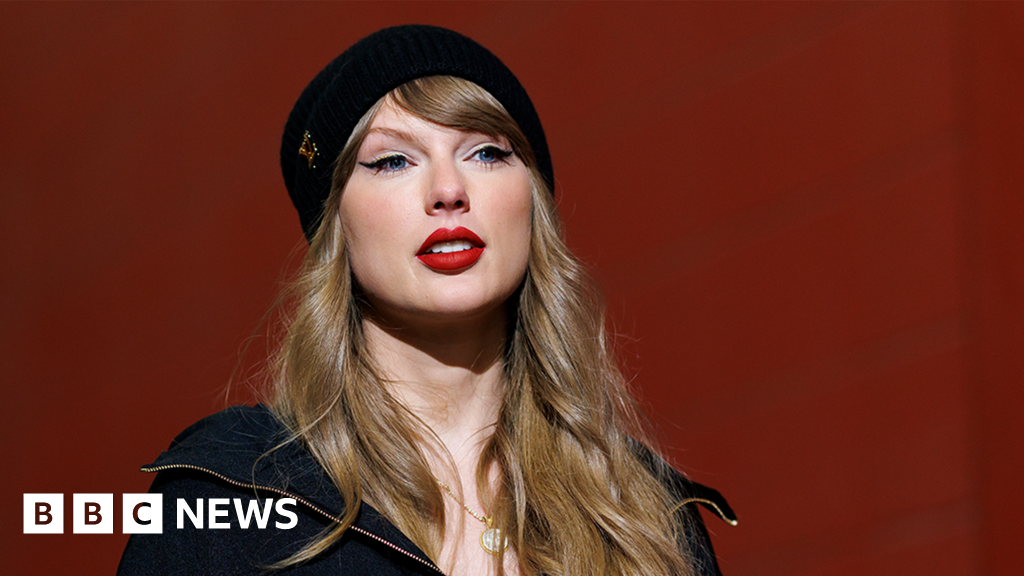
Elon Musk's AI accused of making explicit AI Taylor Swift videosImran Rahman-JonesTechnology reporterGetty ImagesElon Musk's AI video generator has been accused of making "a deliberate choice" to create sexually explicit clips of Taylor Swift without prompting, says an expert in online abuse."This is not misogyny by accident, it is by design," said Clare McGlynn, a law professor who has helped draft a law which would make pornographic deepfakes illegal.

According to a report by The Verge, Grok Imagine's new "spicy" mode "didn't hesitate to spit out fully uncensored topless videos" of the pop star without being asked to make explicit content.The report also said proper age verification methods - which became law in July - were not in place.XAI, the company behind Grok, has been approached for comment.

XAI's own acceptable use policy prohibits "depicting likenesses of persons in a pornographic manner"."That this content is produced without prompting demonstrates the misogynistic bias of much AI technology," said Prof McGlynn of Durham University. "Platforms like X could have prevented this if they had chosen to, but they have made a deliberate choice not to," she added.

This is not the first time Taylor Swift's image has been used in this way.Sexually explicit deepfakes using her face went viral and were viewed millions of times on X and Telegram in January 2024. Deepfakes are computer-generated images which replace the face of one person with another.'Completely uncensored, completely exposed'In testing the guardrails of Grok Imagine, The Verge news writer Jess Weatherbed entered the prompt: "Taylor Swift celebrating Coachella with the boys".

Grok generated still images of Swift wearing a dress with a group of men behind her.This could then be animated into short video clips under four different settings: "normal", "fun", "custom" or "spicy". "She ripped [the dress] off immediately, had nothing but a tasselled thong underneath, and started dancing, completely uncensored, completely exposed," Ms Weatherbed told BBC News.

She added: "It was shocking how fast I was just met with it - I in no way asked it to remove her clothing, all I did was select the 'spicy' option."Gizmodo reported similarly explicit results of famous women, though some searches also returned blurred videos or with a "video moderated" message.The BBC has been unable to independently verify the results of the AI video generations.

Ms Weatherbed said she signed up to the paid version of Grok Imagine, which cost £30, using a brand new Apple account.Grok asked for her date of birth but there was no other age verification in place, she said.Under new UK laws which entered into force at the end of July, platforms which show explicit images must verify users' ages using methods which are "technically accurate, robust, reliable and fair"."

Sites and apps that include Generative AI tools that can generate pornographic material are regulated under the Act," the media regulator Ofcom told BBC News."We are aware of the increasing and fast-developing risk GenAI tools may pose in the online space, especially to children, and we are working to ensure platforms put appropriate safeguards in place to mitigate these risks," it said in a statement.

New UK lawsCurrently, generating pornographic deepfakes is illegal when used in revenge porn or depicts children. Prof McGlynn helped draft an amendment to the law which would make generating or requesting all non-consensual pornographic deepfakes illegal. The government has committed to making this amendment law, but it is yet to come into force."

Every woman should have the right to choose who owns intimate images of her," said Baroness Owen, who proposed the amendment in the House of Lords."It is essential that these models are not used in such a way that violates a woman's right to consent whether she be a celebrity or not," Lady Owen continued in a statement given to BBC News.

"This case is a clear example of why the Government must not delay any further in its implementation of the Lords amendments," she added.A Ministry of Justice spokesperson said: "Sexually explicit deepfakes created without consent are degrading and harmful. "We refuse to tolerate the violence against women and girls that stains our society which is why we have passed legislation to ban their creation as quickly as possible."

When pornographic deepfakes using Taylor Swift's face went viral in 2024, X temporarily blocked searches for her name on the platform.At the time, X said it was "actively removing" the images and taking "appropriate actions" against the accounts involved in spreading them.Ms Weatherbed said the team at The Verge chose Taylor Swift to test the Grok Imagine feature because of this incident."

We assumed - wrongly now - that if they had put any kind of safeguards in place to prevent them from emulating the likeness of celebrities, that she would be first on the list, given the issues that they've had," she said.Taylor Swift's representatives have been contacted for comment.

Analysis

Conflict+
Related Info+
Core Event+
Background+
Impact+
Future+

Related Podcasts