
What happened
Report Provider: BBC News, Mumbai
Author: Nikhil Inamdar
Date: Published August 7, 2025 (covering events leading up to August 27, 2025)
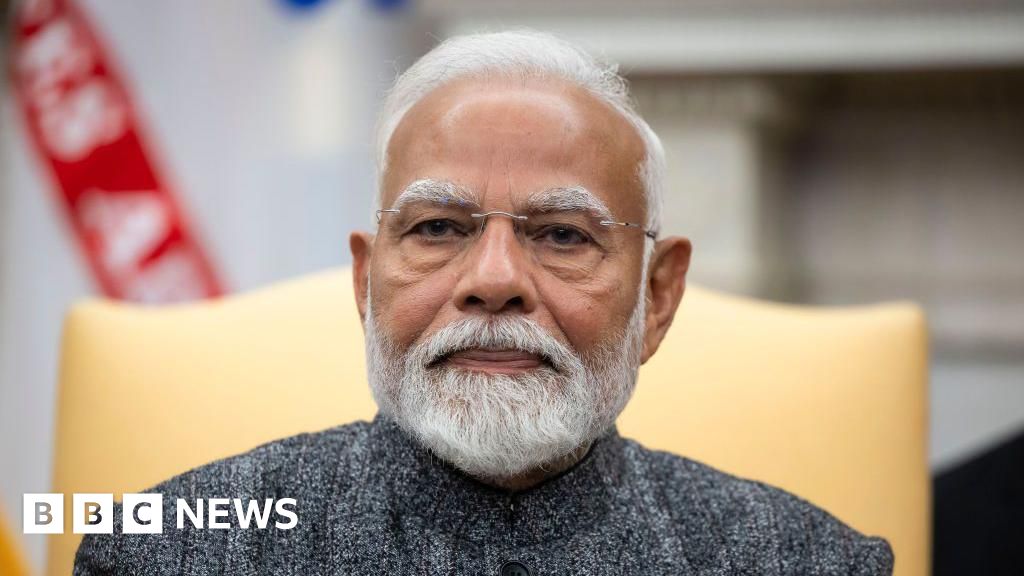
Nikhil InamdarBBC News, MumbaiBloomberg via Getty ImagesIndia has called the US tariffs "unreasonable" India has unexpectedly become a key target in Washington's latest push to pressure Russia over the Ukraine war.On Wednesday, Donald Trump doubled US tariffs on India to 50%, up from 25%, penalising Delhi for purchasing Russian oil - a move India called "unfair" and "unjustified".
The tariffs aim to cut Russia's oil revenues and force Putin into a ceasefire. The new rate will come into effect in 21 days, so on 27 August.This makes India the most heavily taxed US trading partner in Asia and places it alongside Brazil, another nation facing steep US tariffs amid tense relations.
India insists its imports are driven by market factors and vital to its energy security, but the tariffs threaten to hit Indian exports and growth hard.Almost all of India's $86.5bn [£64.7bn] in annual goods exports to the US stand to become commercially unviable if these rates sustain. Most Indian exporters have said they can barely absorb a 10-15% rise, so a combined 50% tariff is far beyond their capacity.
If effective, the tariff would be similar to "a trade embargo, and will lead to a sudden stop in affected export products," Japanese brokerage firm Nomura said in a note. The US is India's top export market, making up 18% of exports and 2.2% of GDP. A 25% tariff could cut GDP by 0.2–0.4%, risking growth slipping below 6% this year.
US imposed additional tariff on India as penalty for buying Russian oilIndia's electronics and pharma exports remain exempt from additional tariffs for now, but the impact would be felt in India domestically "with labour-intensive exports like textiles and gems and jewelry taking the fall", Priyanka Kishore of Asia Decoded, a Singapore-based consultancy told the BBC.
Rakesh Mehra of Confederation of Indian Textile Industry (Citi) called the tariffs a "huge setback" for India's textile exporters, saying they will sharply weaken competitiveness in the US market.With tensions now escalating, experts have called Trump's decision a high-stakes gamble. India is not the only buyer of Russian oil - there are China and Turkey as well - yet Washington has chosen to target a country widely regarded as a key partner.
So what changed and what could be the fallout? India's former central bank governor Urjit Patel said that India's "worst fears" have materialised with the recent announcement. "One hopes that this is short term, and that talks around a trade deal slated to make progress this month will go ahead. Otherwise, a needless trade war, whose contours are difficult to gauge at this early juncture, will likely ensue," Mr Patel wrote in a LinkedIn post.
The damaging impact of the tariffs is why few expect them to last. With new rates starting 27 August, the next 20 days are critical - India's moves in this bargaining window will be closely watched by anxious markets.The key question is whether Prime Minister Narendra Modi's government will quietly abandon trading ties with Russia to avoid the "Russia penalty" or stand firm against the US."
India's efforts to reduce its dependence on Russian military hardware and diversify its oil imports predate pressure from the Trump administration, so Delhi may be able to offer some conciliatory gestures in line with its existing foreign policy behaviour," according to Dr Chietigj Bajpaee of Chatham House.
He says the relationship is in a "managed decline", losing Cold War-era strategic importance, but Russia will remain a key partner for India for the foreseeable future.However, some experts believe Trump's recent actions give India an opportunity to rethink its strategic ties. AFP via Getty ImagesIndia has maintained it will not compromise on the interests of its farmersIf anything the US's actions could "push India to reconsider its strategic alignment, deepening ties with Russia, China, and many other countries", says Ajay Srivastava of the the Global Trade Research Initiative (GTRI), a Delhi-based think tank.
Modi will visit China for the regional Shanghai Cooperation Organisation (SCO) summit - his first since the deadly 2020 Galwan border clashes. Some suggest a revival of India-Russia-China trilateral talks may be on the table.The immediate focus is on August trade talks, as a US team visits India. Negotiations stalled earlier over agriculture and dairy - sectors where the US demands greater access, but India holds firm.
Will there be concessions in areas like dairy and farming that India has been staunchly protecting or could the political cost be too high?The other big question: What's next for India's rising appeal as a China-plus-one destination for nations and firms looking to diversify their supply chains and investments?
Trump's tariffs risk slowing momentum as countries like Vietnam offer lower tariffs. Experts say the impact on investor sentiment may be limited. India is still courting firms like Apple, which makes a big chunk of its phones locally, and has been largely shielded since semiconductors aren't taxed under the new tariffs.
Experts will also be watching what India does to support its exporters."India's government so far has not favoured direct subsidies to exporters, but its current proposed programmes of favourable trade financing and export promotion may not be enough to tackle the impact of such a wide tariff differential," according to Nomura.
With stakes high, trade experts say only top-level diplomacy can revive a trade deal that seemed within reach just weeks ago.For now the Indian government has put up a strong front, saying it will take "all actions necessary to protect its national interests". The opposition has upped the ante with senior Congress party leader Rahul Gandhi calling Trump's 50% tariffs "economic blackmail" and "an attempt to bully India into an unfair trade deal".
Is Modi's touted "mega partnership" with the US now his biggest foreign policy test? And will India hit back?Retaliation by India is unlikely but not impossible, says Barclays Research, because there is precedent."In 2019, India announced tariffs on 28 US products, including US apples and almonds, in response to the US tariffs on steel and aluminium.
Some of these tariffs were eventually reversed in 2023, following the resolution of WTO disputes," Barclays Research said in a note. Follow BBC News India on Instagram, YouTube, Twitter and Facebook.
Source coverage
Report Provider: BBC News, Mumbai
Author: Nikhil Inamdar
Deeper analysis
Full source content
Nikhil InamdarBBC News, MumbaiBloomberg via Getty ImagesIndia has called the US tariffs "unreasonable" India has unexpectedly become a key target in Washington's latest push to pressure Russia over the Ukraine war.On Wednesday, Donald Trump doubled US tariffs on India to 50%, up from 25%, penalising Delhi for purchasing Russian oil - a move India called "unfair" and "unjustified".
The tariffs aim to cut Russia's oil revenues and force Putin into a ceasefire. The new rate will come into effect in 21 days, so on 27 August.This makes India the most heavily taxed US trading partner in Asia and places it alongside Brazil, another nation facing steep US tariffs amid tense relations.
India insists its imports are driven by market factors and vital to its energy security, but the tariffs threaten to hit Indian exports and growth hard.Almost all of India's $86.5bn [£64.7bn] in annual goods exports to the US stand to become commercially unviable if these rates sustain. Most Indian exporters have said they can barely absorb a 10-15% rise, so a combined 50% tariff is far beyond their capacity.
If effective, the tariff would be similar to "a trade embargo, and will lead to a sudden stop in affected export products," Japanese brokerage firm Nomura said in a note. The US is India's top export market, making up 18% of exports and 2.2% of GDP. A 25% tariff could cut GDP by 0.2–0.4%, risking growth slipping below 6% this year.
US imposed additional tariff on India as penalty for buying Russian oilIndia's electronics and pharma exports remain exempt from additional tariffs for now, but the impact would be felt in India domestically "with labour-intensive exports like textiles and gems and jewelry taking the fall", Priyanka Kishore of Asia Decoded, a Singapore-based consultancy told the BBC.
Rakesh Mehra of Confederation of Indian Textile Industry (Citi) called the tariffs a "huge setback" for India's textile exporters, saying they will sharply weaken competitiveness in the US market.With tensions now escalating, experts have called Trump's decision a high-stakes gamble. India is not the only buyer of Russian oil - there are China and Turkey as well - yet Washington has chosen to target a country widely regarded as a key partner.
So what changed and what could be the fallout? India's former central bank governor Urjit Patel said that India's "worst fears" have materialised with the recent announcement. "One hopes that this is short term, and that talks around a trade deal slated to make progress this month will go ahead. Otherwise, a needless trade war, whose contours are difficult to gauge at this early juncture, will likely ensue," Mr Patel wrote in a LinkedIn post.
The damaging impact of the tariffs is why few expect them to last. With new rates starting 27 August, the next 20 days are critical - India's moves in this bargaining window will be closely watched by anxious markets.The key question is whether Prime Minister Narendra Modi's government will quietly abandon trading ties with Russia to avoid the "Russia penalty" or stand firm against the US."
India's efforts to reduce its dependence on Russian military hardware and diversify its oil imports predate pressure from the Trump administration, so Delhi may be able to offer some conciliatory gestures in line with its existing foreign policy behaviour," according to Dr Chietigj Bajpaee of Chatham House.
He says the relationship is in a "managed decline", losing Cold War-era strategic importance, but Russia will remain a key partner for India for the foreseeable future.However, some experts believe Trump's recent actions give India an opportunity to rethink its strategic ties. AFP via Getty ImagesIndia has maintained it will not compromise on the interests of its farmersIf anything the US's actions could "push India to reconsider its strategic alignment, deepening ties with Russia, China, and many other countries", says Ajay Srivastava of the the Global Trade Research Initiative (GTRI), a Delhi-based think tank.
Modi will visit China for the regional Shanghai Cooperation Organisation (SCO) summit - his first since the deadly 2020 Galwan border clashes. Some suggest a revival of India-Russia-China trilateral talks may be on the table.The immediate focus is on August trade talks, as a US team visits India. Negotiations stalled earlier over agriculture and dairy - sectors where the US demands greater access, but India holds firm.
Will there be concessions in areas like dairy and farming that India has been staunchly protecting or could the political cost be too high?The other big question: What's next for India's rising appeal as a China-plus-one destination for nations and firms looking to diversify their supply chains and investments?
Trump's tariffs risk slowing momentum as countries like Vietnam offer lower tariffs. Experts say the impact on investor sentiment may be limited. India is still courting firms like Apple, which makes a big chunk of its phones locally, and has been largely shielded since semiconductors aren't taxed under the new tariffs.
Experts will also be watching what India does to support its exporters."India's government so far has not favoured direct subsidies to exporters, but its current proposed programmes of favourable trade financing and export promotion may not be enough to tackle the impact of such a wide tariff differential," according to Nomura.
With stakes high, trade experts say only top-level diplomacy can revive a trade deal that seemed within reach just weeks ago.For now the Indian government has put up a strong front, saying it will take "all actions necessary to protect its national interests". The opposition has upped the ante with senior Congress party leader Rahul Gandhi calling Trump's 50% tariffs "economic blackmail" and "an attempt to bully India into an unfair trade deal".
Is Modi's touted "mega partnership" with the US now his biggest foreign policy test? And will India hit back?Retaliation by India is unlikely but not impossible, says Barclays Research, because there is precedent."In 2019, India announced tariffs on 28 US products, including US apples and almonds, in response to the US tariffs on steel and aluminium.
Some of these tariffs were eventually reversed in 2023, following the resolution of WTO disputes," Barclays Research said in a note. Follow BBC News India on Instagram, YouTube, Twitter and Facebook.
How this page is built
Goose Pod turns cited reporting into a public episode summary first, then pairs that summary with audio playback so listeners can check the source material before they decide how deeply to engage.
The goal is to make this page useful as a news landing page first, while still giving listeners transcript access, related episodes, and direct links back to the original publishers.