Trump tariff impact: Indians in US may have to eat Pakistani rice or pay 50% more for Indian imports

Trump tariff impact: Indians in US may have to eat Pakistani rice or pay 50% more for Indian imports

2025-08-12Business
--:--
--:--
Aura Windfall
Good morning norristong_x, I'm Aura Windfall, and this is Goose Pod for you. Today is Tuesday, August 12th. We're diving into a topic that’s hitting dinner tables and international relations hard: the impact of new US tariffs on India. It’s a big one.
Mask
I'm Mask. We're here to discuss the stark reality: Indians in the US might soon be eating Pakistani rice or paying a 50% premium for Indian imports. This isn't just about trade; it's a strategic power play with massive consequences. Let's get into it.
Aura Windfall
Let's get started. The core of this issue is a sudden and steep tariff. Can you break down what exactly happened? It seems to have escalated very quickly, catching many people by surprise and creating a lot of uncertainty across so many different sectors.
Mask
It’s simple, aggressive economics. President Trump signed an executive order, slapping an additional 25% 'penalty' tariff on all Indian imports. This is on top of an existing 25% duty. Do the math: that’s a 50% total tariff on Indian goods entering the US.
Aura Windfall
A 50% tariff. What I know for sure is that a number that high sends a shockwave. What’s the justification for such a drastic measure? There must be a powerful reason behind a move that risks so much diplomatic and economic goodwill. What's the narrative here?
Mask
The White House is pointing the finger at India's continued purchase of Russian oil. They're framing it as an 'unusual and extraordinary threat' to US national security and foreign policy. It’s a penalty, plain and simple. A clear message not to do business with their adversaries.
Aura Windfall
So, this is less about trade balances and more about geopolitical alignment. It feels like a moment where commerce is being used as a tool for foreign policy. How are major financial institutions reacting to this? What does this mean for India’s economic ambitions on the world stage?
Mask
Exactly. Moody's has already warned this could be a major blow to New Delhi's manufacturing goals. It could reverse gains they've made in attracting global investment. This isn't a small ripple; it's a tidal wave that could affect India's growth, inflation, and their entire economic trajectory.
Aura Windfall
It sounds like the impact is being felt immediately. I read that India's Seafood Export Association is already asking for financial aid, with two billion dollars in exports threatened. It’s not just one industry, is it? It seems to be a widespread chill on trade.
Mask
It's a pall of uncertainty across most sectors. We're seeing garment exporters in Tamil Nadu pausing production, fearing 50% of their business could vanish. Foreign Portfolio Investors are spooked, pulling out 18,000-crore from equities. This is the market reacting to instability and high risk.
Aura Windfall
With all this pressure, how is India responding? It must be an incredibly difficult position to be in. How do you stand your ground for your own interests when faced with such overwhelming economic force from a partner like the U.S.? What’s the official word?
Mask
Union Minister Piyush Goyal was blunt. He said India will not 'bow down to anybody.' It’s a defiant stance. They’re signaling that they won't be dictated to, even with these massive tariffs looming. It's a high-stakes standoff, and neither side is blinking yet.
Aura Windfall
This feels so sudden and intense. How did the relationship between the U.S. and India get to this point? A 50% tariff doesn't just appear out of nowhere. What’s the history here that led to this moment of confrontation? There must be a backstory of simmering tensions.
Mask
This has been building for years. Back in 2019, the Trump administration terminated India's preferential trade status, which allowed their goods to enter the U.S. duty-free. The reason given was that India wasn't providing 'equitable and reasonable access' to its own markets. It was the first shot.
Aura Windfall
So the seeds of this were planted years ago. How did India react to losing that special status? It must have been a significant blow to their export strategy. It’s one thing to have a disagreement, but another to fundamentally change the terms of trade like that.
Mask
India retaliated. They imposed tariffs on 28 different U.S. products, a move they had planned earlier in response to U.S. duties on steel and aluminum. Negotiations were happening, but they fell apart. Even during Trump's 2020 visit to India, no agreement was reached. The divisions were already deep.
Aura Windfall
It's a powerful lesson in how unresolved issues can fester and grow. What I know for sure is that communication and compromise are essential in any relationship, especially in global trade. Were there any moments of cooperation, or has it been purely contentious?
Mask
There have been moments. In February 2025, Modi and Trump discussed reducing the trade deficit and launched initiatives for defense and energy cooperation. But the fundamental disagreement never went away. The U.S. trade deficit with India was nearly $46 billion, a number that Trump was determined to change.
Aura Windfall
And that brings us to the current situation. The doubling of the tariff to 50% in August 2025. Indian officials called it 'unfair, unjustified, and unreasonable.' It sounds like a complete breakdown of trust. How significant is this moment in the grand scheme of their relationship?
Mask
This is one of the lowest points in U.S.-India relations in nearly twenty-five years. Prime Minister Modi has said 'India will never compromise' and is 'ready to pay a heavy price.' This isn't just a trade dispute anymore; it's a clash of national wills. It's a high-stakes geopolitical drama.
Aura Windfall
It’s fascinating how this dynamic evolved. The relationship really started to shift after India's economic liberalization in 1991. Before that, engagement was limited. But as India opened up, it became a market and a partner the U.S. couldn't ignore, despite the recurring friction.
Mask
Right. Trade volumes surged from the 90s, but so did the irritants for the U.S. - high tariffs, intellectual property issues. There was a goal to hit $500 billion in bilateral trade by 2030, but the friction under Trump’s first term, especially revoking their special trade status, created major roadblocks.
Aura Windfall
And there was even a moment where President Trump threatened retaliation over medicine, wasn't there? I recall India agreeing to end an export embargo on hydroxychloroquine in 2020 after he made that threat. It shows a pattern of using pressure to get a desired outcome.
Mask
A classic hardball tactic. It worked then, and he’s using a similar playbook now. The context is this new 'reciprocal tariff' policy. Trump’s view is simple: if you have high tariffs on our goods, we’ll hit you with the same. He’s targeting countries with trade surpluses, and India is on that list.
Aura Windfall
That’s a very direct, and some would say confrontational, way of handling trade policy. It moves away from the more complex, multilateral agreements we’ve seen in the past. What does this mean for institutions like the World Trade Organization when powerful nations decide to act unilaterally?
Mask
It weakens them, obviously. When the global landscape shifts toward protectionism, countries like the U.S. and India pursue bilateral deals as a pragmatic alternative. They’re trying to redefine their relationship on their own terms, outside of the old frameworks. This is the new reality of global trade.
Aura Windfall
And at the heart of these negotiations, there are specific industries causing friction, right? I've heard that agriculture is a major sticking point. It seems to be a protected area for India, which creates a challenge for U.S. negotiators looking for market access.
Mask
Precisely. The U.S. wants to sell more agricultural products in India, a market of 1.4 billion people. But India has kept that sector heavily protected due to domestic concerns and the welfare of its massive farming population. It’s a classic conflict between domestic priorities and international trade demands.
Aura Windfall
This conflict feels so charged with emotion and national pride. India has accused the U.S. of having double standards, which is a very serious claim. What is the basis for this accusation? It points to a deep sense of injustice in how they are being treated.
Mask
India’s point is that while the U.S. penalizes them for buying Russian oil, the U.S. itself continues to buy Russian uranium hexafluoride, palladium, and fertilizer. They see it as hypocrisy. So when Trump imposes these tariffs, India labels them as 'unfair, unjustified and unreasonable.' They feel singled out.
Aura Windfall
That adds a powerful layer of context. It’s not just a disagreement over policy, but a feeling of being unfairly judged. How is this playing out domestically in both countries? Leaders often have to cater to their home audience, which can make compromise even harder on the world stage.
Mask
Absolutely. This is threatening two decades of diplomatic progress. On both sides, domestic political pressure is hardening the stances. In India, opposition parties and the public are encouraging Prime Minister Modi to resist what they see as bullying by Trump. It’s become a matter of national dignity.
Aura Windfall
And India is the largest buyer of seaborne crude from Russia. What is their explanation for continuing these purchases despite the threat of U.S. tariffs? There must be a compelling reason for them to take such a significant economic risk. It seems they are caught between a rock and a hard place.
Mask
Their foreign ministry spokesperson called it a 'necessity compelled by global market situation.' When the Ukraine conflict began, traditional oil supplies were diverted to Europe. India turned to Russia to meet its energy needs. From their perspective, they are making a pragmatic choice, not a political one.
Aura Windfall
So one side sees it as a security threat, and the other sees it as a practical necessity. It’s a fundamental clash of perspectives. And President Trump has made his position incredibly clear, vowing to substantially raise the tariffs. What does this mean for the future of their relationship?
Mask
It means the trade rift is deepening. India has vowed to take 'all necessary measures to safeguard its national interests and economic security.' They are not backing down. Trump had even previously threatened 100% tariffs on countries buying Russian oil unless a peace deal was reached. The pressure is immense.
Aura Windfall
And Russia is a huge supplier for India, isn't that right? I believe they account for a very significant portion of India's oil. This isn't a minor trade relationship that they can easily replace. This dependency is at the very heart of the conflict.
Mask
It's not minor at all. Russia is India's leading oil supplier, accounting for about 35% of its overall supplies. From January to June this year, India imported about 1.75 million barrels per day from Russia. This isn't a casual dependency; it's a deeply integrated part of their energy strategy.
Aura Windfall
Let’s bring this down to the ground level. The headline of this story is about rice. For the Indian diaspora in the U.S., this isn't an abstract trade war. What does a 50% tariff mean for a family buying their weekly groceries? It’s a very personal and immediate impact.
Mask
It means their staple food could become a luxury item. Indian sona masuri rice, used for everyday meals, costs about $900-$1,000 per tonne. Basmati, for special dishes, is around $1,200. A 50% tariff could make these unaffordable, forcing a switch to cheaper Pakistani alternatives.
Aura Windfall
That’s a tangible, everyday consequence. And what about the farmers back in India? Punjab is the country's largest producer of basmati. What I know for sure is that these tariffs will travel all the way back to the fields, affecting the livelihoods of countless people.
Mask
They will be badly affected. With the new tariff, Indian basmati prices could jump from $1,200 to $1,800 per metric tonne. Meanwhile, Pakistan's rice, with a lower 19% tariff, would sit at around $1,450. That's a $350 difference per tonne. Indian farmers will lose their competitive edge.
Aura Windfall
It’s interesting how these tariffs expose the broader trade imbalances. You mentioned rice, but this applies to other goods as well, doesn't it? I read that the tariff disparities on things like cars and even apples are quite stark, which has been a long-standing issue.
Mask
The imbalances are huge. The U.S. imposes a 2.5% tariff on passenger vehicles; India imposes 70%. U.S. apples are duty-free here, but face a 50% duty in India. This is the 'reciprocal' part Trump talks about. He’s trying to level a playing field he sees as fundamentally unfair.
Aura Windfall
It seems other countries have found ways to navigate this. I saw that South Korea managed to secure a deal for a 15% tariff instead of 25%. How did they achieve that? It suggests that there are pathways to negotiation, even in this tough environment.
Mask
They came to the table with leverage. South Korea offered major investments, higher energy imports, and concessions on rice and beef. India, on the other hand, grew overconfident. Negotiators thought the U.S. would accommodate their reluctance on agriculture, but one White House official said 'there was never a deal that we felt good about.'
Aura Windfall
So, where do we go from here? Is there a path forward, or is this relationship destined for more conflict? India's trade minister has said the government is prioritizing the welfare of its farmers and small businesses, which seems to signal a continued protectionist stance.
Mask
The future looks bleak. Without a trade deal, these tariffs are in effect. Economists predict this could slash India's economic growth and that further talks are unlikely to secure a significantly better outcome. One economist at Emkay Global said with such 'obnoxious tariff rates,' trade between the nations could be 'practically dead.'
Aura Windfall
That is a devastating prediction. Is there any glimmer of hope? Are the lines of communication still open? It seems hard to believe that two major global partners would simply let their trade relationship wither away completely without trying to find some common ground.
Mask
There are whispers. They've agreed to start talks towards an 'early trade deal,' and India is reportedly open to cutting tariffs on over $23 billion worth of U.S. goods. But the damage is done. Exporters face a 30-35% disadvantage now, and the government is already considering relief measures like interest subsidies.
Aura Windfall
It truly feels like a severe setback. What I find most concerning is the potential disruption to India's access to its largest export market. This isn't just about tariffs; it's about supply chains, jobs, and the economic stability of countless industries like textiles, gems, and footwear.
Aura Windfall
That's the end of today's discussion. What’s clear is that a 50% tariff on Indian rice is more than a trade policy—it's a move with deep personal and economic consequences, tied to the complex geopolitics of Russian oil. Thank you for listening to Goose Pod.
Mask
Ultimately, this is a story of leverage and national interest. It's a stark reminder that in global trade, the bottom line can be influenced by security, politics, and power. It will be a tough road ahead for everyone involved. See you tomorrow.

## Summary of US Tariff on Indian Rice Exports This report from **The Economic Times**, published on **August 9, 2025**, details the significant impact of a new **50% tariff** imposed by the US on Indian rice exports, effective **August 27, 2025**. The tariff, announced by US President Donald Trump, is expected to substantially increase prices for the Indian diaspora in America, potentially leading them to switch to cheaper Pakistani rice alternatives. ### Key Findings and Impacts: * **Price Hike:** Indian rice imported to the US could see a price increase of up to 50%. * **Shift to Pakistani Rice:** This price hike is likely to drive the Indian diaspora towards Pakistani rice, which will remain comparatively cheaper due to a lower tariff. * **Impact on Indian States:** Punjab, India's largest producer of basmati rice (contributing 40% of total output), is anticipated to be among the hardest-hit states. * **Diaspora Consumption:** Indian households in the US typically consume "sona masuri" for everyday meals and "basmati" for special dishes like biryani. ### Key Statistics and Metrics: * **Current Indian Rice Exports to US:** Approximately **2.5 lakh tonnes** annually. * **Sona Masuri Variety:** Accounts for around **40%** of Indian rice exports to the US, grown in Andhra Pradesh and Telangana. * **Basmati Variety:** Accounts for the remaining **60%** of Indian rice exports to the US, largely cultivated in northern Indian states. * **Current Prices:** * Sona Masuri: **$900–$1,000 per tonne** * Basmati: **$1,200–$1,300 per tonne** * **Projected Basmati Price Post-Tariff:** Could jump from **$1,200 to $1,800 per metric tonne (MT)**. * **Pakistani Basmati Exports to US:** Approximately **1.8 LMT** annually. * **Pakistani Basmati Price:** Currently around **$1,450 per MT**. * **Tariff Difference:** The new 50% tariff on Indian basmati creates a **$350 per MT** difference compared to Pakistan's 19% tariff. * **Value of Indian Basmati Exports to US:** **$350 million** annually. ### Context of the Tariff: * **Initial Tariff:** The White House initially announced a **25% "Reciprocal Tariff, Adjusted"** on Indian exports as part of an executive order covering nearly 70 countries. * **Additional Levy:** President Trump added another **25% tariff specifically on India** over its Russian oil imports, bringing the total duty to 50%. * **Rationale:** Sources suggest the move may be aimed at pressuring the Indian diaspora in response to India's purchase of Russian oil. * **Effective Date:** The additional levy will take effect **21 days after the announcement**, which is **August 27, 2025**. ### Reactions and Concerns: * **Indian Rice Exporters Association:** President B.V. Krishna Rao warned that the Indian community in the US will be "badly affected." * **India's Stance:** India has called the move "unjustified and unreasonable" and stated it will take necessary steps to protect its national interests and economic security. * **Indiaspora (US-based nonprofit):** Described the new duties as a "setback" in people-to-people ties but expressed hope for a temporary strain. This tariff represents a significant development in US-India trade relations, with direct implications for the Indian diaspora and the Indian rice export industry.

Trump tariff impact: Indians in US may have to eat Pakistani rice or pay 50% more for Indian imports

Read original at The Economic Times

SynopsisA new 50% tariff imposed by the US on Indian rice exports, effective August 27, threatens to significantly increase prices for the Indian diaspora in America. This could lead to a shift towards cheaper Pakistani alternatives.TIL CreativesAccording to a report, the Trump tariffs is likely to severely affect Punjab, the highest producer of basmati rice in the country.

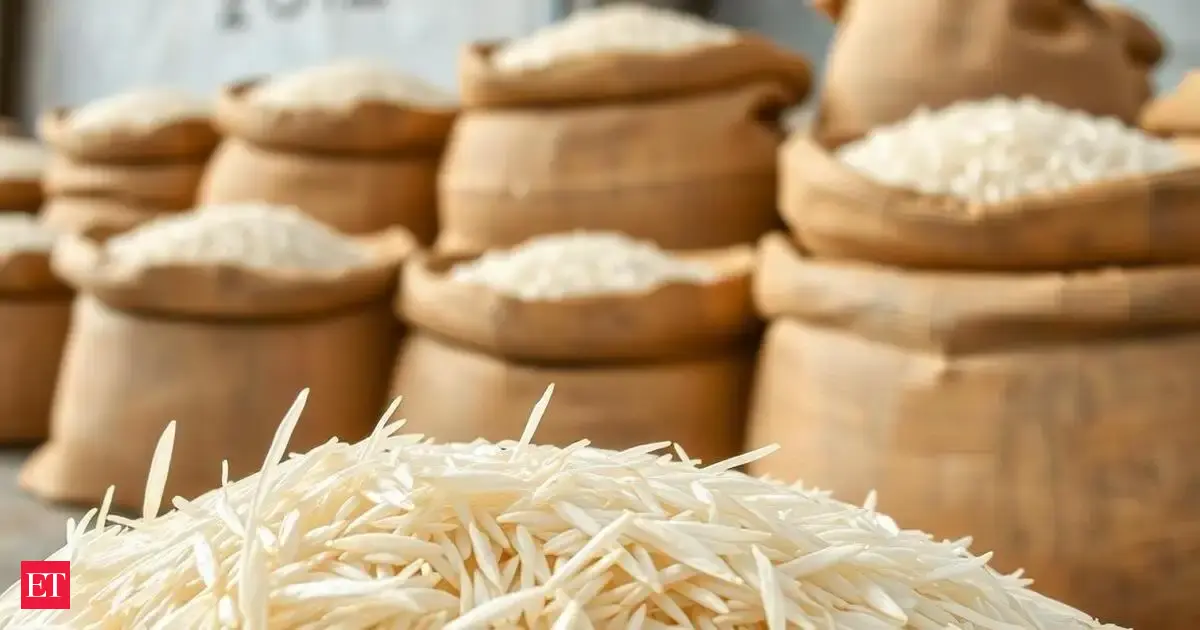
(AI-generated image)The Indian diaspora in the United States may soon have to pay up to 50% more for rice imported from India— a staple in most households — or opt for Pakistani imports, after US President Donald Trump announced a steep 50% tariff on Indian rice exports. The price hike is expected to take effect from August 27.

India currently exports nearly 2.5 lakh tonnes of rice to the US every year, of which around 40% is the sona masuri variety grown in Andhra Pradesh and Telangana, while the remaining 60% is basmati, largely cultivated in Punjab, Haryana, Uttar Pradesh, and other northern states. According to the Deccan Chronicle, Indians living in the US — whether for work, study, or business — typically consume sona masuri for everyday meals, while basmati is reserved for delicacies like biryani.

Presently, sona masuri costs $900–$1,000 per tonne, and basmati $1,200–$1,300 per tonne. If Trump’s directive comes into force, prices could surge significantly, making Indian varieties far costlier than Pakistani alternatives. Sources quoted by the Deccan Chronicle suggested the move may be aimed at pressuring the Indian diaspora in response to India’s purchase of Russian oil.

Rice Exporters Association president B.V. Krishna Rao warned that the Indian community in the US will be “badly affected” but added that the full impact will be clearer in the coming weeks. The Indian Express noted that Punjab — India’s largest producer of basmati with 40% of total output — will be among the hardest-hit states.

India currently exports around 3 lakh metric tonnes (LMT) of basmati worth $350 million to the US annually, while Pakistan supplies about 1.8 LMT. With the new tariff, Indian basmati prices could jump from $1,200 to $1,800 per metric tonne (MT), compared to Pakistan’s $1,450 per MT, thanks to its lower 19% tariff — a $350 per MT difference.

Why the Tariff Was Imposed Last week, the White House announced a 25% “Reciprocal Tariff, Adjusted” on Indian exports under an executive order titled Further Modifying the Reciprocal Tariff Rates, which covered nearly 70 countries. Tariffs range from 10% to 40% — Japan (15%), Sri Lanka (20%), Pakistan (19%), Laos and Myanmar (40% each), and the UK (10%).

Then on Wednesday, Trump added another 25% tariff on India specifically over its Russian oil imports, bringing the total duty to 50% — among the highest imposed on any nation. The additional levy will take effect 21 days after the announcement, i.e., on August 27. India has called the move “unjustified and unreasonable” and said it will take all necessary steps to protect its national interests and economic security.

US-based nonprofit Indiaspora said the new duties are a “setback” in the otherwise strong people-to-people ties between India and the US, but expressed hope that the strain will be temporary.( Originally published on Aug 08, 2025 )

Analysis

Conflict+
Related Info+
Core Event+
Background+
Impact+
Future+

Related Podcasts