
What happened
Report Provider: BBC Sport
Author: Laura Scott
Date of Publication: July 7, 2025, 15:08:47 (Coverage for Wimbledon 2025 dates: June 30 - July 13)
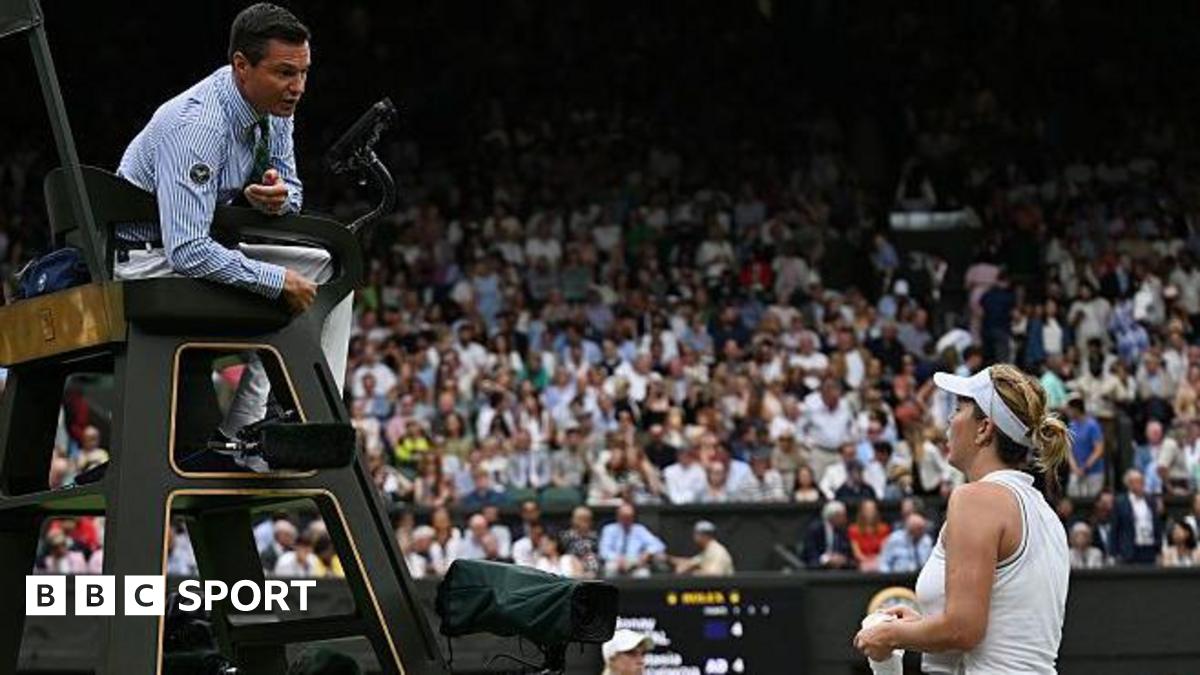
Wimbledon announces change after line call controversyImage source, Getty ImagesImage caption, Umpire Nico Helwerth opted to replay a point when a 'human error' led to the line-calling technology being deactivatedWimbledon 2025Dates: 30 June-13 July Venue: All England ClubCoverage: Live across BBC TV, radio and online with extensive coverage on BBC iPlayer, Red Button, Connected TVs and mobile app.
Full coverage guide.Wimbledon has made changes to its electronic line calling system to remove the possibility of "human error" after it was accidentally deactivated in a controversial episode on Sunday.An "operator error" meant the ball-tracking technology was turned off for one game in the fourth-round match between Britain's Sonay Kartal and Russian Anastasia Pavlyuchenkova on Centre Court."
Following our review, we have now removed the ability for Hawk-Eye operators to manually deactivate the ball tracking," the All England Lawn Tennis Club (AELTC) said in a statement to BBC Sport."While the source of the issue was human error, this error cannot now be repeated due to the system changes we have made."
Kartal sent a backhand long when game point down at 4-4, but this was not detected by the line-call system, which instead made two automated calls of "stop".Umpire Nico Helwerth opted to replay the point - which Kartal won - but was criticised by Pavlyuchenkova and some pundits for not using his authority to overrule and call the ball out.
The AELTC said he had "followed the established process".Club chief executive Sally Bolton said earlier on Monday that Helwerth was "having a rest day"."We have rotation of our umpires regularly. A little bit like the players, the umpires also need rest days throughout the tournament," Bolton told BBC Sport."
He's having a rest day today. He's fine. "It's really important to say that the umpire followed the protocols in place. He did what he needed to do on court and acted entirely correctly."Media caption, Tennis losing its charm because of technology - PavlyuchenkovaOn Sunday evening, Pavlyuchenkova told BBC Sport that Helwerth had acknowledged to her after the match that he should have taken the initiative to overrule and call it out."
I think the chair umpire should be able to take the initiative, that's what he's there for," she said."That's why he's sitting on that chair. Otherwise, I think we could have also had a match without the umpires. "They have no problem giving us fines and code violations for any reason so I would like them to be a bit more attentive to this sort of situation when the ball is very close to him."
The rulebook states that if the electronic line-calling system fails to make a call, "the call shall be made by the chair umpire".It adds: "If the chair umpire is unable to determine if the ball was in or out, then the point shall be replayed. This protocol applies only to point-ending shots or in the case when a player stops play."
The electronic system was introduced at this year's Championships, replacing line judges, who had been a staple on court for 147 years.The technology is an "enhanced" version of the previous Hawk-Eye system, which was used when players challenged calls made by line judges.There is a line-calling hub inside Wimbledon's grounds, where 50 operators use 144 screens to monitor the ball-tracking footage from 12 cameras on each court.
The AELTC added: "We continue to have full confidence in the accuracy of the ball-tracking technology. The live ELC [electronic line calling] system relies on the Hawk-Eye operators, the review official and the technology to work in harmony. This did not happen."In this instance there was a human error and as a consequence we have fully reviewed our processes and made the appropriate changes."
Media caption, Kartal wins controversial game after electronic line-calling system fails
Source coverage
Report Provider: BBC Sport
Author: Laura Scott
Deeper analysis
Full source content
Wimbledon announces change after line call controversyImage source, Getty ImagesImage caption, Umpire Nico Helwerth opted to replay a point when a 'human error' led to the line-calling technology being deactivatedWimbledon 2025Dates: 30 June-13 July Venue: All England ClubCoverage: Live across BBC TV, radio and online with extensive coverage on BBC iPlayer, Red Button, Connected TVs and mobile app.
Full coverage guide.Wimbledon has made changes to its electronic line calling system to remove the possibility of "human error" after it was accidentally deactivated in a controversial episode on Sunday.An "operator error" meant the ball-tracking technology was turned off for one game in the fourth-round match between Britain's Sonay Kartal and Russian Anastasia Pavlyuchenkova on Centre Court."
Following our review, we have now removed the ability for Hawk-Eye operators to manually deactivate the ball tracking," the All England Lawn Tennis Club (AELTC) said in a statement to BBC Sport."While the source of the issue was human error, this error cannot now be repeated due to the system changes we have made."
Kartal sent a backhand long when game point down at 4-4, but this was not detected by the line-call system, which instead made two automated calls of "stop".Umpire Nico Helwerth opted to replay the point - which Kartal won - but was criticised by Pavlyuchenkova and some pundits for not using his authority to overrule and call the ball out.
The AELTC said he had "followed the established process".Club chief executive Sally Bolton said earlier on Monday that Helwerth was "having a rest day"."We have rotation of our umpires regularly. A little bit like the players, the umpires also need rest days throughout the tournament," Bolton told BBC Sport."
He's having a rest day today. He's fine. "It's really important to say that the umpire followed the protocols in place. He did what he needed to do on court and acted entirely correctly."Media caption, Tennis losing its charm because of technology - PavlyuchenkovaOn Sunday evening, Pavlyuchenkova told BBC Sport that Helwerth had acknowledged to her after the match that he should have taken the initiative to overrule and call it out."
I think the chair umpire should be able to take the initiative, that's what he's there for," she said."That's why he's sitting on that chair. Otherwise, I think we could have also had a match without the umpires. "They have no problem giving us fines and code violations for any reason so I would like them to be a bit more attentive to this sort of situation when the ball is very close to him."
The rulebook states that if the electronic line-calling system fails to make a call, "the call shall be made by the chair umpire".It adds: "If the chair umpire is unable to determine if the ball was in or out, then the point shall be replayed. This protocol applies only to point-ending shots or in the case when a player stops play."
The electronic system was introduced at this year's Championships, replacing line judges, who had been a staple on court for 147 years.The technology is an "enhanced" version of the previous Hawk-Eye system, which was used when players challenged calls made by line judges.There is a line-calling hub inside Wimbledon's grounds, where 50 operators use 144 screens to monitor the ball-tracking footage from 12 cameras on each court.
The AELTC added: "We continue to have full confidence in the accuracy of the ball-tracking technology. The live ELC [electronic line calling] system relies on the Hawk-Eye operators, the review official and the technology to work in harmony. This did not happen."In this instance there was a human error and as a consequence we have fully reviewed our processes and made the appropriate changes."
Media caption, Kartal wins controversial game after electronic line-calling system fails
How this page is built
Goose Pod turns cited reporting into a public episode summary first, then pairs that summary with audio playback so listeners can check the source material before they decide how deeply to engage.
The goal is to make this page useful as a news landing page first, while still giving listeners transcript access, related episodes, and direct links back to the original publishers.